 Vietnamnet.vn

 Podcast



As the Lunar New Year approaches, Dong Nai’s largest gladiolus-growing village enters its most decisive stage, with farmers watching the weather and adjusting irrigation carefully so the flowers bloom exactly in time for the Tet market.
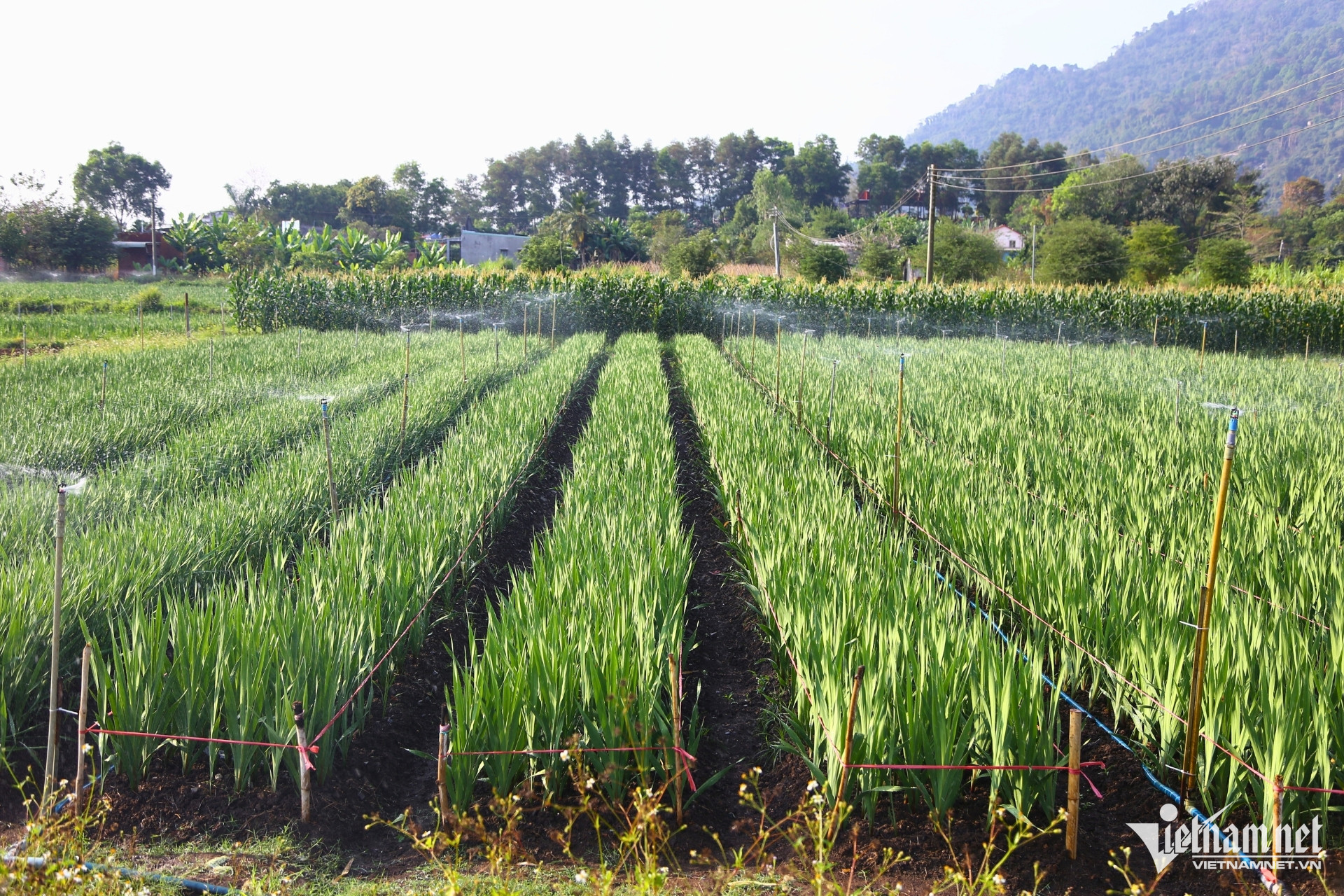
Dong Nai’s largest gladiolus-growing area enters its crucial Tet season. Photo: Hoang Anh
Across the country, demand for Tet flowers is beginning to rise, and gladiolus - a familiar bloom adorning family altars and living rooms - is among the most closely monitored crops in the region.
In Xuan Loc Commune, the heart of Dong Nai’s gladiolus production, the atmosphere is lively and focused.
On the fields, growers tend to each row, managing water levels, checking growth rates and ensuring the flowers follow the correct schedule to meet Tet demand.
Farmers explain that despite being a steady seller every Tet, gladiolus remains highly sensitive to risk.
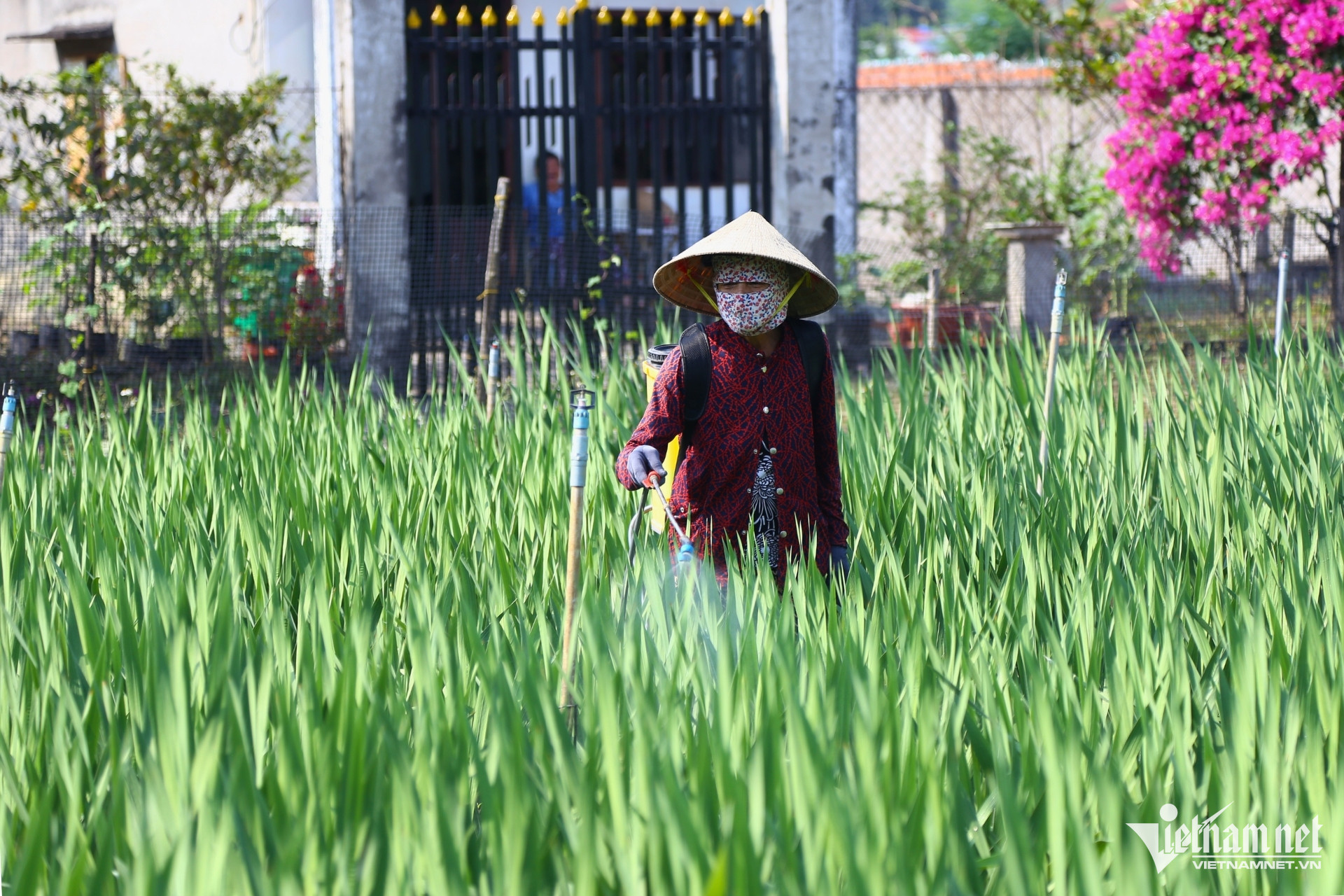
A slight shift in weather or the unexpected appearance of pests can cause flowers to bloom too early or too late, resulting in significant losses.
“This flower is extremely delicate,” one grower noted.
“To sell at a good Tet price, we must calculate everything precisely - from planting dates and fertilizing to water control and disease prevention.”
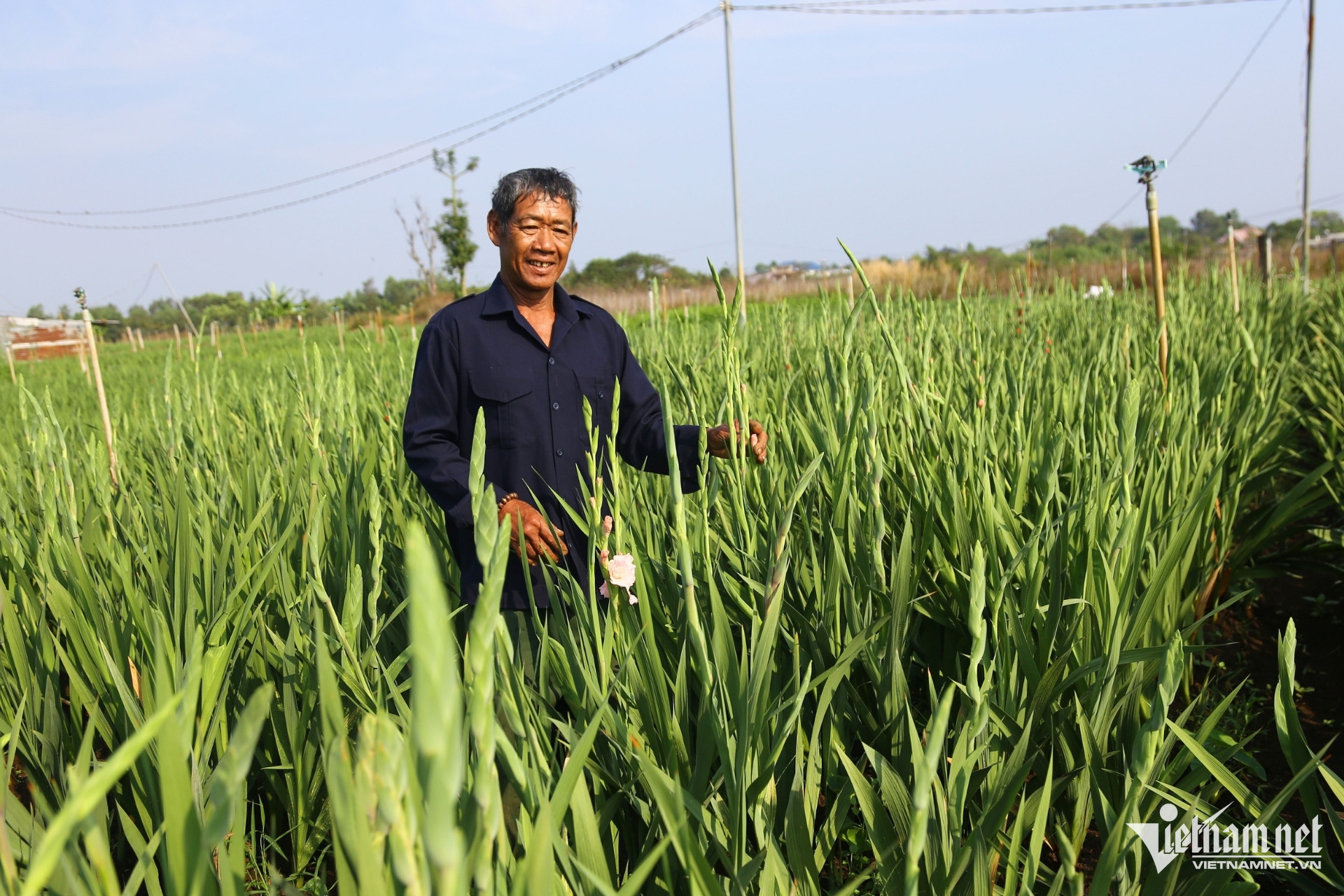
Ut stands beside gladiolus fields nearly ready for Tet harvest. Photo: Hoang Anh
In the field, Tong Van Ut, a 66-year-old farmer of the Cho Ro ethnic group, stands beside rows of gladiolus nearing harvest.
He explains that the crop takes about 75 days from planting to picking.
For Tet, that means farmers must begin sowing around the 10th day of the tenth lunar month to meet market timing.
“Weather determines everything - quality and price,” Ut said.
“If there’s too much sun, the flowers bloom too early.
If rain lasts too long, root and leaf diseases appear.
If you detect it late, you can lose the entire field.”
Local growers say traders typically begin buying around the 23rd day of the last lunar month, with peak activity in the days immediately before Tet.
Flowers that bloom early are harvested and sold first, though they fetch only average prices.
Near Tet, prices often rise sharply, sometimes reaching nearly 100,000 VND (about 4 USD) per bundle of ten stems depending on size and bloom quality.
Walking through the fields, growers point out signs of stress that gladiolus commonly encounters, from weakened stems to leaf discoloration.
Despite the challenges, farmers in Xuan Loc remain hopeful.
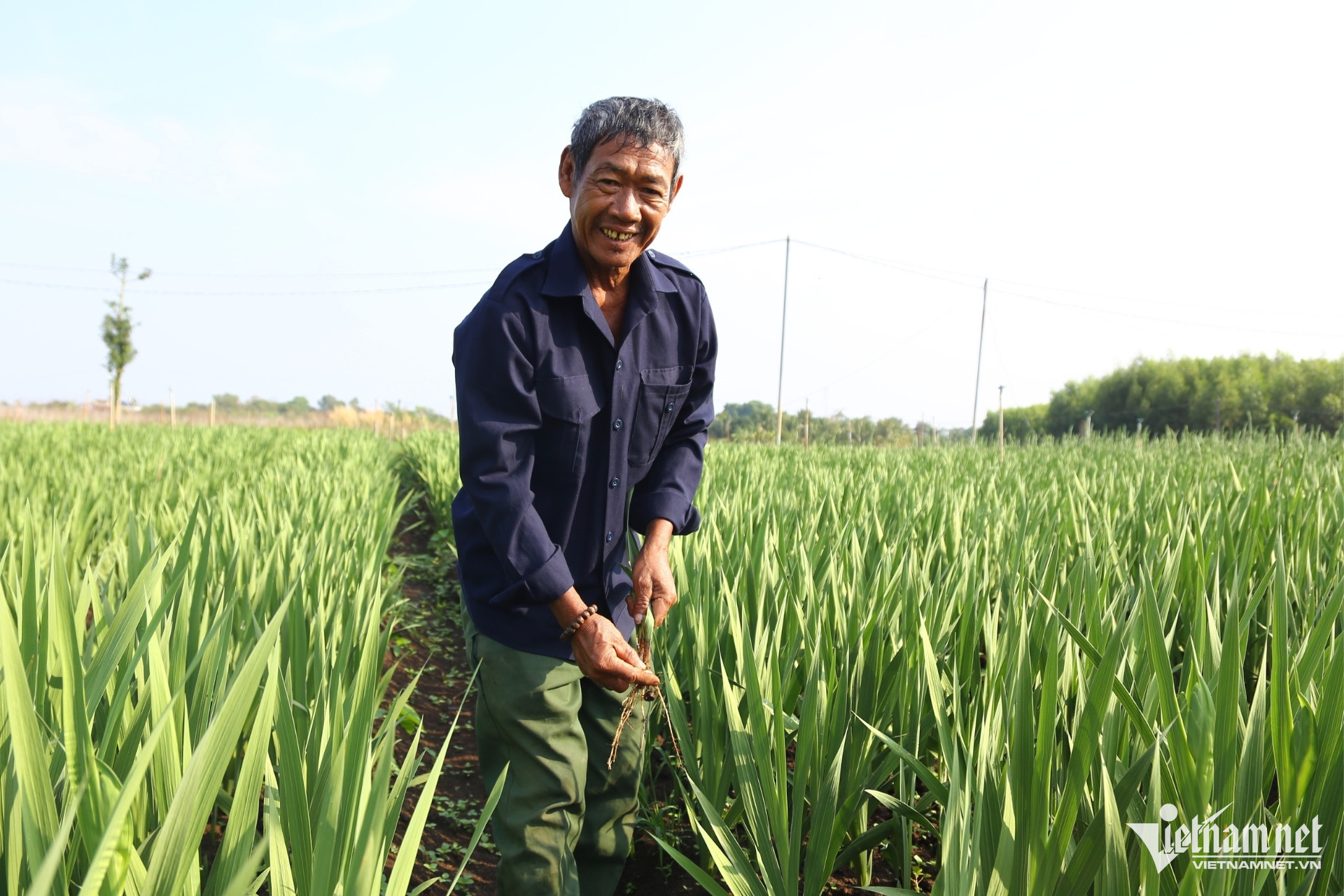
Farmers monitor signs of stress commonly affecting gladiolus. Photo: Hoang Anh
Many expect this year’s crop to be both timely and profitable, as Tet demand appears stable.
If the weather holds steady and the flowers bloom evenly with long, bright stems, prices are likely to stay high, helping families secure a warm and abundant New Year.
Farmer Dinh Van Tin planted more than two sào of gladiolus this year for the Tet market.
With nearly a decade of experience, he says his crop is developing on schedule and is likely to reach harvest just in time for Tet - typically the period with the highest prices.
“At this stage, we can only hope for stable weather,” Tin shared.
“If the flowers bloom uniformly, with straight stems and vibrant color, traders will buy quickly and prices will be more favorable.”
Today, Xuan Loc maintains roughly 30 hectares of gladiolus near the foot of Chua Chan Mountain.
The harvest not only supplies the province but is transported by traders to Ho Chi Minh City and other southern regions.
During the peak period before Tet, trucks arrive continuously, turning the area into a bustling hub of activity.
According to Phan Cao Lam, deputy chairman of Xuan Loc Commune, locals have cultivated gladiolus for over two decades, making it a signature crop for the Tet market.
In recent years, the commune has encouraged growers to shift from traditional varieties to hybrid gladiolus from Lam Dong, which offer higher yields and economic efficiency.
“The commune aims to develop the gladiolus-growing area with a focus on improving product quality and stabilizing market access,” Lam said.
“At the same time, we organize technical training and support access to credit so farmers can invest confidently and expand production.”
Hoang Anh
.svg)
