 Vietnamnet.vn

 Podcast



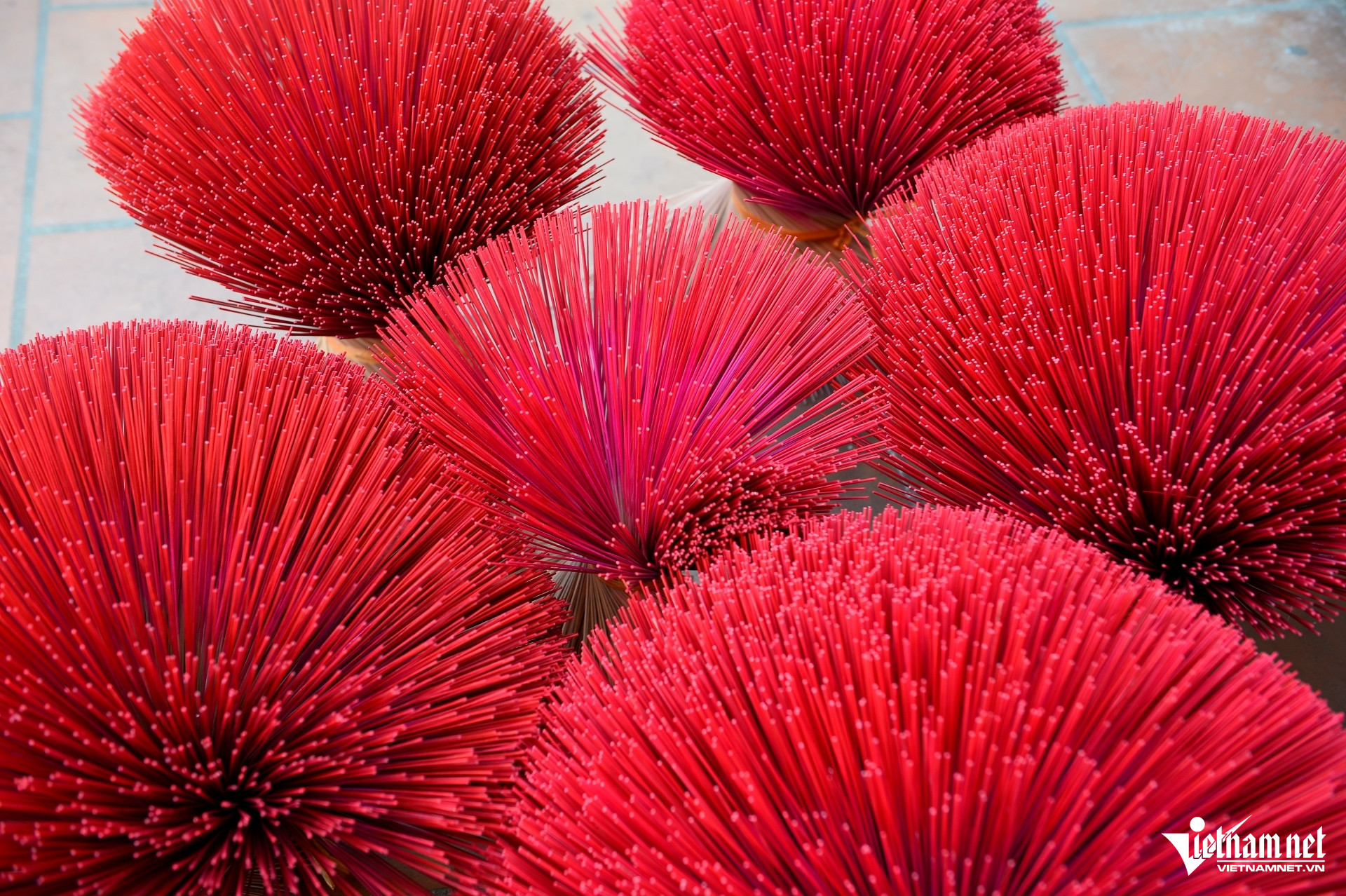
Courtyards fill with rows of deep-red incense sticks drying under the winter sun, releasing a delicate scent that has long become part of the village’s identity.
This traditional craft not only sustains livelihoods but also safeguards a piece of cultural memory passed down through generations.
As the year winds to a close, Dong Khe moves with a steady, bustling rhythm from early morning until dusk.
Along the narrow lanes, villagers work swiftly, rolling incense, dyeing the bamboo bases, and laying fresh batches out to dry.
The fragrance settles gently over the village, a familiar signal that the New Year is near.
Dong Khe is one of Thanh Hoa’s most recognized craft villages specializing in handmade herbal incense.
Across generations, the craft has offered a stable source of income for many families.
Yet it is only during the Tet season that the pace of production truly surges.
Villagers say that during ordinary months, they produce just enough to serve the provincial market and nearby regions.
As Tet approaches, demand intensifies so sharply that households must triple their output.
Bundles of completed incense are packed and shipped continuously, traveling to markets across the country.
Orders arrive without pause, prompting families to call on children and grandchildren to help keep up with production.
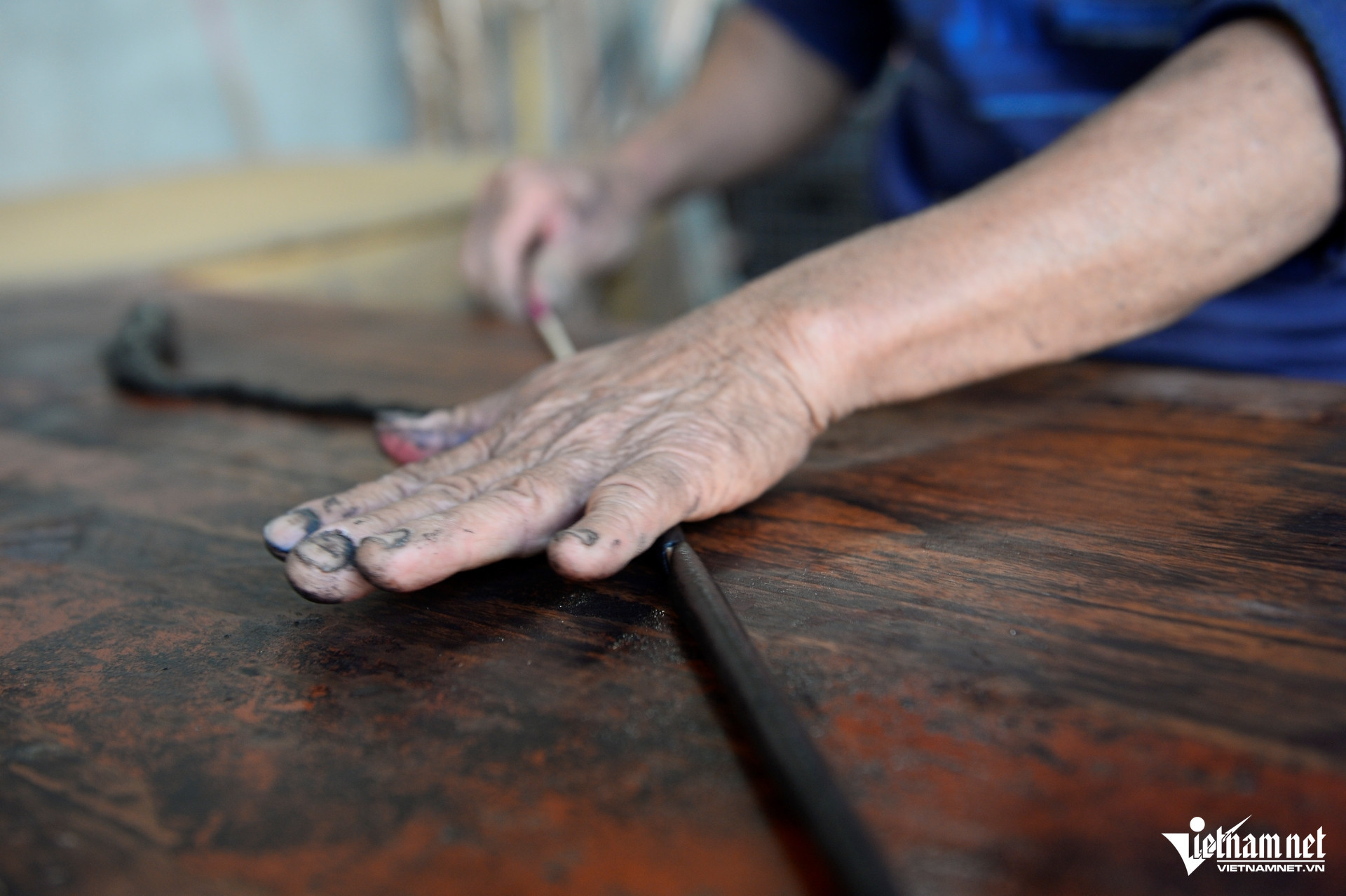
What distinguishes Dong Khe incense is its entirely manual process.
Every step - choosing ingredients, mixing the herbal powder, rolling each stick, and drying them in the sun - relies on the artisan’s touch.
This meticulous, hands-on approach creates a clean, naturally scented product with an unmistakable herbal fragrance unlike industrial incense.
At 66, Doan Van Mau has spent more than four decades devoted to the craft.
For him, incense making is more than a livelihood; it is “the spirit of the village.”
Each stick, he says, is shaped not merely for sale, but also as an expression of reverence and cultural tradition during holidays and ancestral offerings.
“My family is among the few that produce incense year-round,” he shared.
“During the regular months, we make around 100,000 sticks each month.
When the year ends, we have to hire extra workers to produce between 300,000 and 400,000 sticks to meet the market demand.”
His family’s herbal incense has earned a 3-star OCOP certification and is now sold widely in provinces across the country.
Mau explains that traditional herbal incense is made from medicinal plants, tree bark and fine wood powder, giving it a gentle, calming scent when burned.
Its natural fragrance has drawn growing interest, especially as consumers become more attentive to safety and quality.
Local leaders in Hoang Giang commune note that Dong Khe’s incense-making tradition has existed for hundreds of years.
For many households, the craft provides steady income throughout the year.
Yet the Tet season offers an important opportunity for artisans to earn additional savings for holiday preparations and family expenses.
In 2015, the Chairman of Thanh Hoa Province officially recognized Dong Khe as a “Traditional Incense Craft Village.”
To further support the craft, the commune plans to strengthen village branding in connection with rural development programs and tourism.
In the coming years, the commune also intends to open training classes for younger generations, ensuring both new income opportunities and the preservation of a long-standing cultural tradition.
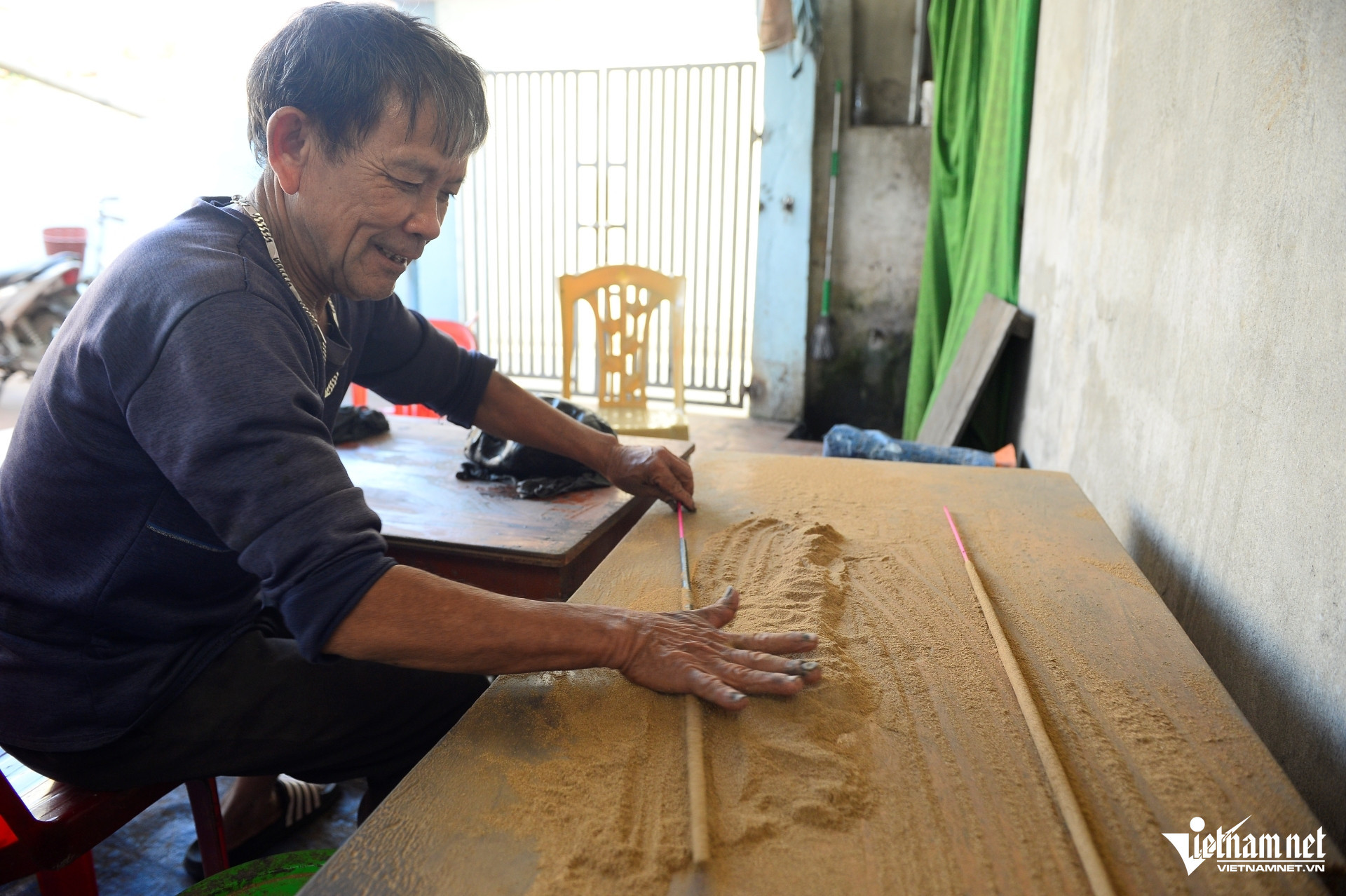
Mr. Mau crafting herbal incense sticks by hand. Photo: Le Duong
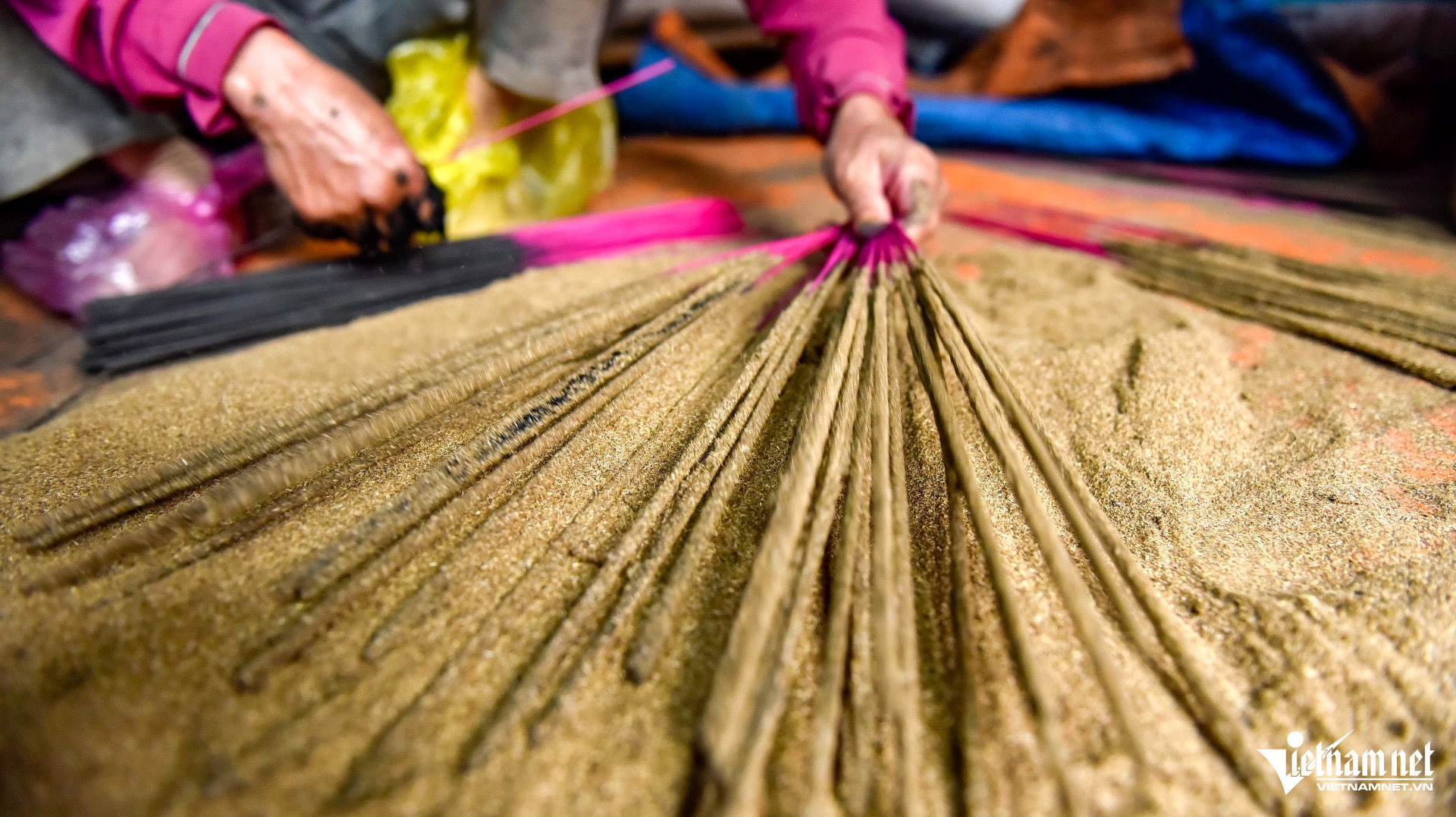
Dong Khe’s herbal incense is consistently in short supply in the days leading up to Tet. Photo: Le Duong

Kneading the incense powder mixture. Photo: Le Duong
Le Duong
.svg)
