 Vietnamnet.vn

 Podcast



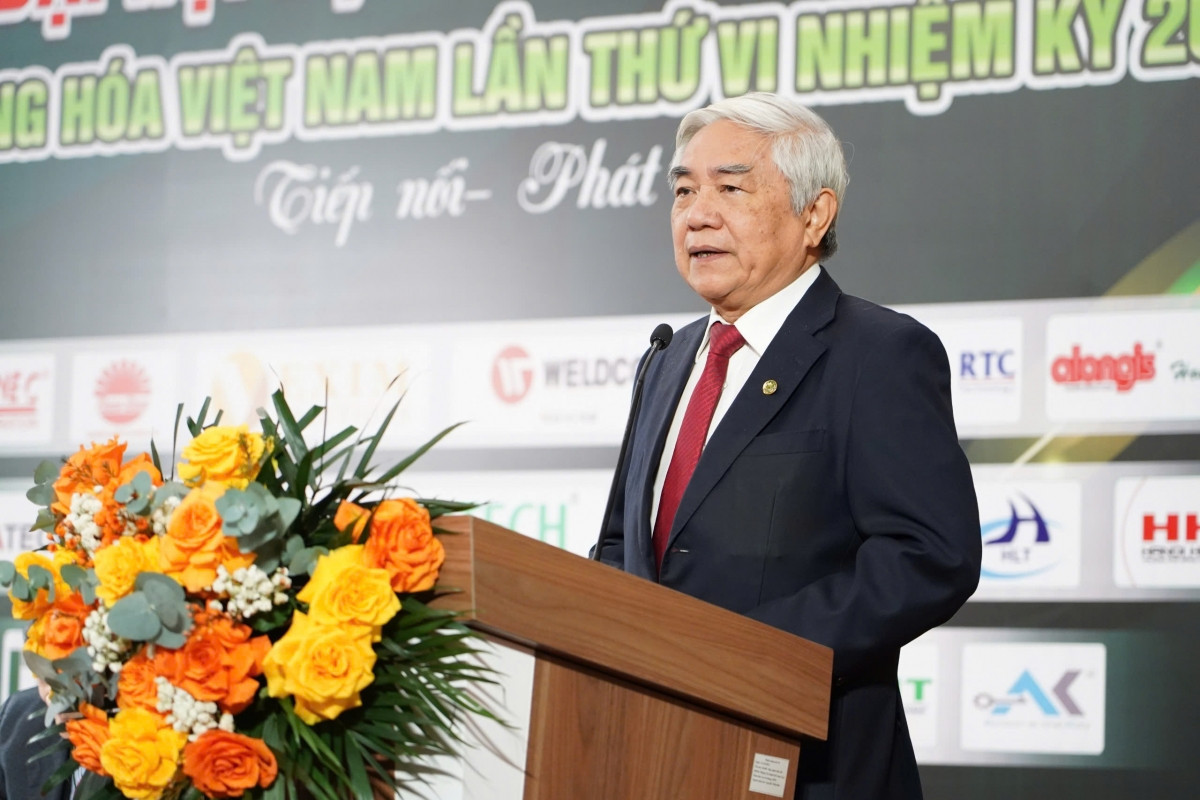
On December 27, the VAA held its 6th National Congress for the 2025–2030 term. The congress adopted the theme “Continuity – Development,” reflecting VAA’s role and determination in the country’s new development phase. Former Minister of Science and Technology Nguyen Quan was elected VAA’s President for the 6th term.
Speaking at the congress, Prof Dr Huynh Thanh Dat, Member of the Party Central Committee and Deputy Head of the Central Commission for Propaganda, Education and Mass Mobilization, emphasized that the Commission values the results achieved by the Vietnam Automation Association during the past term.
Through scientific conferences, technology forums, policy consultancy and critique activities, and business networking, the Association has helped disseminate knowledge, promote automation in production, services, infrastructure, and social life, and support Vietnamese enterprises in accessing modern technical solutions, thereby enhancing competitiveness.
He noted that the Association’s image is increasingly associated with professionalism, responsibility, and creativity, becoming a trusted partner for state management agencies in policy consultation, as well as a bridge connecting scientists with businesses and bringing technology from research into real-world production.
The Association’s reputation has been affirmed not only domestically but also internationally through cooperation, integration, and expert exchange activities in the automation field.
Dat also pointed out that Vietnam is entering a historic transformation period, strongly influenced by the 4.0 Industrial Revolution, with a focus on AI, big data, robotics, digital control systems, and cyber-physical systems. This new technology wave is fundamentally reshaping production, business, and social governance worldwide.
He said large global economies are restructuring value chains toward smart manufacturing and high automation, gradually reducing reliance on low-cost labor while increasing scientific and technological content.
In this context, automation is no longer merely a technical field but has become a foundational capability of a modern industrial nation, playing a decisive role in productivity, quality, competitiveness, and economic autonomy.
Quan, VAA’s President for the 5th term, said the country is implementing the Politburo’s Resolution No57-NQ/TW on the development of science, technology, innovation, and national digital transformation. In this context, the role of VAA has become increasingly important, requiring the Association to carry out its mission of mobilizing scientists, research institutes, universities, and businesses to implement the breakthrough contents of Resolution 57.
He said this is a challenging task, but Resolution 57 has created the necessary tools and conditions to achieve these important goals. This places high demands on unity, consensus, and the promotion of collective intelligence among VAA members, especially those from research institutes, universities, and the business community, which has promoted digital transformation and achieved significant successes in recent years.
In the coming period, VAA will focus on key development directions such as enhancing the effectiveness of the Business and Trade Promotion Committee, with an emphasis on supporting enterprises, removing obstacles, and disseminating scientific research outcomes and new technologies to automation businesses.
The Association will provide consultancy and support to enterprises in scientific research activities, project development, and the growth of science and technology enterprises.
Resolution 57 has fostered a strong consensus and determination within the technology business community, opening up a strategic space for enterprises to engage more deeply in the advancement of science and technology.
Earlier, at the workshop “Robots and Intelligent Automation”, one of five discussions in the “Science for Life” series held during VinFuture Science and Technology Week 2025 in early December 2025, international scientists all agreed that this is a rare opportunity for Vietnam to break through in the automation era.
Despite many challenges, the new wave of technology is creating strong momentum for countries to innovate and adapt. Ho-Young Kim from Seoul National University said Vietnam has a flexible supply chain, large-scale laboratory infrastructure, and an increasingly high-quality workforce, an ideal context for translating physical AI research into practical applications.
He noted that bringing together leading global experts in Hanoi would shorten the pathway from laboratory to factory, accelerate knowledge transfer, and enhance the capacity to deploy technology responsibly in fast-growing economies.
The connective power of VinFuture can become a catalyst for building sustainable relationships among academia, industry, and policy, turning knowledge into real-world value that contributes to Vietnam and the wider world.
Thai Khang
.svg)
