 Vietnamnet.vn

 Podcast



At the 2025 national conference on science, technology, innovation, and digital transformation, FPT Chairman Truong Gia Binh emphasized that mastering core technologies is the foundation for realizing Resolution No. 57, ensuring Vietnam’s technological sovereignty and long-term growth.
Binh affirmed that Resolution No. 57 has created strong unity and determination among Vietnam’s technology enterprises, opening strategic space for deeper participation in national science, technology, and digital transformation initiatives.
On December 25, the Central Steering Committee for Science, Technology, Innovation, and Digital Transformation held its 2025 year-end conference to review results and set key tasks for 2026.
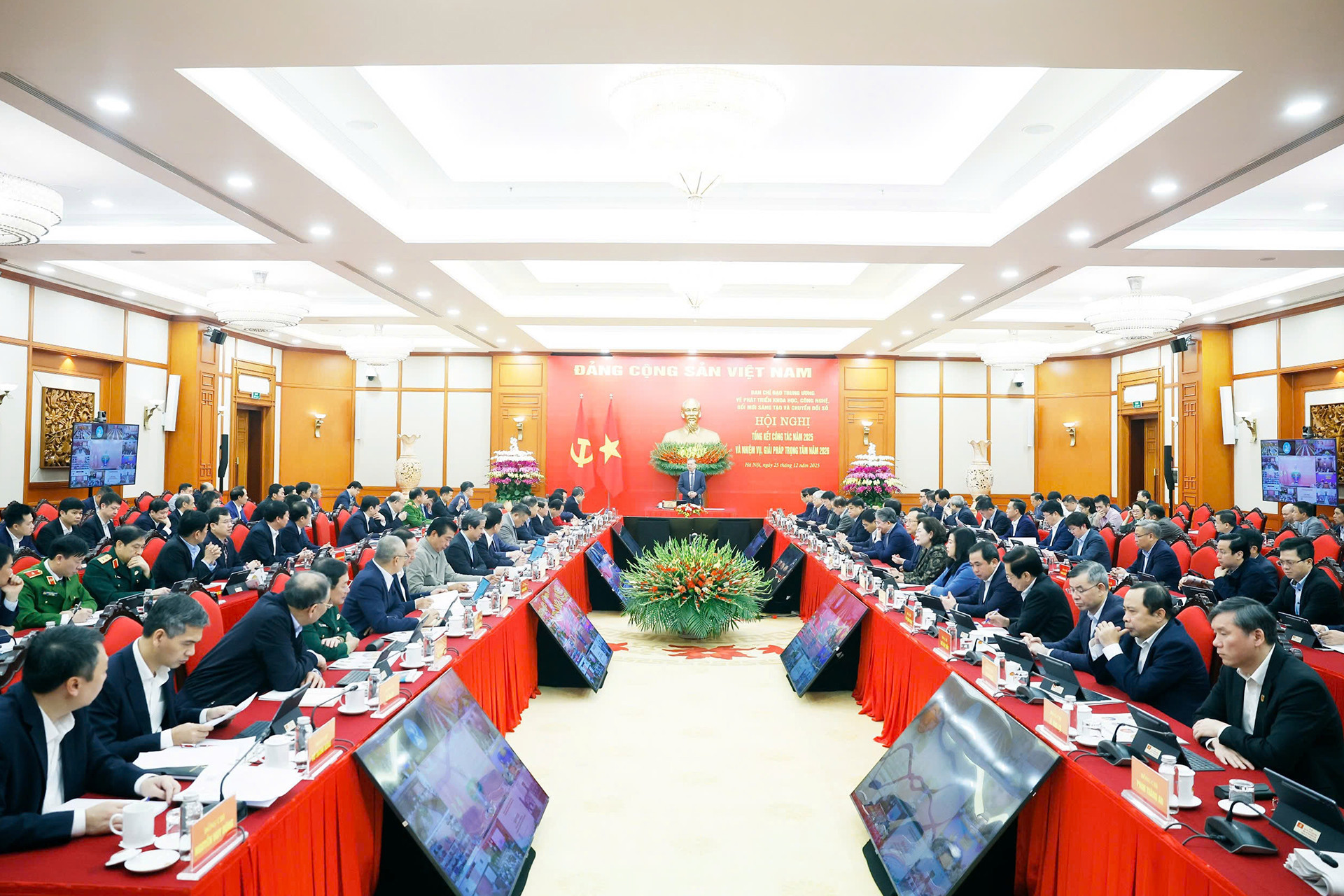
Progress in national digital transformation
By the end of 2025, 53.3% of national public services were offered online, with 31.36% fully digital end-to-end. At the local level, online provision reached 93.9%, with 45% fully online.
The expansion of digital public services helped save around 4.1 trillion VND (USD 160 million) for citizens and businesses.
The National Public Service Portal was upgraded to a “one-stop” digital gateway in mid-2025, enabling the two-tier local government model.
Digital transformation within the political and administrative system accelerated, with paperless meetings, digital document management, and integrated operational platforms in use nationwide.
National digital infrastructure also expanded rapidly, placing Vietnam’s internet speed among the world’s top 20 and 5G coverage reaching nearly 59% of the population. The first National Data Center has been established, forming the backbone of Vietnam’s digital government, economy, and society.
Core technology as a pillar of sovereignty
At the event, Truong Gia Binh emphasized that in a world of growing complexity, technology has become inseparable from sovereignty, security, and economic independence.
Following the spirit of Resolution 57-NQ/TW, FPT has adopted a strategic shift from pure business growth to long-term investment in core technologies - positioning them as the foundation for sustainable development and meaningful national contribution.
Currently, FPT employs around 85,000 engineers and staff across more than 30 countries, focusing on artificial intelligence (AI), cybersecurity, quantum technology, data, and digital infrastructure.
Binh revealed that FPT University is transitioning from a practice-based model to a research-oriented institution, integrating AI research into all academic programs. Students begin research from their first year, publishing around 270 international scientific papers annually.
FPT launches $100 million Quantum AI & Cybersecurity Institute
On December 3, FPT established the Quantum AI & Cyber Security Research Institute (QACI) and pledged $100 million in investment.
The initiative aims by 2035 to:
Train 100 PhD researchers
Develop 2,000 technology specialists
Publish 500 papers and patents in advanced tech fields
FPT’s strategy now centers on “co-creation” rather than “self-production,” based on three principles: shared goals, shared actions, and shared responsibility.
For example, the company has collaborated with Da Nang to digitize land data, and with Quang Ninh to bring Resolution 57 implementation to the grassroots level.
FPT also promotes the concept of “data born to be used,” building open and interoperable data systems.
The company has co-founded the Âu Lạc AI Alliance, developing a Vietnamese large language model comparable to ChatGPT, trained on 112 billion tokens with 70 billion parameters, and serving about 5 million regular users.
In the semiconductor sector, FPT-designed “Make in Vietnam” chips have been successfully exported to Japan and South Korea.
Four key proposals from FPT
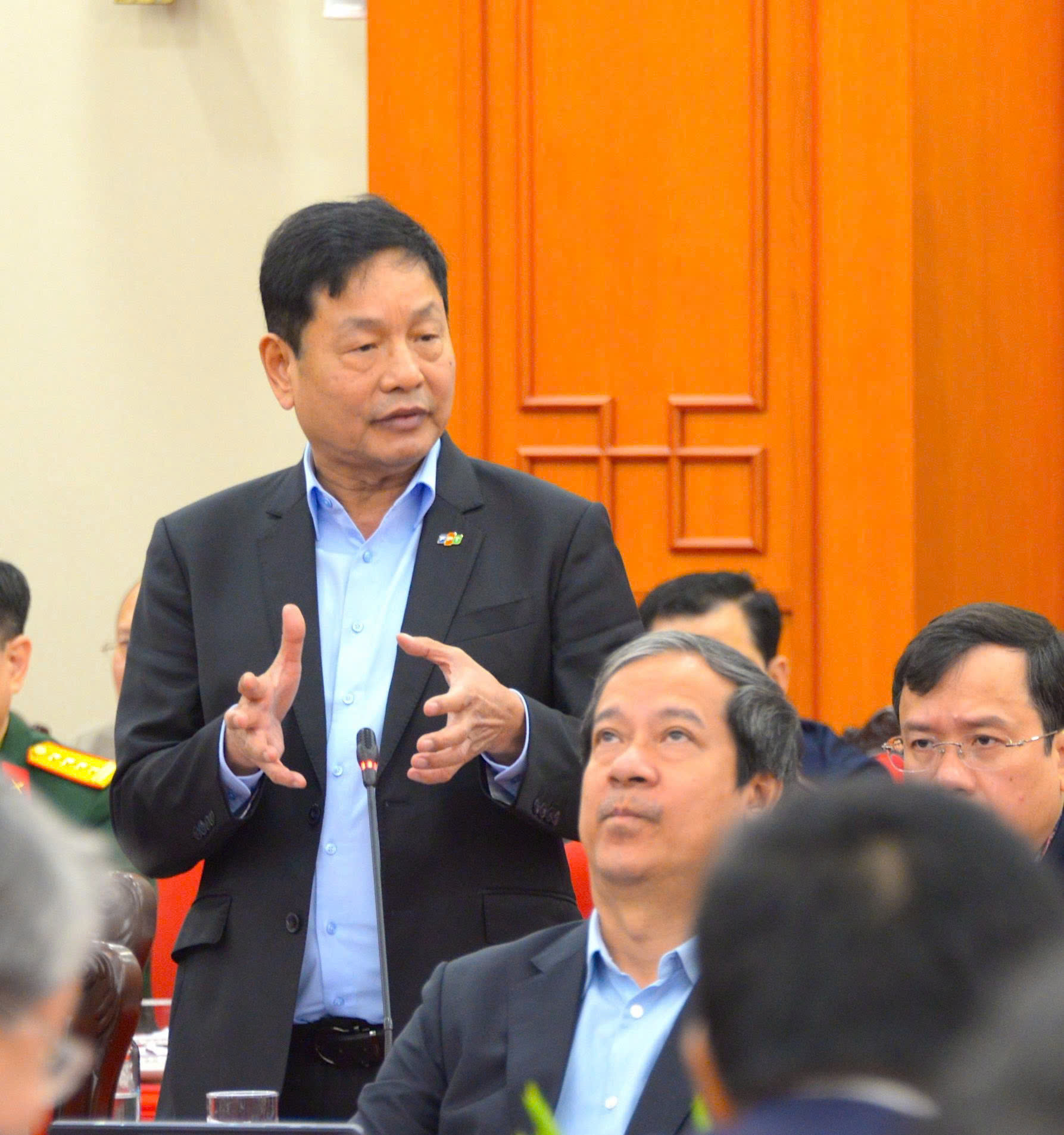
At the conference, Truong Gia Binh presented four major proposals to accelerate the implementation of Resolution 57:
Build core technology platforms for digital government, with AI as the foundation for national governance, security, and digital economy development.
Form a National Cyber Defense Alliance connecting domestic security products under the “Make in Vietnam” initiative, and invest in high-level systems to safeguard national digital infrastructure.
Adopt a “public–private co-creation” model to encourage experimental investment in emerging technologies, particularly in low-orbit economy, semiconductors, and smart railway systems, enabling domestic mastery of operation and control technologies.
Develop railway infrastructure technology, ensuring mastery of operation, control, and protection systems - a field where FPT seeks deeper participation alongside ministries and provinces.
Binh reaffirmed FPT’s commitment to invest heavily in core technologies in line with Resolution 57, contributing to a self-reliant, modern, and globally integrated Vietnamese science and technology sector.
Building human capital for the new technological era
In May 2025, enterprises launched the Strategic Human Resource Alliance to implement Resolution 57. The alliance aims to develop a high-quality workforce of scientists, engineers, and administrators, capable of driving Vietnam’s socio-economic transformation and digitalization.
At the event, Binh echoed General Secretary To Lam’s message from Resolution 68-NQ/TW:
“Entrepreneurs are soldiers on the economic front.”
However, he added, today’s battle is not fought with weapons but with knowledge, technology, and AI-driven human capital.
“If in 1945 Vietnam needed mass literacy campaigns,” Binh said, “then today every citizen must learn technology - especially artificial intelligence - to keep pace with the world.”
He urged that every student in Vietnam should gain AI knowledge and digital skills, capable of working with global experts.
“We must cultivate a generation equipped with AI knowledge and technological creativity - the new ‘digital soldiers’ who will lead Vietnam into the future,” Binh declared.
Thai Khang
.svg)
