 Vietnamnet.vn

 Podcast



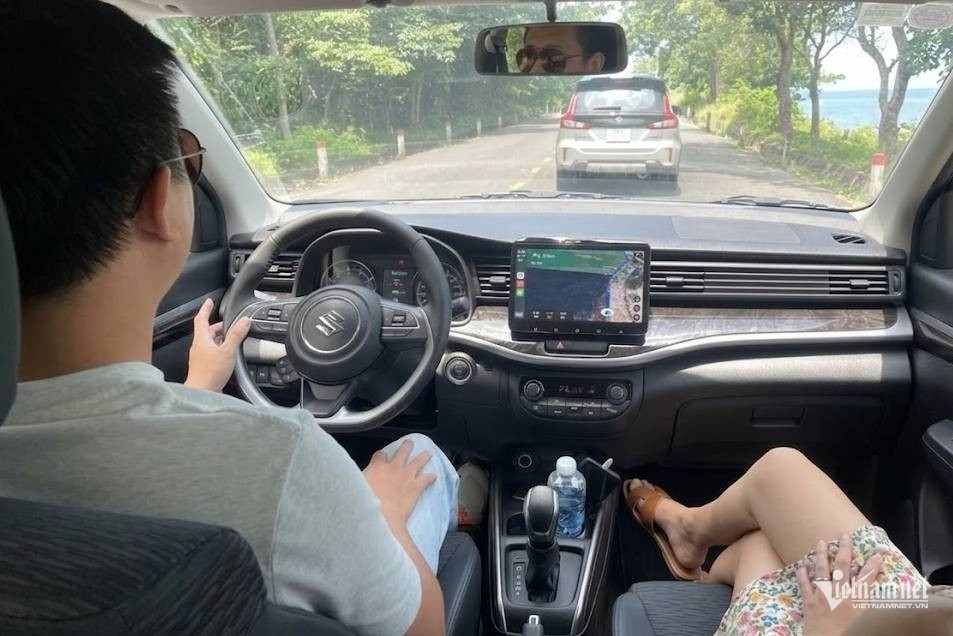
The regulation has raised concerns among drivers who share rides and split fuel and toll expenses.
The Ministry is currently gathering feedback on a draft decree to amend and supplement several articles of Decree 168/2024/ND-CP regarding administrative penalties in road traffic order and safety. The draft proposes stiff penalties for using private vehicles to carry passengers for profit, aiming to crack down on private, disguised "pirate buses."
Clause 8a is proposed to be appended to Clause 8, Article 20 of Decree 168: "A fine ranging from VND 12 million to 14 million shall be imposed on drivers of non-commercial private vehicles but transport passengers for money, execute transport contracts, or accept reservations to carry passengers."
Additionally, violating drivers will have six points deducted from their driving licenses.
This is viewed as an exceptionally harsh penalty, signaling authorities’ determination to address the increasingly common situation of private vehicles operating as disguised passenger transport services.
In reality, on social media, it is easy to find the so-called "convenient trip carpool" groups operating overtly. By simply posting passenger recruitment notices on Facebook, Zalo, or ride-sharing forums, many private car owners can turn their personal vehicles into unlicensed commercial transport operations.
In numerous cases, private drivers operate two to three interprovincial trips daily, picking up passengers along the road and collecting fares similarly to taxis or 16-seat luxury limousines.
However, they don’t register at bus stations or comply with commercial transport prerequisites such as badging, tracking devices, or tax obligations. This creates an unfair competitive environment for legitimate transport enterprises while causing tax leaks for the state budget.
Dang Thanh Cong (Thanh Xuan, Hanoi), an interprovincial bus driver, said: "Private cars operating as 'carpools' or 'convenient trips' are really commercial services. Many aggressively compete for passengers and park arbitrarily, creating congestion and traffic safety hazards, yet they remain difficult to control because they lack business registration."
"Increasing sanctions to tighten oversight on disguised contract cars and illegal carpools is essential to bring transparency to the passenger transport market," Cong added.
Commuters sharing fuel costs fear collateral damage
However, alongside widespread consensus, many individuals expressed deep anxiety over the new regulation, particularly those who participate in genuine carpooling and contribute to fuel costs, highway tolls, or parking fees.
Pham Minh Tuan (Ha Dong, Hanoi), who works at an industrial park in Bac Ninh Province, shared that he drives roughly 30 kilometers daily from Hanoi to work and routinely picks up two to three colleagues employed at the same industrial park. For each trip, each companion contributes about VND100,000.
"We live close to each other and realized we share the same commute, so we formed a Zalo group to coordinate rides - deciding whose car to take and at what time. Everyone voluntarily sends money to share fuel expenses. However, interpreted strictly under the draft regulation, I could still face heavy fines," Tuan said.
Do Hoang Tung, a hardwood flooring supplier and installer who frequently commutes from Hung Yen Province to Hanoi in a pickup truck, expressed hesitation.
"Before every trip to a construction site, I usually post on hometown forums to see if anyone traveling the same route wants a ride to help offset fuel costs. But if accepting reservations to carry people on a vehicle triggers a VND14 million fine, I will not dare to do it anymore," Tung said.
Many individuals working in suburban areas or neighboring provinces around Hanoi noted that carpooling has become highly popular amid escalating commuting costs. Sharing minor expenses when riding together slashes financial pressures while curbing the volume of vehicles in circulation.
Pham Thi Thu in Bac Ninh Province said: “Every time I travel to Hanoi, I post on my residential community group to check if anyone wants to tag along. Since we are all acquaintances, I send a small contribution for expenses after each ride, and everyone is satisfied.”
According to Thu, this method of travel is comfortable, convenient, and spares her from driving herself. And the shared cost is not significantly higher than a standard bus fare.
Experts suggest that authorities must issue clear guidelines to differentiate between disguised commercial transport operations and supportive, voluntary carpooling among acquaintances, colleagues, or travelers sharing identical routes. The key issue lies in the nature of the activity.
Vu Diep
.svg)
