 Vietnamnet.vn

 Podcast


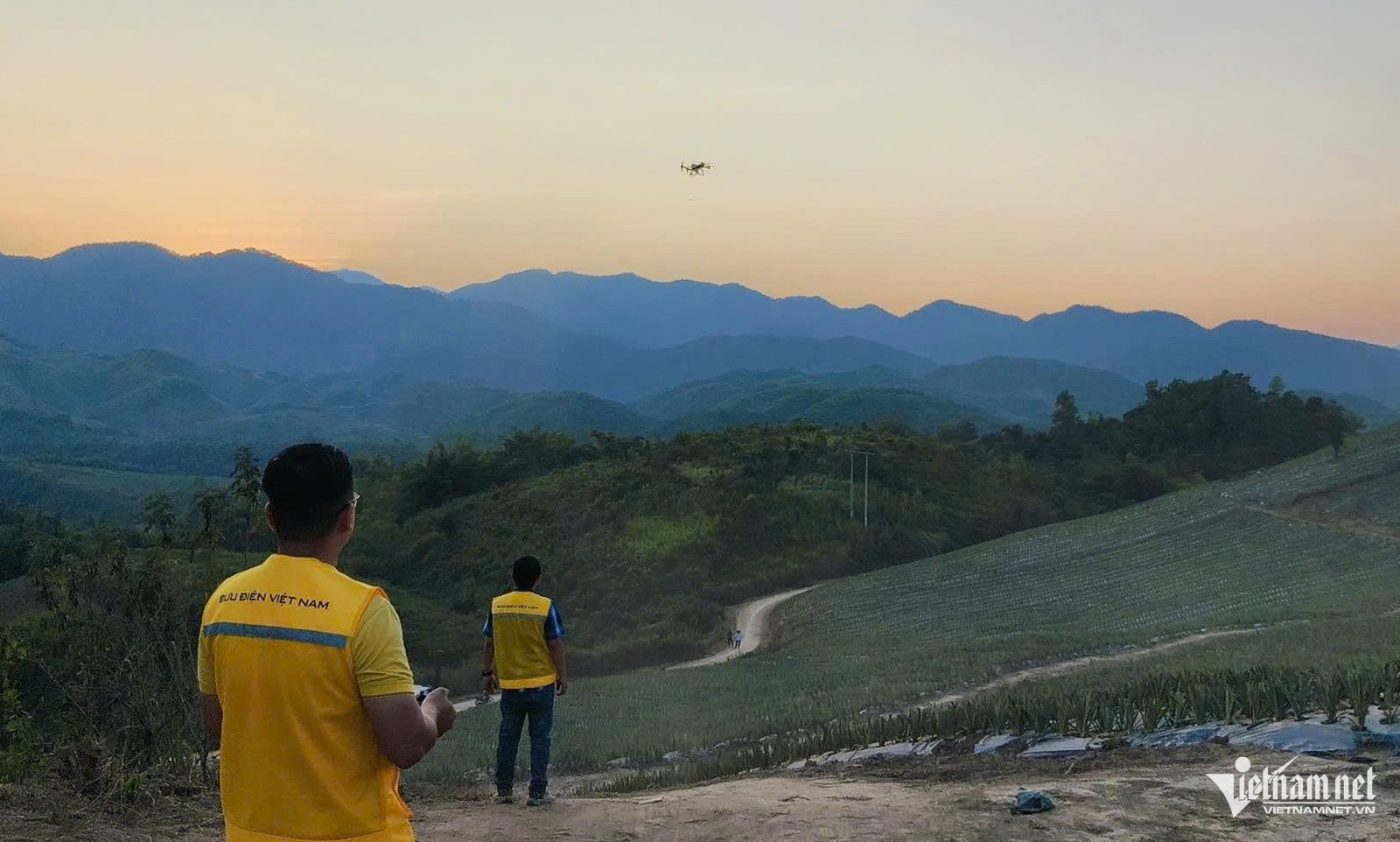
Using drones to overcome challenging terrain
Fragmented terrain, scattered settlements and long distances between production areas and collection points pose significant challenges to goods transportation in many mountainous regions. For seasonal agricultural produce, delays in collection can affect preliminary processing schedules and the quality of raw materials.
In Dien Bien Province, Vietnam Post is deploying unmanned aerial vehicles (UAVs) to transport goods, opening up new opportunities for logistics development in areas with limited transport infrastructure.
On September 21, 2026, Vietnam Post officially launched its drone-based goods and agricultural produce transportation service in Muong Ang Commune, Dien Bien Province.
The initiative focuses on transporting coffee from hillside harvesting areas to collection points, where it is transferred to road transport vehicles for delivery to purchasing facilities, cooperatives or processing establishments.
According to Vietnam Post, some coffee and macadamia growing areas in Muong Ang are located approximately four to five kilometres from collection and purchasing points.
Steep terrain and narrow, difficult roads make transporting agricultural produce during harvest season particularly labour-intensive. Drones are deployed to cover this segment of the transportation journey, with a reported payload capacity of around 50kg per flight.
By mid-October 2026, the initiative had completed more than 100 flights transporting coffee from harvesting areas to collection points before connecting with road transport services within the existing logistics network.
Transportation services are organised according to local demand. Farming households register their requirements, while the operator receives requests, schedules flights and coordinates collection and delivery in accordance with its operational plans.
In mountainous production areas, transporting agricultural produce from harvesting sites to collection points typically requires considerable time and effort.
The application of UAV technology can reduce manual transportation requirements and shorten the time needed to deliver agricultural produce to preliminary processing and processing facilities.
For coffee and other agricultural products requiring timely post-harvest handling, improving transportation efficiency is particularly important in maintaining raw material quality, minimising losses and enhancing product value.
Expanding low-altitude logistics applications
Chu Quang Hao, General Director of Vietnam Post, said technology is a key driver of innovation in postal and logistics operations. UAVs represent an emerging technology that Vietnam Post has proactively researched and tested to assess its practical applications.
With an extensive service network reaching communes, villages and remote settlements, Vietnam Post is exploring the potential of UAVs in areas with challenging terrain, long transportation distances or limited conventional transport options, particularly for time-sensitive goods.
“For Vietnam Post, participating in the development of the low-altitude economy is not simply about adopting a new means of transportation. More importantly, it involves integrating our existing physical network with technology to develop new, more efficient logistics solutions that better serve residents, businesses and local communities,” Hao emphasised.
According to Phan Long Giang, Director of Dien Bien Provincial Post, the effectiveness of UAV applications is assessed across the entire transportation journey, from collection, consolidation and delivery to operational costs and service quality.
Beyond supporting agricultural production, Vietnam Post has proposed expanding research into UAV applications based on the Muong Ang initiative.
Potential applications include transporting postal items, delivering essential goods to communities isolated by natural disasters, transporting medicines, medical supplies and clinical specimens, supporting search and rescue operations, and assisting forest management and protection.
Nguyen Van Doat, Vice Chairman of the Dien Bien Provincial People’s Committee, said the province’s extensive and fragmented terrain, combined with its dispersed population, creates demand for UAV applications across multiple sectors.
The province aims to develop models with measurable outcomes and scalability while ensuring compliance with requirements concerning national defence, security, airspace sovereignty and data security.
Infrastructure development, greater application of science and technology, support for value chain-based production and improved access to essential services are important components of the National Target Programme for socio-economic development in ethnic minority and mountainous areas.
Starting with coffee transportation flights in Muong Ang, the integration of technology into logistics is offering new solutions to the distinctive challenges facing mountainous communities.
These innovations are creating opportunities for local residents to capitalise on their agricultural strengths, increase incomes and develop sustainable livelihoods.
Duy Anh

