 Vietnamnet.vn

 Podcast



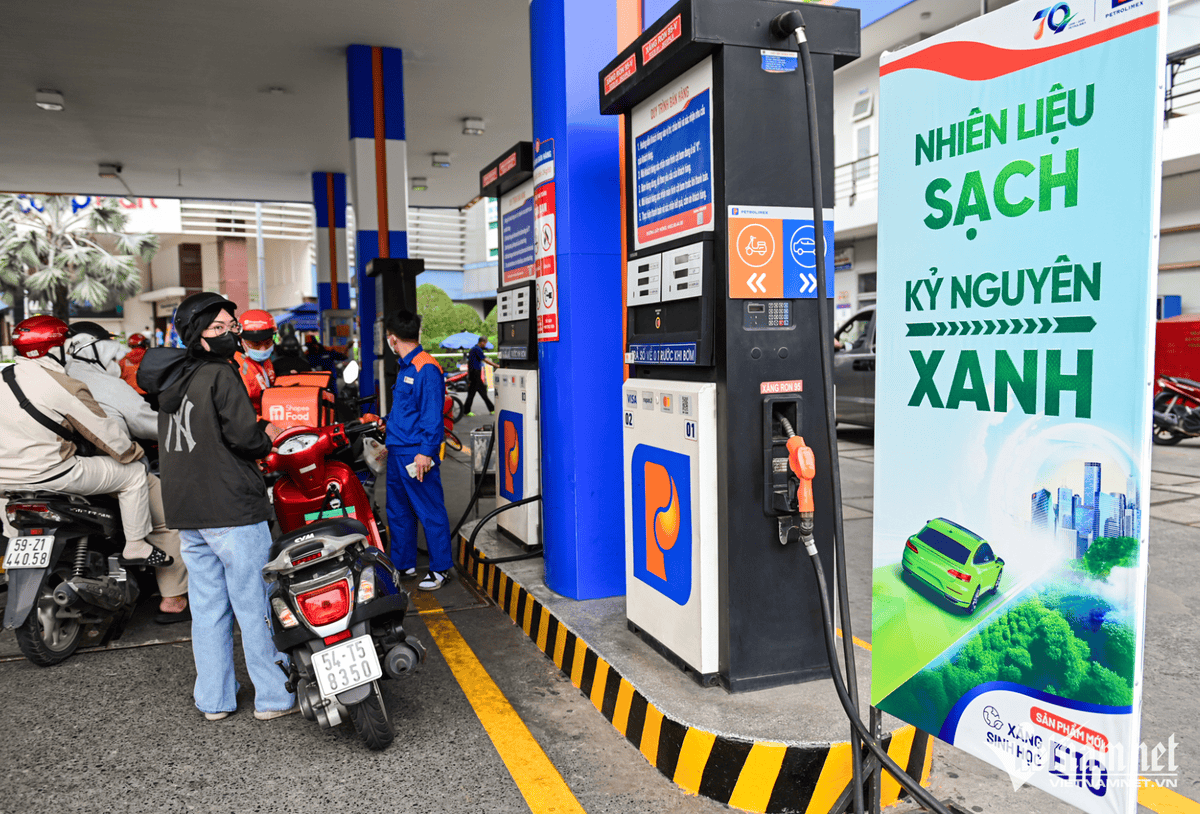
Bui Ngoc Bao, chair of the Vietnam Petroleum Association, said Vietnam's Biofuel Program was implemented by the Government very early. In 2014-2015, Vietnam began the E5 gasoline program across the country.
Under the original roadmap, after E5 the country was supposed to continue deploying E10 gasoline during the 2020–2022 period. However, due to a lack of coordinated implementation, E10 has been delayed compared with expectations, he noted.
Besides E5 and E10 gasoline, there are also other biodiesel blends such as B5 and B10. Biofuels therefore play an important role in achieving environmental protection goals, promoting green transition, and reducing greenhouse gas emissions.
With blending ratios of 5–10 percent such as E5, E10, B5, and B10, Vietnam can reduce its dependence on fossil fuels. This is particularly meaningful for an economy that has a large agricultural sector. The biofuel program not only creates demand for agricultural products such as cassava and corn but also strengthens the link between agriculture and the processing industry.
Bao emphasized that if Vietnam consumes about 26–26.5 million m3/tons of petroleum products each year, a 10 percent blending ratio would replace a significant amount of fossil fuel. If implemented effectively and eventually expanded to blends such as E15, E20, B15, or B20, as seen in some countries, the reduction in dependence on imported fuels would be even more evident.
“Vietnam currently meets only about 70 percent of domestic fuel demand, while the remaining 30 percent must be imported. Therefore, any program that helps reduce reliance on fossil fuels has strategic significance,” Bao said.
Regarding readiness for nationwide blending and distribution of E10 gasoline, Bao said petroleum businesses had prepared for this for a long time thanks to their experience with E5 deployment.
By June 1, when E10 is implemented nationwide to replace mineral gasoline, companies will need to restructure their technical systems, raw material sources, and market plans. Businesses without facilities have worked with major distributors to lease blending and storage services.
“Companies are now eager to accelerate the nationwide distribution of E10 gasoline to reduce reliance on mineral gasoline amid the global energy crisis,” Bao said.
1.1 million m3 of ethanol needed for E10 blending
Ho Ngoc Linh from Petrolimex said that since August 2025 the company had piloted E10 gasoline sales in HCMC.
After the issuance of Circular 50, Petrolimex implemented multiple measures simultaneously, including upgrading technical infrastructure at blending depots and developing a conversion plan across its system.
“Currently, Petrolimex has seven blending depots ready to produce E10 gasoline nationwide. Together with a network of more than 2,800 fuel stations, we have prepared the necessary infrastructure and built an appropriate transition roadmap.
“Petrolimex is striving to move faster than the schedule outlined in Circular 50,” Linh said.
Regarding ethanol demand, Linh said that based on Petrolimex’s network of fuel stations, the group estimates that 45,000–50,000 m3 of ethanol (E100) will be required each month for blending E10 gasoline.
In addition to domestic E100 supply, since early March Petrolimex has negotiated with partners from the US, Singapore, and South Korea to sign both long-term and short-term contracts, ensuring stable E100 supply for E10 blending and meeting assigned energy security requirements.
According to Do Minh Quan from the Ministry of Industry and Trade (MOIT), biofuel will be implemented nationwide starting June 1, 2026.
Reports from petroleum traders show that total gasoline consumption in 2025 reached about 11.37 million m3. Therefore, when switching to E10 biofuel gasoline under the roadmap, the estimated ethanol requirement for blending will be around 1.1 million m3.
Vietnam currently has six ethanol plants. If operating at full design capacity, their output could reach about 400,000–500,000 m3, meeting 40 percent of domestic E100 demand. As a result, in the early stage of the roadmap implementation, Vietnam will still need to import about 60 percent of ethanol.
MOIT is coordinating with ministries, associations, and businesses to support ethanol imports while promoting the reopening of plants that are currently closed or operating below capacity. Once the market stabilizes, restoring and expanding domestic production will help Vietnam gradually become more proactive in securing E100 supply and reduce dependence on imports.
Bao said the most suitable supply sources for E100 imports are the US and Brazil.
Tam An
.svg)
