 Vietnamnet.vn

 Podcast



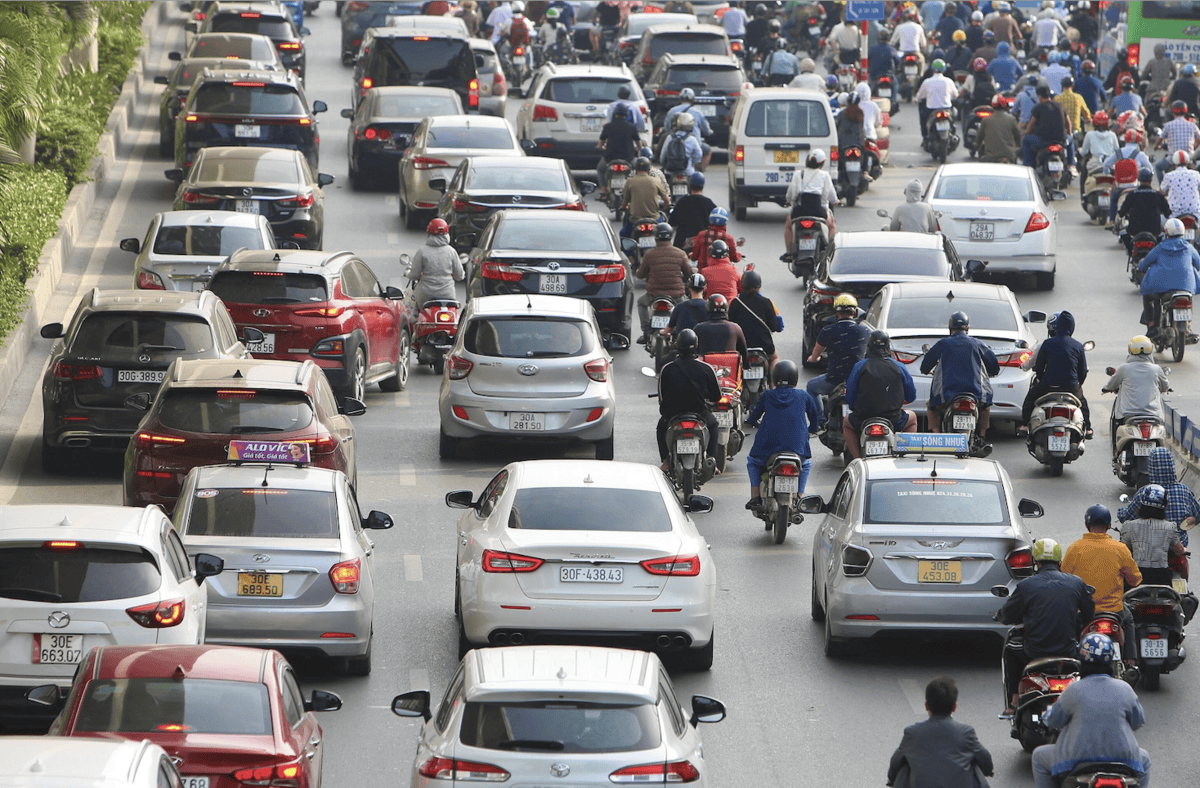
At the seminar "Transitioning to E10 gasoline: Is the market ready?" on January 27, Associate Prof Dam Hoang Phuc (Hanoi University of Science and Technology) noted that E10 has long been used worldwide, forcing vehicle manufacturers to research and adapt. The car he currently uses can run on E20, as committed by the manufacturer.
Users can check the fuel cap: if the manufacturer say it is “Euro 5 E20,” this means the vehicle can use this kind of fuel.
"The biggest risk does not lie in E10 gasoline, but in using the wrong fuel," Phuc emphasized, adding that consumers need to understand whether their vehicles meet Euro 3, Euro 4, or Euro 5 standards to choose the correct gasoline.
He said ethanol is a solvent that does not affect mechanical parts but can impact non-metallic materials such as gaskets, seals, and rubber. Therefore, car manufacturers must ensure that materials and components meet compatibility requirements when fuel standards change.
For vehicles that do not have the E symbol when opening the fuel cap, usually models used for over 20 years, Phuc believes they need more careful maintenance, especially the entire fuel system. This is mandatory because even without using E10, components in the fuel system need periodic inspection and replacement to ensure safety and stable operation.
Phuc explained that ethanol has cleaning properties, so it can cause longstanding deposits in the fuel tank to dissolve faster and enter the engine through the fuel system. However, in newer car models, fuel tanks and systems have been improved, so sedimentation rarely occurs. Conversely, with motorcycles, especially older models, this risk may still exist, so users need to be cautious when switching to E10.
"In essence, using E10 only makes the deposit dissolution process happen faster, rather than E10 generating deposits itself. Users need to correctly understand the nature of this issue," Phuc said.
Phuc said that ethanol is hygroscopic, which increases the water content in fuel, potentially affecting engine combustion, especially for vehicles using carburetors. Therefore, besides complying with fuel quality standards and regulations, it is necessary to ensure a fast enough circulation cycle to limit the risk of water absorption.
Phuc also said he once participated in a study on comparing RON95, E5-RON95, and E10-RON95 gasoline in coordination with Toyota. The results showed that engine power may decrease because the heating value of ethanol is lower than traditional gasoline. However, a higher octane rating helps the combustion process take place more efficiently.
Accordingly, depending on the operating mode, engine power levels will differ. Accurate evaluation should be based on specific experimental scenarios and specialized measuring equipment. Results showed that power still remains within an oscillation margin of approximately ±5 percent. When power decreases, fuel consumption may accordingly increase by about 1–3 percent during use.
Regarding fire and explosion risks, Phuc said ethanol has a higher ignition temperature than gasoline, so its flammability is lower. In addition, the national technical standards system (QCVN) has been established to control safety, meaning blending does not make fuel more flammable and users can be reassured.
"From a technical perspective, I believe concerns surrounding E5 and E10 do not lie in the nature of the technology, but mainly stem from the quality of implementation. If the fuel meets standards, infrastructure is well-controlled, and there is clear coordination between regulators, businesses, and car manufacturers, then E10 will be a safe transition contributing to emission reduction," Phuc emphasized.
Bui Ngoc Bao, Chair of the Vietnam Petroleum Association, believes that users need to clearly understand which fuel is suitable for their vehicle and what standards it meets to use it correctly. On the other hand, petroleum businesses must strictly comply with regulations, providing the correct fuel types according to announced standards.
According to Bao, in practice, most disputes among consumers, retail agents, and car manufacturers do not originate from poor fuel quality, but mainly from fuel types that do not meet vehicle requirements. In some cases, gasoline still meets quality standards, but the vehicle requires a higher rating, while the user uses a lower-rated fuel. For cars, such mismatches can lead to serious consequences and complex disputes among parties.
Tam An
.svg)
