 Vietnamnet.vn

 Podcast



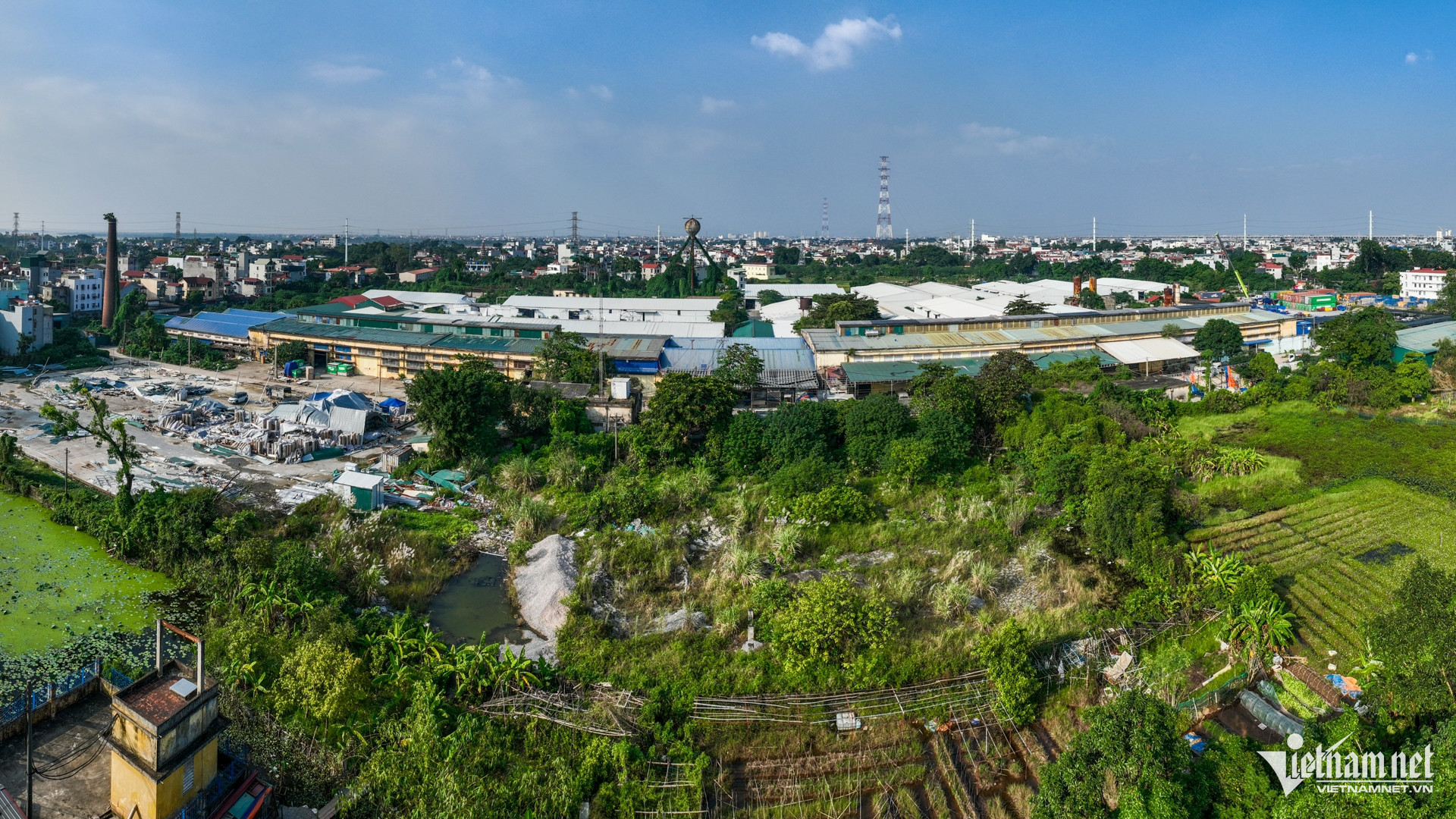
At the plenary discussion session of the first meeting of the 16th National Assembly, one delegate proposed applying a land-use fee based on efficiency and the time the land is put into use.
Specifically, projects delayed for more than 24 months should be subject to fees that increase over time. For second and subsequent homes/land plots that are not used or leased, appropriate progressive taxes and fees should be applied.
Le Ba Chi Nhan, an economic expert, said the proposal is highly feasible in theory and necessary in practice amid the Vietnamese real estate market's situation of asset hoarding, speculative abandonment, and wasted land resources.
When a land asset is "frozen" for speculative purposes or due to delayed project implementation, society bears a huge opportunity cost: housing supply shortages, disrupted infrastructure, and property prices pushed up by artificial scarcity.
Meanwhile, the state budget still has to invest in infrastructure around these land plots without achieving commensurate economic efficiency. Therefore, imposing progressive fees is not aimed at maximizing revenue collection, but at creating economic pressure to force assets into exploitation.
Many countries impose very high taxes or fees on abandoned real estate, and this policy can be implemented in Vietnam, according to Nhan.
If this proposal is implemented, it would immediately impact the real estate market. First, it reduces the motive for speculative hoarding. Second, it creates pressure forcing investors to implement projects on schedule. Third, it contributes to cooling property prices sustainably, not through administrative orders but through market economic mechanisms.
Nguyen Quang Huy from Nguyen Trai University said the proposal can be implemented if based on a full, transparent, and verifiable data.
If the policy is designed reasonably, positive impacts will occur in a "gradual adjustment" direction: reducing the motive to hold unexploited assets; encouraging real estate to be put into use or circulation; and creating positive pressure on delayed projects. In the long term, this helps the market operate closer to real value and real demand.
How should fees be applied?
According to Huy, an important principle is to shift from a "counting quantity" mindset to "assessing status." Determining "non-use" should be based on a combination of signs such as residency status, lease contracts, and usage levels of essential infrastructure over a certain period, rather than a single criterion.
For delayed projects, the appropriate approach is to apply a flexible mechanism.
"Progressive fees should be designed with a gradually increasing roadmap, acting as a signal to adjust behavior rather than creating a policy shock. Along with that, designing conditional exemption mechanisms for specific cases and conducting periodic reviews will contribute to ensuring fairness and building consensus," Huy said.
He proposed piloting in several localities, linked to a mechanism for monitoring, evaluation, and flexible adjustment.
Meanwhile, Dr Le Ba Chi Nhan said that for progressive fees to be effective and not evaded, the key is not only the fee level, but how to define and measure what constitutes "non-use" and "delayed implementation" using quantitative criteria, based on digital data rather than administrative discretion.
"Regarding fee levels, they should be designed to increase based on the duration of abandonment, not just the number of assets. The first year could see a symbolic rate as a warning; from the second year onwards, the fee should increase exponentially, large enough so that the holding cost exceeds speculative benefits," he said.
To determine "non-use," Nhan said it is necessary to rely on verifiable signs from interconnected databases: no residency registration, no minimum electricity or water consumption over a certain period, no declared lease contracts, and no tax transactions related to asset exploitation.
When data is linked between the tax, electricity, water, and residency management agencies, the determination will be objective and difficult to falsify.
The legal framework for this monitoring can be placed under the coordination of the Government, with a land and tax data platform managed by the Ministry of Agriculture and Environment and the Ministry of Finance to ensure connectivity and transparency.
Furthermore, according to the expert, to ensure fairness, there should be mechanisms for fee exemptions or deferrals in force majeure cases such as legal entanglements caused by state agencies, inheritance, disputes, or proven financial difficulties.
Hong Khanh
.svg)
