 Vietnamnet.vn

 Podcast



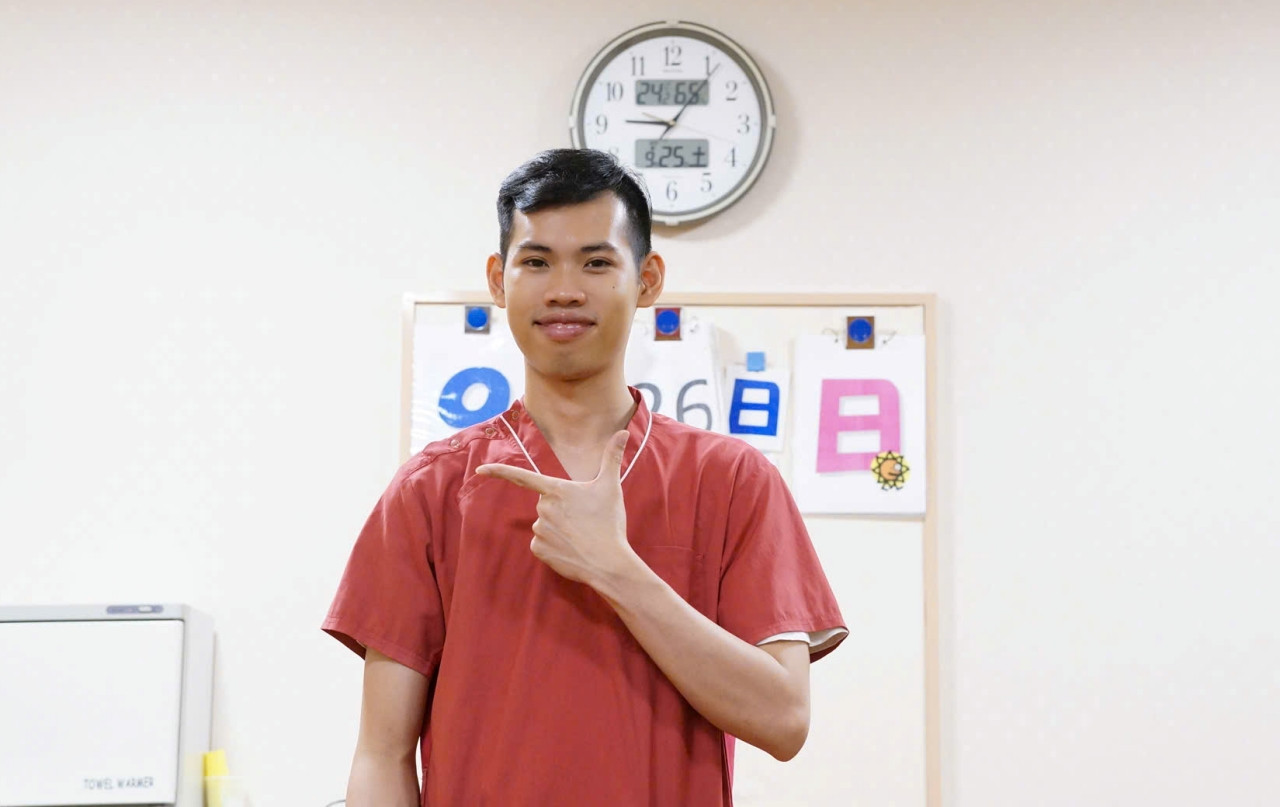
Tai, 30, from Vinh Long province, who is living and working in Kobe city, Japan, has always loved the land of the rising sun. In 2017, after graduating from university, he surprised those around him by deciding to go to Japan to study nursing care.
Upon arriving in Japan, Tai spent 3 years to relearn everything from scratch. In the first year, he learned Japanese. In the next two years, he was trained with the knowledge needed to become a caregiver, called kaigo in Japanese.
The job of a kaigo is to provide daily physical and mental support to the elderly, patients or people with disabilities, including helping with eating, drinking, bathing, changing diapers and organizing recreational activities.
In Japan, Tai mostly works at nursing homes as a kaigo responsible for elderly care.
Tai’s 8-hour workday begins with receiving task updates from the previous shift and noting all reminders. After that, he takes the elderly to the restroom, changes their diapers and helps them with breakfast.
At noon, Tai makes tea, prepares lunch, and helps the residents eat. For the older residents with illnesses who cannot eat by themselves, Tai has to feed them spoon by spoon. After lunch, he guides them to brush their teeth, leads them back to their rooms to change diapers, and helps them go to sleep.
At 2pm, Tai wakes them up and gives them a light snack. In the afternoon, he continues to support them with using the toilet, changing diapers, and eating.
During their rest time, Tai updates each person’s condition and handles small tasks like washing dishes, preparing afternoon tea and cleaning the rooms until finishing his shift at 5pm.
Tai shared: “The work is not gentle or peaceful at all. It is full of challenges. Caregivers cannot avoid daily contact with waste and unpleasant smells.
“In nursing homes, most elderly people are very old, sometimes forgetful, and behave like children. At times, they refuse to cooperate and even scream, scratch or bite my hand. I must stay calm and explain gently. If things get too stressful, I call another staff member to help stabilize their emotions.”
Memorable moments
After eight years in the profession, Tai has many happy and sad memories. The most haunting moment for him was witnessing the person he cared for take their final breath.
Tai still remembers the first time it happened. That day, he noticed that an elderly man he cared for had eaten less than usual, even though he showed no clear signs of illness.
Sensing something unusual, Tai patiently observed and monitored him for days, but everything seemed normal. The man was still cheerful and optimistic as usual.
Then one afternoon, after finishing his meal, the elderly man lay down to rest. No one expected that it would be his final sleep. He passed away quietly and gently, so silently that no one noticed.
When Tai came to wake him up for the afternoon snack, he discovered what had happened. It was his first close contact with a deceased person, and he was startled and scared. However, he quickly calmed down and handled the situation as trained.
Tai said: “In such cases, I call the nurse so they can take care of the procedures. But I must stay to help in cleaning and beautifying the deceased, such as changing clothes, fixing their hair, putting makeup on elderly women or shaving for elderly men.
“At first, before I got used to it, each time an elderly person passed away, I felt very sad, empty and heartbroken. But gradually, I learned to accept it and understand that it is the natural law of life.”
Despite the pressure that requires patience and compassion, Tai’s job still gives him stable income. He said that each month, after tax and insurance, he receives about VND50 million.
Not yet married, this income not only helps Tai live comfortably in Japan but also allows him to regularly visit and support his parents in his hometown.
“After 8 years of working, I realized I chose the right path. This job not only brings stable income but also gives me the opportunity to stay long term in Japan.
As Japan’s population is rapidly aging, the caregiving industry always needs a large workforce. This will be an attractive option for foreign workers who want to work and live long term in Japan,” Tai shared.
Thanh Minh
.svg)
