 Vietnamnet.vn

 Podcast



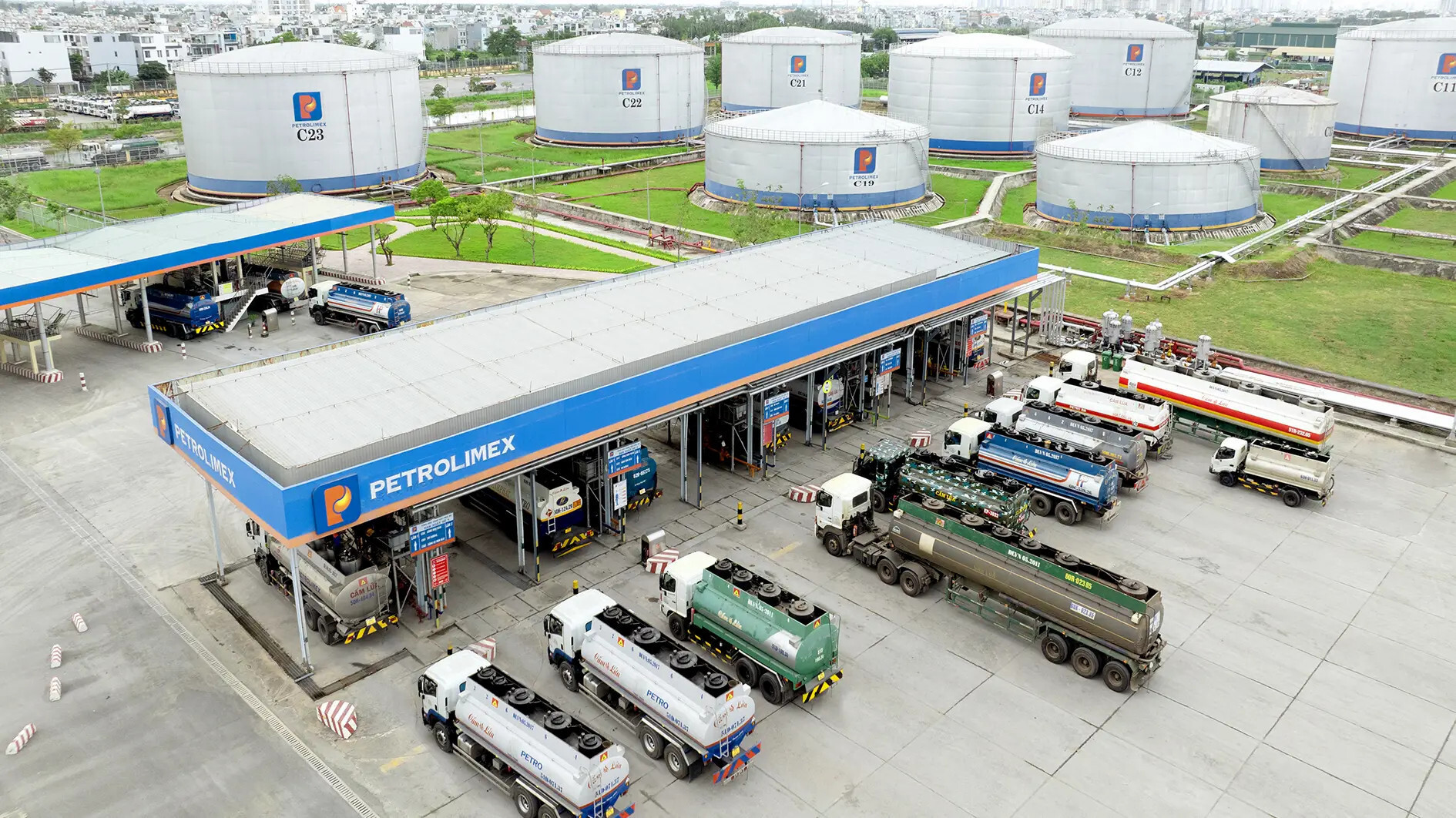
The Politburo’s Resolution 70 on ensuring national energy security to 2030, with a vision to 2045, clearly outlined the goal: “petroleum reserve levels shall reach approximately 90 days of net imports by 2030.” This goal is set against the current context where the country’s petroleum reserve capacity remains modest, covering only about 15–26 days.
So, should strategic fuel storage facilities be accelerated?
“Definitely, because energy security is key to Vietnam’s double-digit growth ambitions,” said Nguyen Son, a lecturer in supply chain and logistics management at RMIT University Vietnam.
According to Son, tensions involving the US, Israel, and Iran highlight rising risks to global energy supply stability. Current petroleum reserve levels reveal a major risk amid conflict that could be prolonged. Therefore, the plan to raise national energy reserves needs to be accelerated.
In terms of structure, agencies must optimize the composition of reserves, including crude oil and key refined products, based on demand forecasts for each type. A portion should be in readily usable forms such as gasoline, diesel, and jet fuel.
Alongside assessing domestic refining capacity, Vietnam needs to develop standardized measurement systems and digitize data on reserves and consumption to optimize operations and minimize implementation gaps.
“It is necessary to avoid both overstocking, which is costly, and understocking, which threatens energy security,” he noted.
In addition, the storage and diversification of energy supplies must be done simultaneously.
On one hand, Vietnam needs to improve its ability to process diverse types of input crude oil for the domestic petrochemical refining industry. On the other hand, negotiating long-term contracts with supplies from many geographical regions also needs to be considered a policy requirement. For example, in China, the supply from any single country never exceeds 20 percent of the total crude oil imported.
Also according to Son, the strategic reserve structure consists of at least two distinct layers: crude oil – the input material for refineries, which cannot be used immediately; and refined products such as gasoline, diesel, jet fuel, and LPG – ready to be released to the market.
Reality from the 2026 global energy crisis shows that the group of products with an urgent and immediate shortage was gasoline, diesel, and jet fuel, rather than crude oil.
The reason why people often speak of crude oil reserves or "crude oil barrels equivalent" is because crude oil is easier to store, has lower inventory costs, and is more flexible. "However, this flexible advantage only becomes real if we have the corresponding oil refining capacity," he pointed out.
Countries changing the game
Many countries manage risk very strictly, and the reality of the ongoing fuel crisis has shown certain success with their management strategies.
For instance, as of the end of 2025, Japan maintained a total reserve of 254 days of consumption, at three levels: national storage facilities, mandatory private sector reserves, and joint storage facilities with oil-exporting nations. When the crisis occurs, Japan can release reserves and stabilize the domestic petroleum supply.
China has a policy combining state strategic reserves and commercial reserves (owned by enterprises, but the government can use them during a crisis). China's total reserves fall around 90-120 days, and these reserves were built over many years by purchasing discounted oil from Russia, Iran, and Venezuela.
Furthermore, strong electrification and automation of freight transport are gradually reducing China's dependence on oil. This is a long-term advantage for the energy security of the nation of billions.
South Korea shows a different picture. Calculated by the actual amount of oil running through refineries each day, reserves in state warehouses are only enough for about 34 days, and combined with the private sector, it is about 67 days. However, South Korea still overcame the crisis by applying a gasoline price cap and activating a financial market stabilization package worth $68 billion.
As for the Latin American region, most countries were less affected by energy issues due to stable supplies. For example, Argentina has the Vaca Muerta field, and Brazil has pre-salt oil fields. No country in this region had to declare an energy-related state of emergency.
Tran Chung
.svg)
