 Vietnamnet.vn

 Podcast



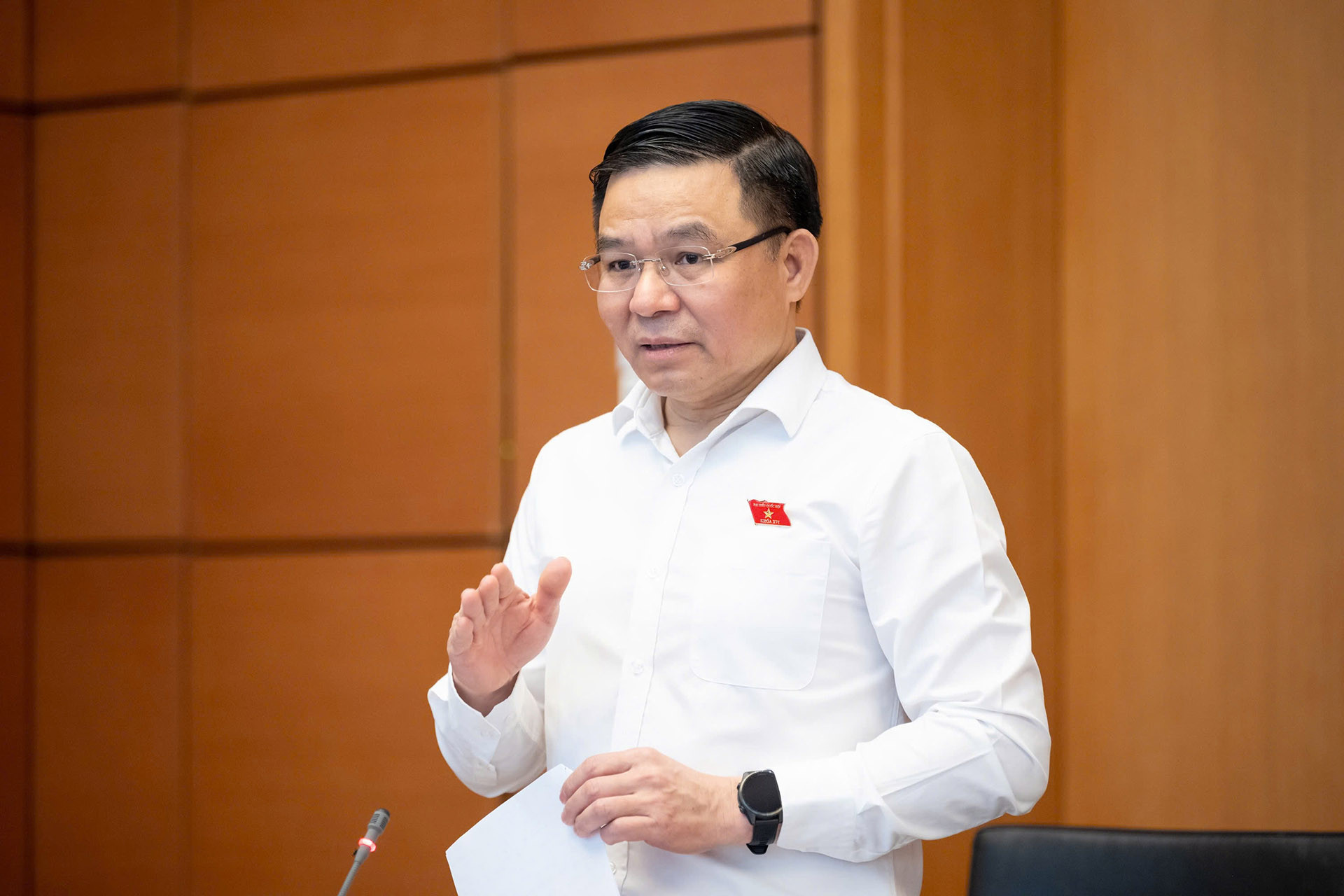
Speaking at a National Assembly discussion on April 10, the minister said geopolitical conflicts have had a significant impact on Vietnam’s fuel market, prompting authorities to adopt flexible response scenarios and strengthen supply resilience.
Supply pressure and import dependence
Vietnam’s total fuel demand reached about 26.2 million cubic meters/tons in 2025 and is projected to exceed 28 million in 2026.
Currently, around 70% of domestic demand is met by local production from the Dung Quat Oil Refinery and Nghi Son Oil Refinery, while the remaining 30% relies on imports.
However, when factoring in both crude oil and refined fuel, Vietnam remains heavily dependent on the Middle East for about 70% of its imports - highlighting the importance of strategic reserves.
Three pillars of energy security
The government has identified energy security as a top priority, based on three key pillars: Ensuring sufficient supply; Maintaining uninterrupted distribution; Guaranteeing accessibility for citizens and businesses.
To achieve this, authorities have implemented multiple measures, including maximizing refinery output, restoring ethanol and cassava processing plants, and improving distribution networks.
Vietnam’s fuel distribution system currently includes 26 major traders, 245 distributors and around 17,200 retail stations nationwide.
Stable prices and improved resilience
According to the minister, these efforts have helped Vietnam maintain stable supply and avoid disruptions despite global volatility.
Fuel prices in Vietnam remain lower than the global average - about VND 23,000–24,000 per liter compared to roughly $1.3 per liter worldwide.
Compared with neighboring countries such as Laos, Cambodia, China, Thailand and Philippines, Vietnam’s fuel prices are also more competitive and stable, while some countries have faced shortages or emergency measures.
Long-term strategy
Looking ahead, Vietnam plans to reduce its dependence on imported primary energy from 43.9% to around 30% by 2030 through updated national energy strategies.
The government is also considering more flexible policy mechanisms, including granting greater authority to the prime minister to respond quickly to market fluctuations.
The increase in fuel reserves marks a significant step toward strengthening Vietnam’s energy resilience and ensuring stability in an increasingly unpredictable global market.
Tran Thuong
.svg)
