 Vietnamnet.vn

 Podcast



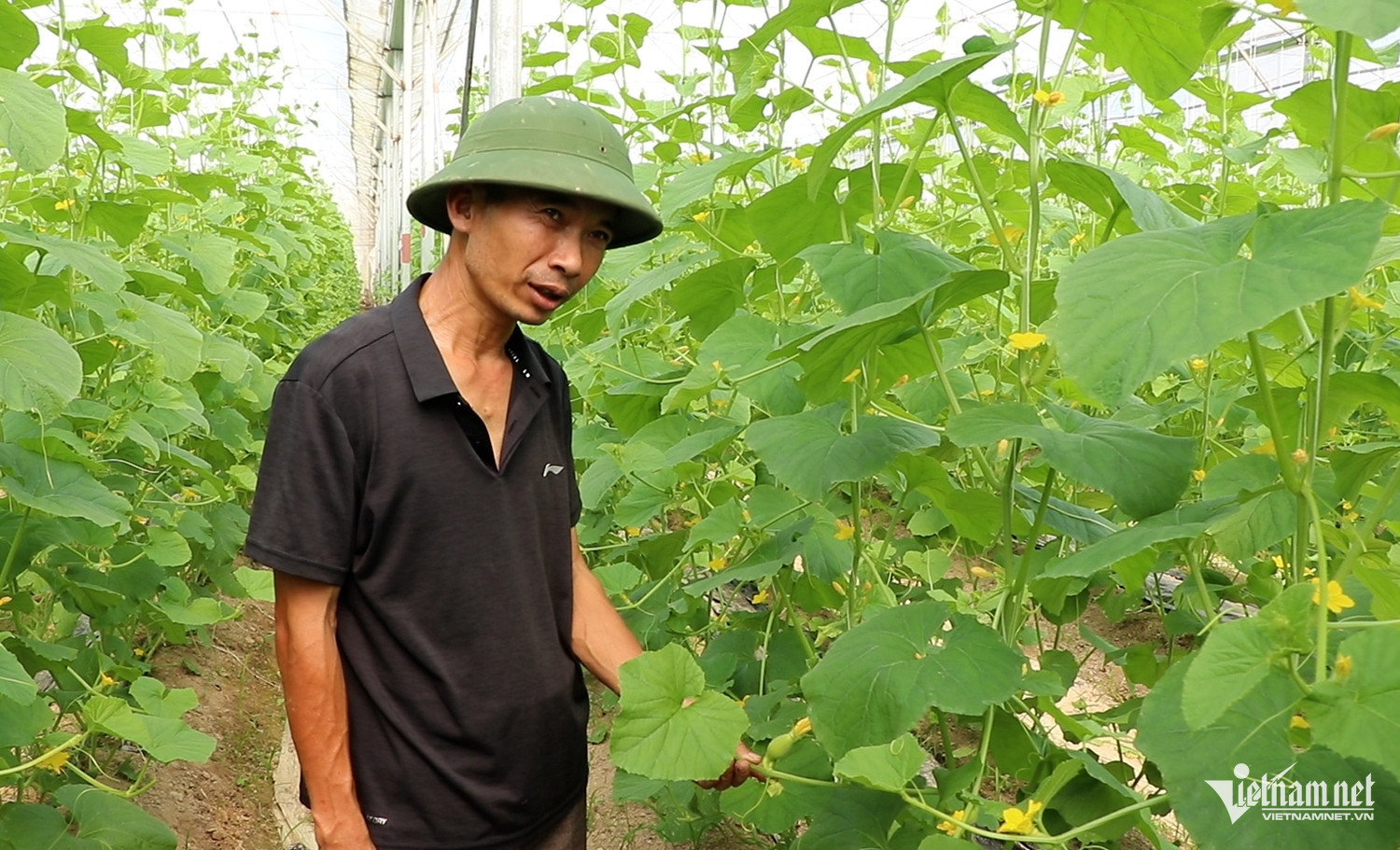
Near midday, under the scorching sun, Vu, 45, from Giai Lac Commune, Nghe An Province, was working recently alongside his employees, pruning leaves and pinching shoots on each melon plant.
Few would guess that he was once a transportation engineer in Hanoi, earning more than VND50 million per month.
In 2023, Vu surprised both his family and neighbors when he decided to leave the city and return to his hometown.
“It may sound risky, but there is nothing better than doing what you are passionate about. The key is to have a vision and a plan,” Vu said.
When he decided to return to his hometown permanently for farming, his family could not help but worry. Starting a business at the age of 42 in a risk-laden agricultural sector meant that if he failed, it would be difficult to get back on his feet.
However, Vu saw a major opportunity as the demand for clean agricultural products grew, while quality supply remained scarce and allowed for direct access to consumers. He believed that if he found the right direction, high-tech agriculture would win.
To prepare for this turning point, he spent many months researching traditional melon-growing models domestically, while learning experience from advanced models in China and Japan.
By the end of 2023, he leased three hectares of fertile land in Dong Sơn hamlet (Giai Lac commune) with a 10-year term. Using all of his accumulated capital and borrowing more, he invested VND10 billion to set up a high-tech agricultural production farm, specializing in growing cucumbers and cantaloupes inside greenhouses.
Committed to clean production principles, Vu follows the philosophy of "nurturing the soil rather than just nurturing the plant."
Instead of using herbicides or chemical pesticides, he relies entirely on biological products and beneficial microorganisms while using heat treatment to improve soil fertility.
Vu also demonstrated a keen business mindset through crop schedule regulation. His farm usually sowed seeds later than the market's general seasonal schedule.
Although this strategy exposes the farm to less favorable weather conditions, careful soil preparation and crop management enable the farm to maintain high yields.
When market supply becomes scarce, his produce can command better prices, helping him avoid the common problem of bumper harvests accompanied by falling prices.
For melons, Vu divides production into four separate sections, staggering planting dates one week apart. This approach allows continuous harvests over an extended period, ensuring a steady supply to the market and avoiding the pressure of selling all products at once.
The farm exceeded expectations in its first year of operation, providing strong motivation. However, rather than rapidly expanding, Vu focused on maximizing efficiency on every square meter of land.
According to Vu, except for 2025, when consecutive storms destroyed the trellises and pushed up replanting costs, melon cultivation has generated profits of around VND800 million per year after expenses.
The farm currently provides stable employment for five local workers, with daily incomes ranging from VND250,000 to VND300,000.
To optimize costs, revenue from cucumbers is used to pay workers’ monthly wages. Meanwhile, income from melons is reinvested into expanding livestock facilities, purchasing breeding stock, and developing a bamboo rat farming operation.
“I currently raise more than 200 breeding bamboo rats. Revenue from melons is being used to expand this farming model,” Vu said.
According to his calculations, the species has strong reproductive capacity, with each mother rat giving birth to 5-6 pups per litter. Instead of selling breeding stock immediately, he chooses to raise them to market size.
With current market prices reaching up to VND700,000-900,000 per kg depending on the size, he asserted that this commercial bamboo rat segment is precisely the source that brings in the most profit.
Doan Ba Canh, chair of the commune's Farmers' Association, said this is the largest-scale high-tech agricultural model in the locality, proving superior economic efficiency compared to fragmented crop cultivation previously and opening up a highly promising new direction for local farmers.
Thanh Minh
.svg)
