 Vietnamnet.vn

 Podcast



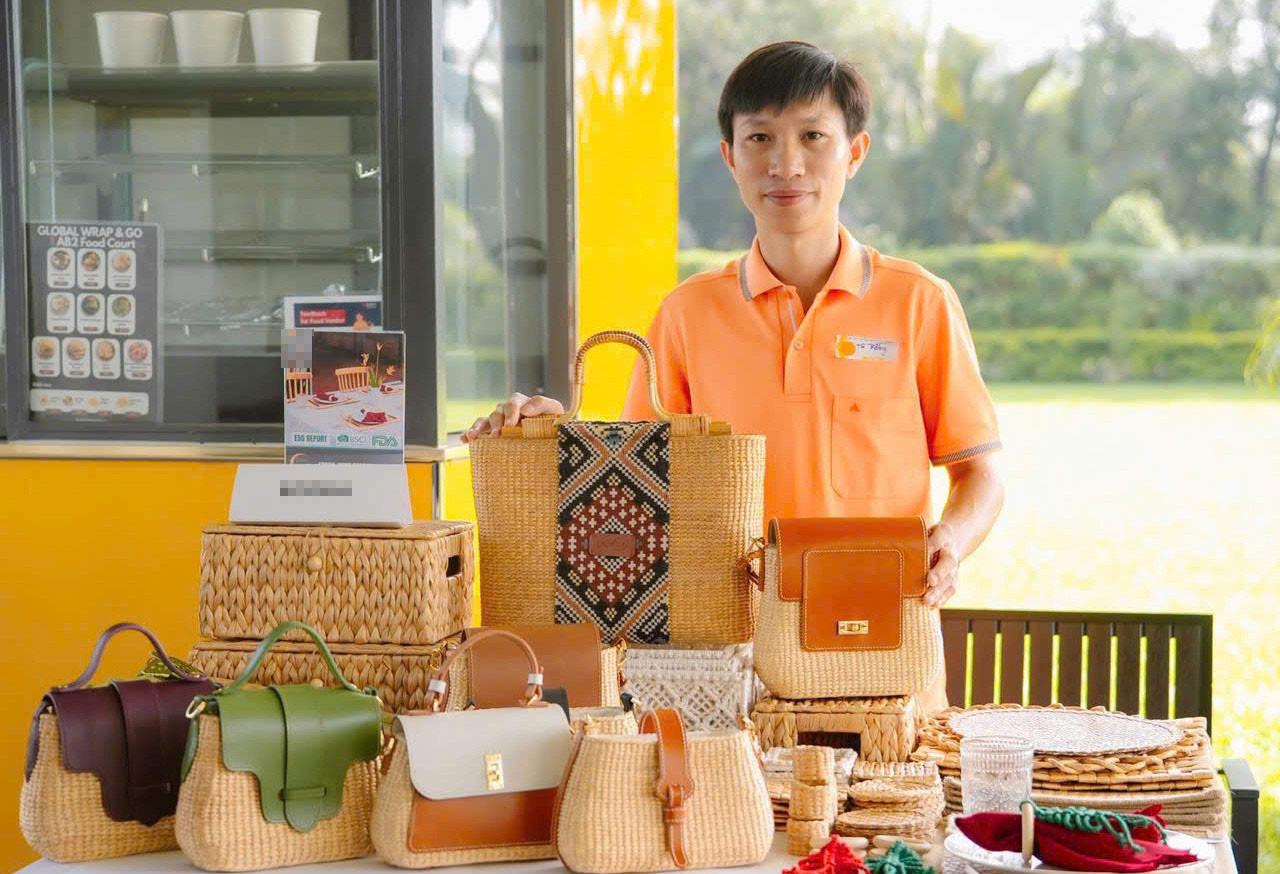
Water hyacinth was once regarded as a ‘nameless floating weed’ in the Mekong Delta, but Ha Anh Truong, 38, from Vinh Thuan Dong Commune in Can Tho City, saw a hidden gold mine.
Growing in the region’s sediment-rich rivers, water hyacinth has stems reaching 80-90cm in length, an even golden color when dried, and minimal joints, all ideal characteristics for producing high-quality handicrafts.
Truong graduated in computer science overseas and initially built his career by selling products through Amazon e-commerce platforms. During his experience in exports, he realized that Vietnamese products could compete in demanding markets if their strengths were properly leveraged.
“After years in e-commerce, I asked myself why I wasn't exporting products that Vietnam has a competitive advantage in. Vietnamese handicrafts actually have many strengths,” Truong said.
In 2018, while surveying craft villages across the country to identify suitable export products, he found that machine-made products struggled to compete with Chinese goods. In contrast, handicrafts made from natural materials had enormous growth potential in European and North American markets.
That was when he decided to make water hyacinth his business direction.
Truong said the dry climates in Europe and North America are well suited to water-hyacinth products. At the same time, demand for eco-friendly, handcrafted and biodegradable products has been growing rapidly.
Initially, he sourced products from existing manufacturers to test the market. After about a year, as orders became stable, he decided to establish a workshop in the heart of the Mekong Delta’s raw-material region.
In 2022, he launched his own brand specializing in the production and export of products made from water hyacinth, sedge grass, bamboo, and rattan.
From a small operation, his company has grown into a manufacturing system covering more than 7,000sqm and offering over 300 product designs. The product portfolio focuses on environmentally friendly household items such as laundry baskets, storage baskets that can replace plastic containers, as well as coasters, placemats, pet houses, fashion bags, and more.
International standards
However, the journey of bringing Mekong Delta water hyacinth to the global market has not been easy. Truong said the greatest challenge was not technology or production techniques but changing the production mindset of local workers.
To export to markets such as the US, UK, and Canada, products must meet strict requirements regarding quality, traceability, carbon emissions, and social responsibility.
“International customers demand transparency throughout the entire supply chain, along with stringent requirements on environmental standards, safety, and biodegradability,” Truong said.
In the early days, he faced considerable difficulties working with local farmers. At the time, many workers lacked both technical skills and an understanding of structured production processes. Residents were accustomed to making simple products. Adapting to strict quality-control systems designed to increase product value was not easy.
Truong spent years patiently guiding, encouraging, and training local producers. Drawing on his engineering background, he introduced green solutions into production. One notable innovation is a solar-powered drying system for water hyacinth, inspired by models in Israel and Sweden.
Instead of consuming large amounts of electricity like traditional drying methods, the enclosed drying facility creates natural air circulation, controls humidity, and dries raw materials efficiently. As a result, the company has significantly reduced energy costs and moved closer to meeting international ESG standards.
The company has also developed a system to measure carbon absorption for each product and provide the data to overseas partners. This level of transparency has helped the brand gradually attract major international buyers.
Today, Truong’s business works with more than 1,000 households, over 10 craft villages, and cooperatives nationwide to build an integrated supply chain.
To secure raw materials, the company has also established its own water-hyacinth cultivation area along 8km of riverway, covering nearly 300ha of water surface. Although only about 5 percent of the area’s potential is currently being used, it is considered a foundation for long-term growth.
The production model has also created jobs for rural workers as agriculture becomes increasingly mechanized. Residents can take materials home for weaving, earning an additional VND4-6 million per month. Thousands of water-hyacinth products are exported each month to nine countries, generating annual revenue of $1.2 million.
Ha Nguyen
.svg)
