 Vietnamnet.vn

 Podcast



On the foundation that has been laid, the sector of ethnic and religious affairs is poised to enter a new era alongside the nation, energized by renewed determination and high resolve.
A historic turning point
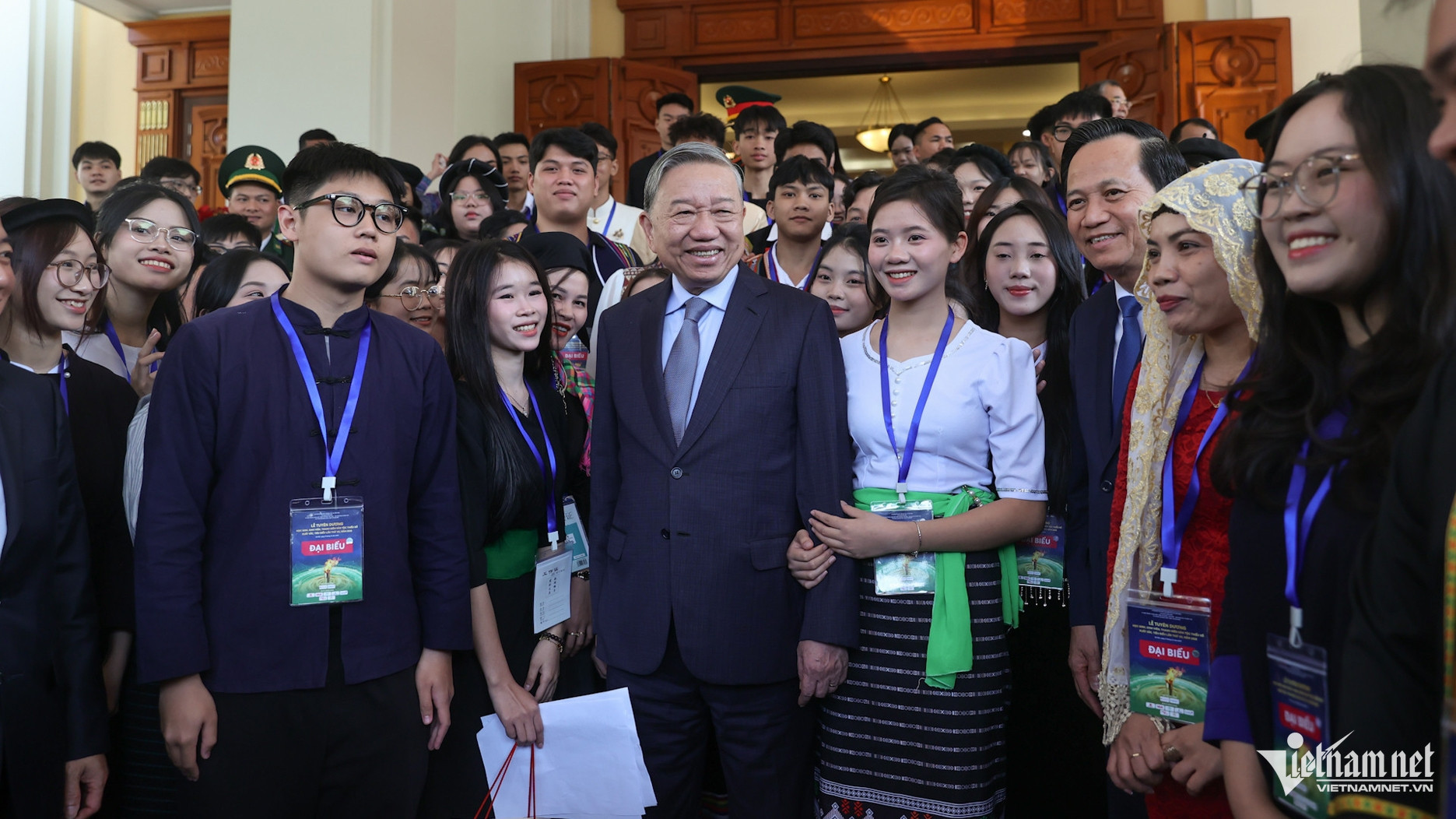
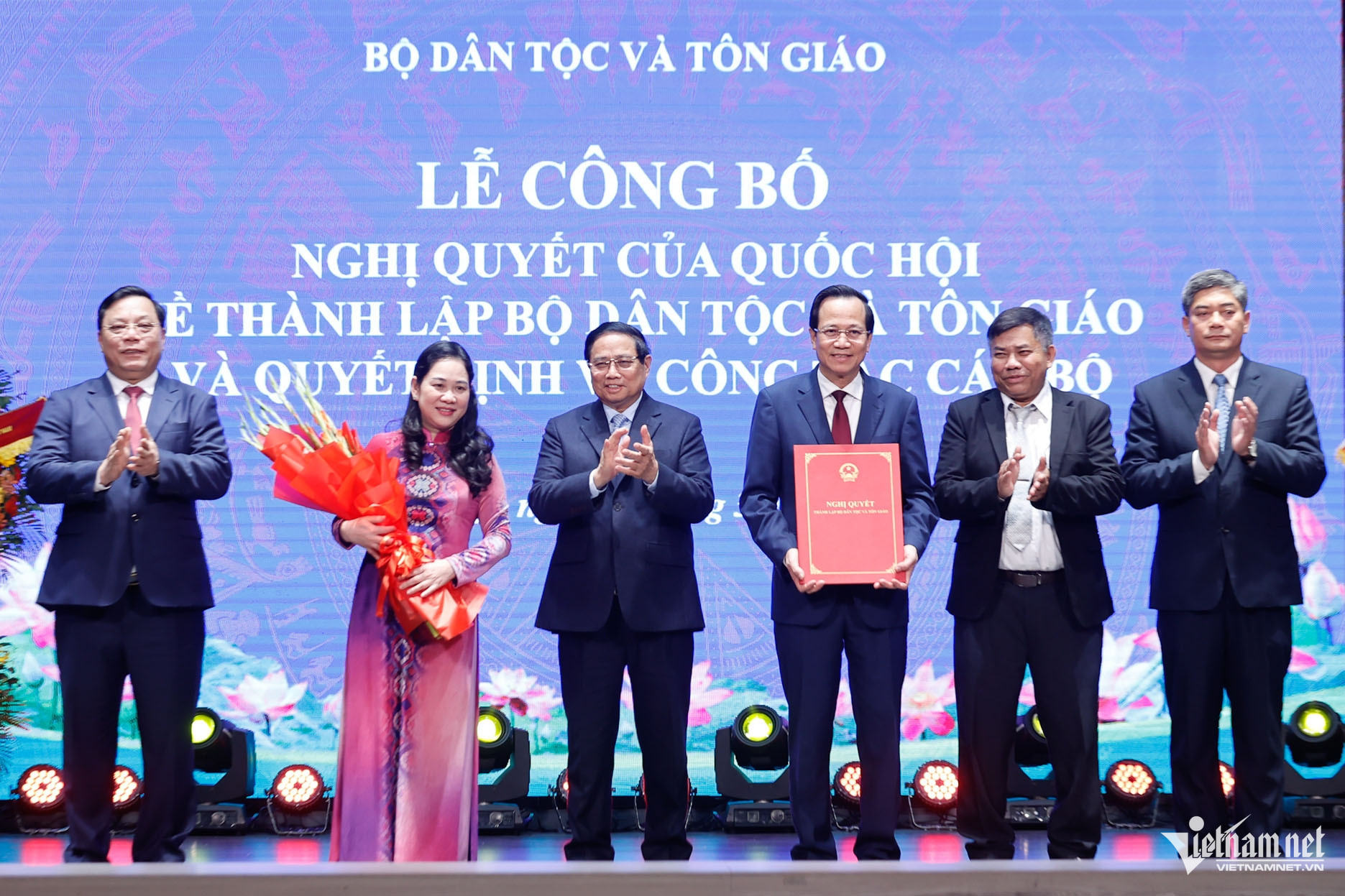
The year 2025 marked a historic milestone with the establishment of the Ministry of Ethnic and Religious Affairs, built upon the former Committee for Ethnic Minority Affairs and assuming state management of belief and religion from the Ministry of Home Affairs. The move reflects a strategic vision and the consistent attention of the Party and State to ethnic and religious affairs, a distinctive field closely tied to the great national unity bloc.
General Secretary To Lam underscored: “Our country is entering a new era of development. Opportunities are immense, but so are the demands placed upon the younger generation. With the care of the Party, the State and society, and with patriotism, a tradition of learning, resilience and aspiration, I believe ethnic minority youth will continue to shine and contribute worthily to the cause of national construction and defense.”
Upon assuming his new role, Minister Dao Ngoc Dung described the field as both challenging and vibrant, emphasizing the need to act immediately. The ministry, he said, must not only fulfill state management functions but also serve as an extended arm of the Party in matters of ethnicity and religion, where trust, aspiration and social consensus converge.
Prime Minister Pham Minh Chinh presented the National Assembly’s resolution establishing the ministry to its leadership, affirming the expectation that it become a model of unity and an inspiration for equitable development among ethnic groups and religions.
From the outset, the spirit of “immediate action” translated into a proactive, decisive and scientific working style, closely connected to local realities and measuring success by tangible outcomes and the well-being of ethnic minority and religious communities. The “six clarities” principle - clear responsibilities, clear tasks, clear timelines, clear accountability, clear deliverables and clear authority - became a guiding operational framework.
In its first year, the ministry made significant strides in institutional building, science and technology development, innovation, digital transformation and administrative reform. It submitted 11 proposals and tasks to the National Assembly Standing Committee, the Government and the Prime Minister; issued 10 circulars under its authority; received, classified and digitized more than 19,000 incoming documents; and released over 4,000 outgoing documents, all fully digitized and transmitted through the national document exchange system on schedule. These efforts laid the groundwork for modern, transparent and effective governance.
At the heart of every policy, as Minister Dao Ngoc Dung repeatedly emphasized, remains a human-centered objective: ensuring ethnic minority and religious communities enjoy improved material and spiritual conditions, safeguarding freedom of belief and religion, and strengthening solidarity among all ethnic and religious groups.
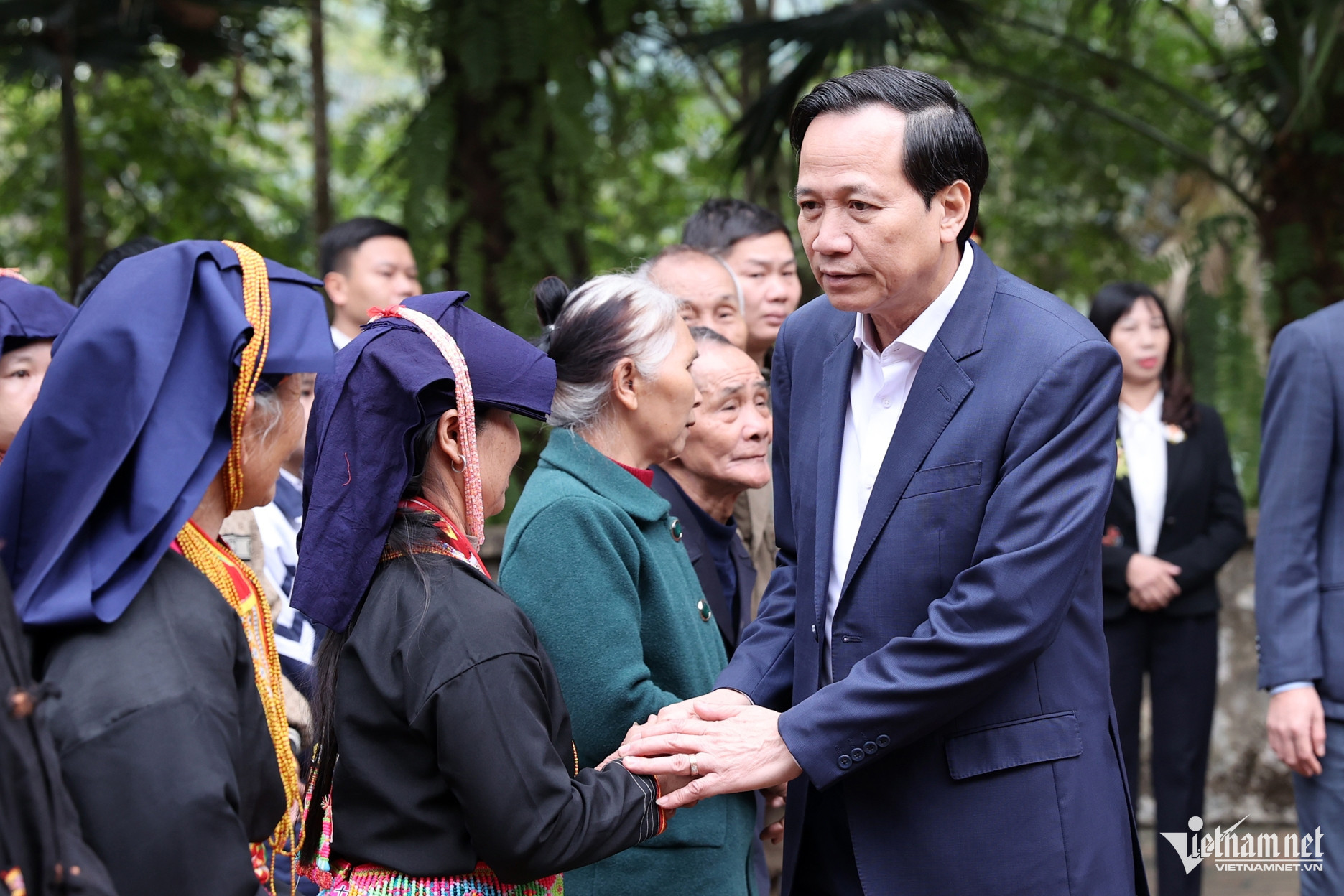
Throughout 2025, ministry leaders led more than 100 working delegations to localities, not only to address obstacles but to listen, share and encourage communities to rise in their lives. These visits created a continuous flow of connection from central authorities to grassroots levels, from policy to lived reality.
Spreading momentum for development
'
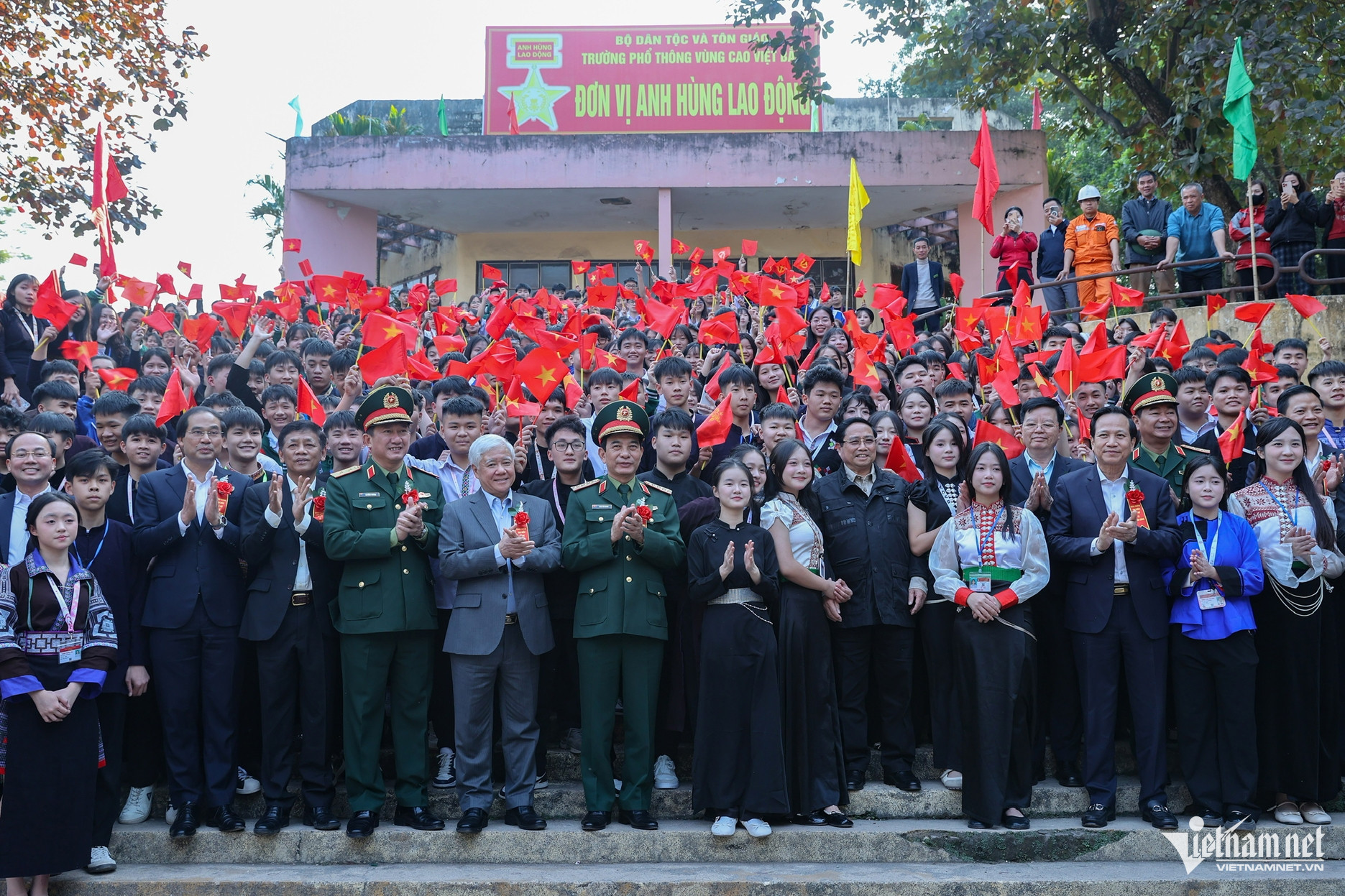
Prime Minister Pham Minh Chinh and Party and State leaders attend the groundbreaking ceremony for the infrastructure project of the Viet Bac High School for Ethnic Minorities. Photo: Le Anh Dung.
Minister Dao Ngoc Dung stressed that ethnic and religious affairs are political and social issues requiring engagement from the entire political system. He called for a change in mindset among state managers: “Think deeply, act boldly and decisively, with effectiveness. What we do today must serve the next ten years.”
Despite organizational restructuring and an unprecedented workload, the sector maintained operational continuity without disruption or overlap.
The implementation of ethnic policies, particularly Phase I (2021-2025) of the National Target Program for socio-economic development in ethnic minority and mountainous areas, recorded notable progress. After nearly five years, six of nine target groups under National Assembly Resolution 120/2020/QH14 were achieved or exceeded.
Concrete figures tell the story: an average poverty reduction rate of 3.4 percent annually, rising per capita income and improved access to essential social services. These outcomes reflect not only administrative performance but tangible improvements in the lives of ethnic minority communities.
Building on these results, the ministry proposed Phase II of the program with breakthrough adjustments, focusing on urgent issues in mountainous and ethnic minority regions while maintaining strategic objectives set by the National Assembly.
In religious affairs, positive developments were also evident. A major highlight was the ministry’s active guidance and support for the Vietnam Buddhist Sangha in hosting the United Nations Vesak 2025 celebration. The joint declaration of the event underscored Buddhism’s responsibility toward global challenges while conveying messages of peace and compassion, enhancing Vietnam’s image as a nation that respects religious freedom, preserves cultural identity and embraces international integration.
Public communication and policy dissemination were further strengthened, and international cooperation in ethnic and religious affairs expanded, gradually elevating Vietnam’s standing globally.
Milestones of significance
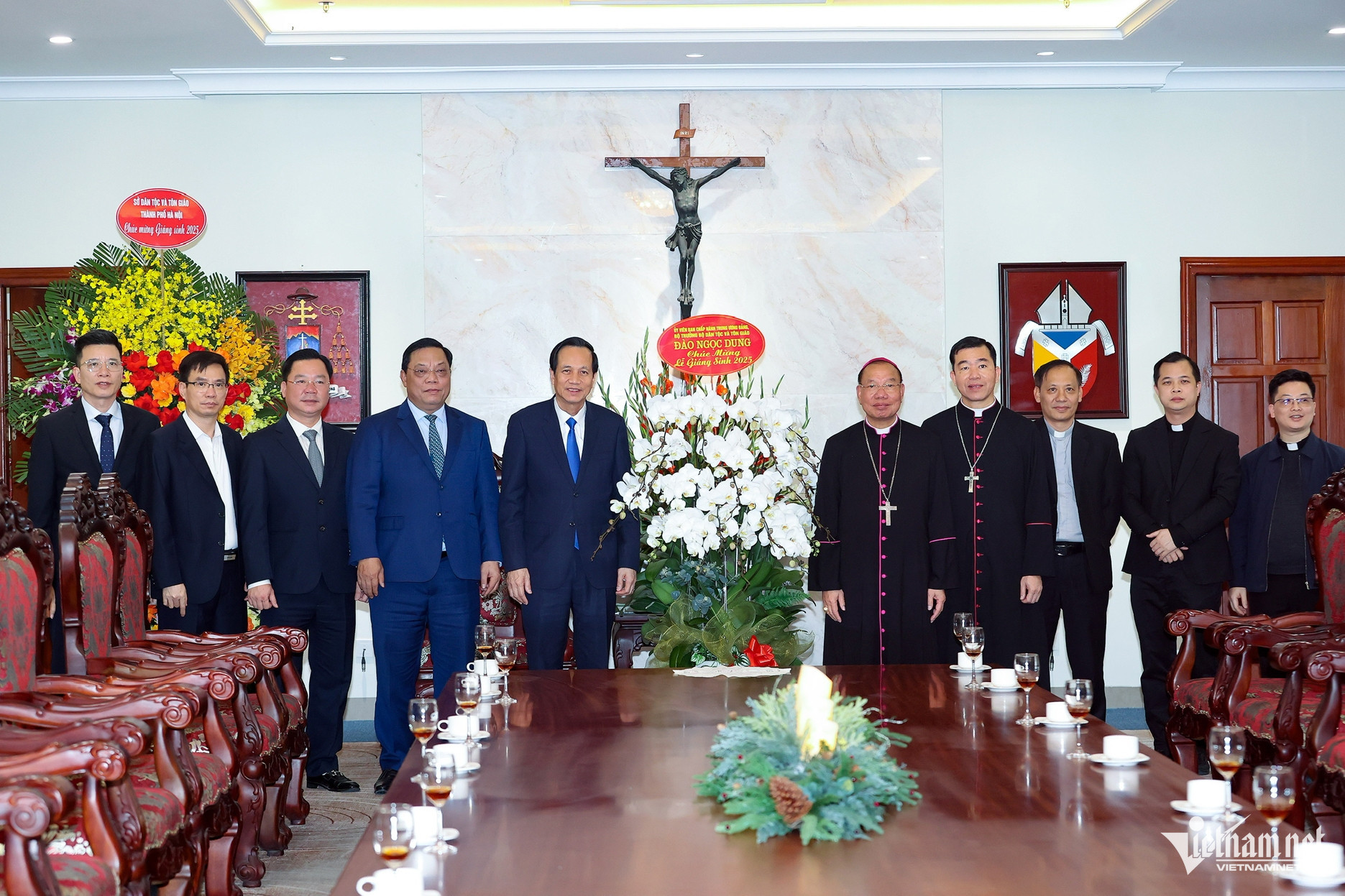
Minister Dao Ngoc Dung and Deputy Minister Nguyen Hai Trung visit and present gifts to the Archdiocese of Hanoi in December 2025. Photo: Le Anh Dung.
The year 2025 also marked foundational events, including the first Patriotic Emulation Congress and the first Party Congress of the Ministry of Ethnic and Religious Affairs for the 2025-2030 term. These milestones signaled organizational maturity and inaugurated a journey of sustainable development under the ministry’s unified structure.
At the ceremony honoring outstanding ethnic minority students and youth, General Secretary To Lam’s emotional meeting with young delegates served as a powerful source of encouragement, reinforcing their confidence in pursuing education and careers.
Another landmark achievement was the near completion of the program to eliminate temporary and dilapidated housing, described as a true “miracle.” After assuming responsibility as the standing agency, the ministry accelerated implementation under the “four truths” principle: truthful commitment, genuine action, real effectiveness and tangible benefits for the people.
Completing the program five years and four months ahead of schedule resulted in 334,234 solid homes built nationwide, strengthening the foundation for sustainable and equitable development.
At the national exhibition marking 80 years of Independence - Freedom - Happiness, the “Vietnam in diversity - united in purpose” pavilion curated by the ministry vividly portrayed solidarity among ethnic and religious communities as a core strength of the nation.
Groundbreaking ceremonies for projects such as the Viet Bac High School for Ethnic Minorities and preparatory universities reaffirmed the Party and State’s deep commitment to ethnic minority and religious communities.
Reflecting on this demanding first year, Minister Dao Ngoc Dung acknowledged that staff had to exert “several hundred percent” effort to fulfill their responsibilities. Achievements, he emphasized, were the result of unity within the sector, close coordination with ministries and localities, and the perseverance of the people.
At the national conference reviewing 2025 activities, Deputy Prime Minister Le Thanh Long affirmed that within just nine months of establishment, the ministry, together with localities and communities, had accomplished key objectives, reinforcing national unity and strengthening public trust in the Party and State.
Turning pressure into motivation
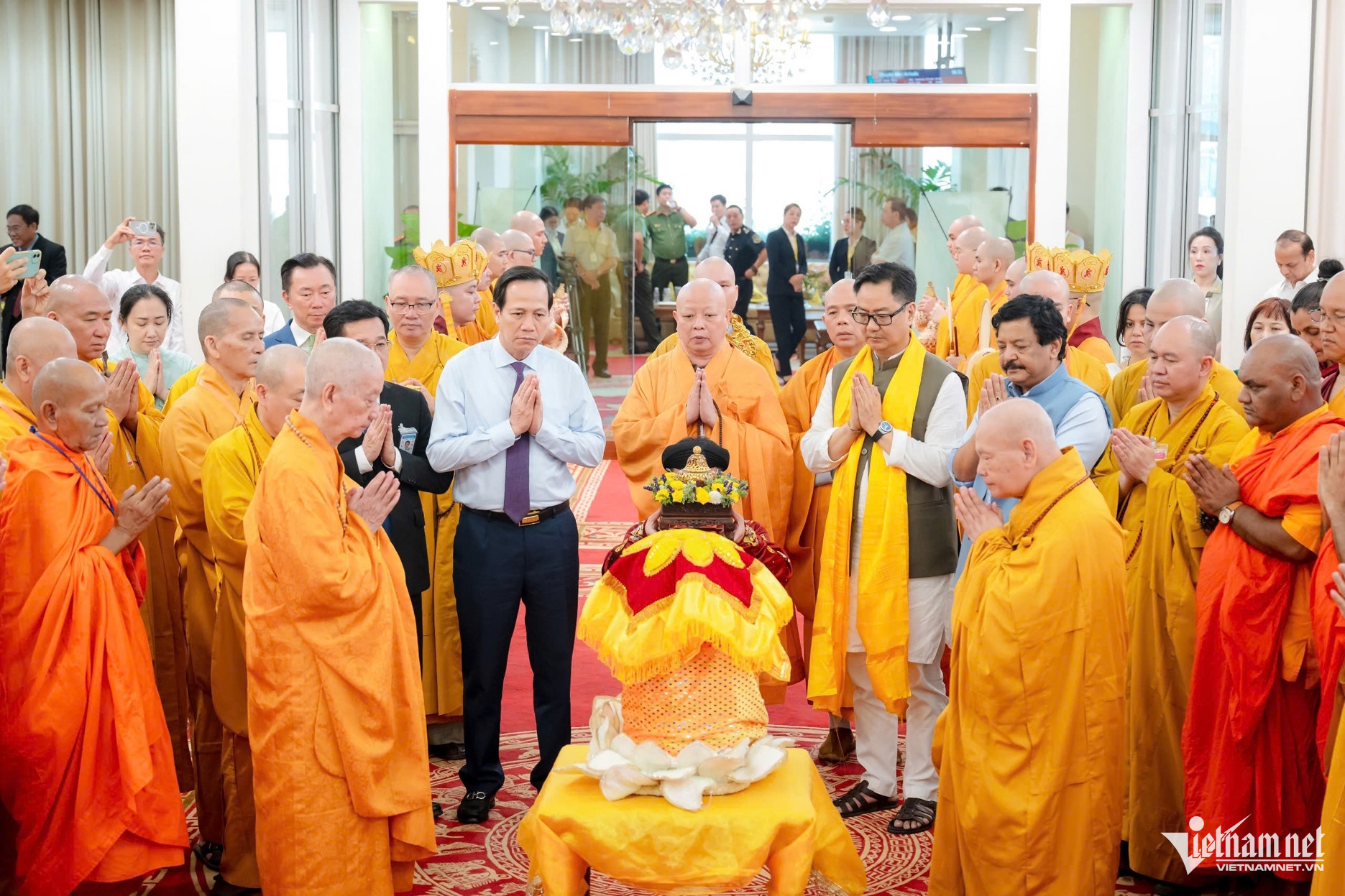
Minister Dao Ngoc Dung and delegates receive the Buddha’s relics during the United Nations Vesak celebration.
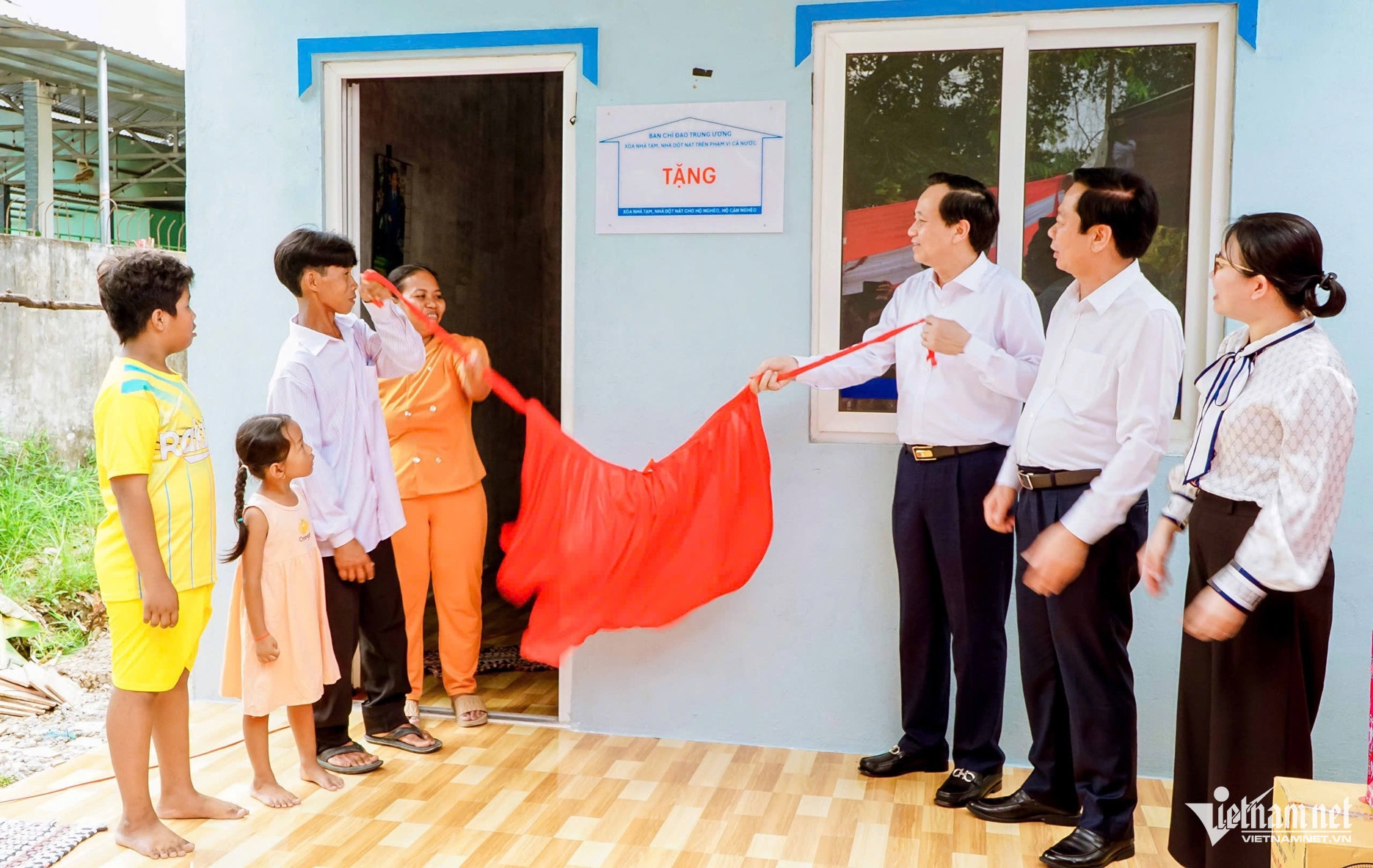
Minister Dao Ngoc Dung attends the handover of a new house under the program to eliminate temporary and dilapidated housing for the family of Thach Trung Thai, a Khmer ethnic resident in Thoi Lai commune, Can Tho. Photo: Tao Dat.
At the ceremony announcing the National Assembly’s resolution establishing the ministry on March 1, 2025, Prime Minister Pham Minh Chinh reiterated that the enduring foundation of the country’s new development phase remains the spirit of great national unity. The ministry must thoroughly grasp Party directives and state policies, fulfilling its assigned functions effectively.
The achievements of 2025 affirm the growing importance of ethnic and religious affairs and provide a solid basis for entering 2026, the first year of a new development phase linked to the implementation of the 14th Party Congress Resolution and the 2026-2030 socio-economic development plan.
“2026 must be a year of strong acceleration, contributing to national renewal and growth. The entire sector must act more decisively, think at a higher level, show greater determination and stronger effort, turning pressure into motivation and challenges into opportunities,” Minister Dao Ngoc Dung directed.
On the foundation now established, the sector will move forward with proactive confidence and responsibility, placing people at the center and social stability and consensus at the core, fulfilling the Prime Minister’s expectation that the Ministry of Ethnic and Religious Affairs become a model of unity and an inspiration for equitable development among ethnic groups and religions.
A meaningful highlight of 2025 was the presentation of the 40-year Party membership badge to Minister Dao Ngoc Dung, a prestigious recognition of his long-standing dedication and a source of inspiration for the ministry’s officials and Party members.
Pham Thi Thanh Huyen
.svg)
