 Vietnamnet.vn

 Podcast



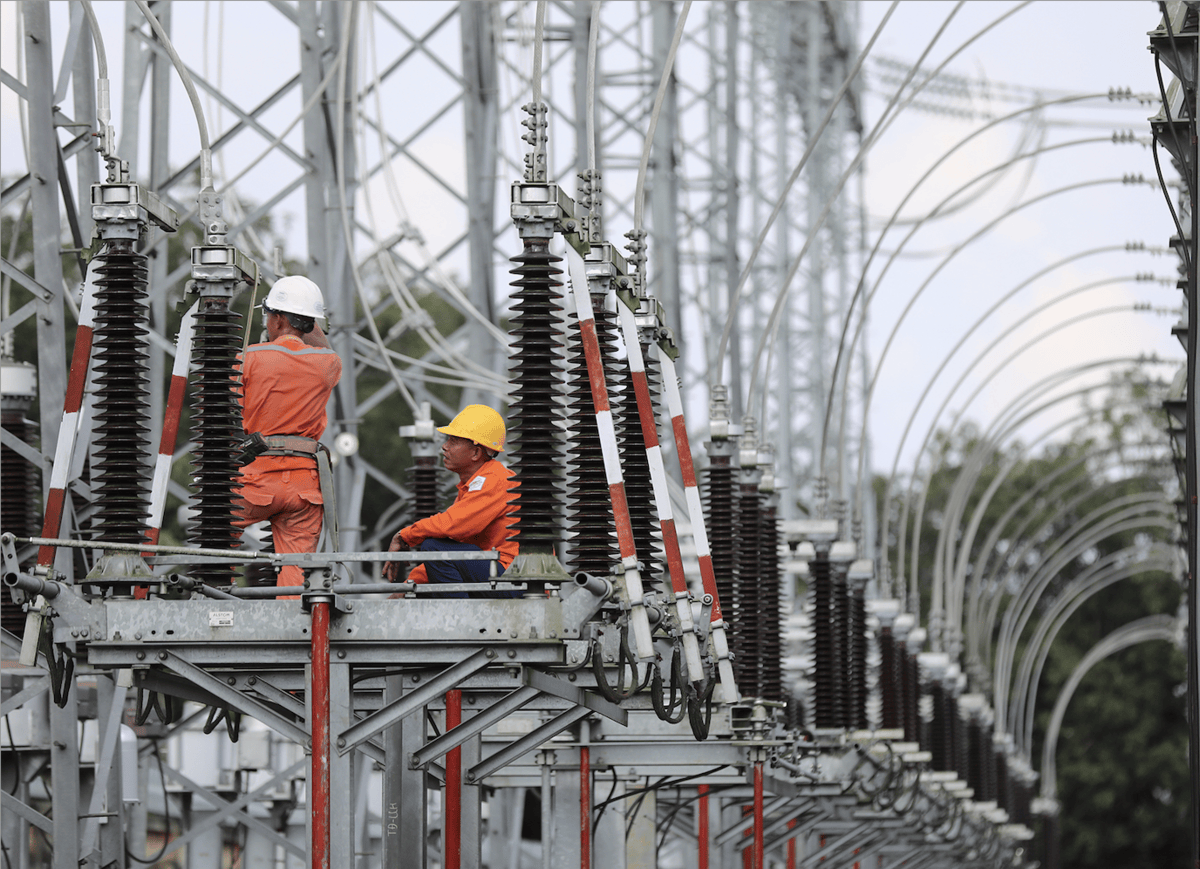
Talking with VietNamNet about Vietnam Electricity Group’s (EVN) unusually strong profits in 2025, energy expert Ha Dang Son, director of the Center for Energy and Green Growth Research, said that while EVN previously incurred heavy losses due to surging fuel prices, it is understandable for the enterprise to record a corresponding profit to offset prior losses once fuel prices drop and operational conditions improve.
He also noted that before the Covid-19 pandemic, EVN had operated profitably, although profit levels were not particularly high.
To determine whether EVN’s substantial profit is reasonable, it is necessary to examine the power generation structure in 2025, as this factor directly affects electricity procurement costs.
“If power purchase costs are lower, EVN will naturally generate higher profits. We need to compare the 2025 generation source structure with that of 2023 and 2024 to clearly understand the difference,” he said.
According to Son, 2025 benefited from several favorable conditions. Input fuel prices declined compared with previous years, particularly coal and gas prices. At the same time, hydropower plants enjoyed favorable operating conditions thanks to abundant rainfall, significantly improving business results.
"If we only look at the impact of the retail electricity price adjustment of nearly 5 percent, this increment can only explain a portion of the total profit. The larger share stems from falling fuel prices and high mobilization rate of hydropower," he said.
Son said during the 2023 period, high fuel prices caused power production costs to skyrocket. But in 2024 and 2025, input price levels declined significantly.
Since the beginning of 2026, LNG prices have not fluctuated too drastically following conflicts in the Strait of Hormuz due to relatively abundant global supply, especially from the US. However, the Asian market still faces supply volume pressures because of its reliance on long-term contracts with the Middle East.
"The risk for this year's summer does not lie in LNG prices, but in the supply itself. Fortunately, LNG vessels still dock at Thi Vai port to replenish fuel for gas-fired power plants," he stated.
Any chance for electricity prices to fall?
Regarding suggestions that EVN’s strong profit performance could justify lower electricity prices, Son argued that the issue is far more complex.
“If electricity prices are reduced, the entire system of power purchase agreements would have to be reconsidered. We are pushing for a pricing mechanism that accurately and fully calculates costs while gradually eliminating cross-subsidies," he said.
Vietnam needs to develop new power sources, including LNG-fired power plants, offshore wind projects, and nuclear power. These technologies require massive investment and generally have higher generation costs than traditional hydropower.
"When these power sources come into operation, the question is at what price we sign the power purchase agreements to ensure investors can recover their capital," he said.
He also noted that EVN is still handling accumulated losses from previous years. Meanwhile, many costs have not been fully factored into electricity prices despite proposals from regulatory authorities.
In addition, input expenses such as salaries and insurance during this period have all increased under new regulations and must be allocated into retail electricity prices.
"Fuel prices dropped, but adjustments were not made promptly in the past. The current profit must be utilized to offset losses, restore financial capacity, and create capital for investment. If it hasn't even recovered yet and is required to lower electricity prices, it will be very difficult for the enterprise to balance its books," he observed.
EVN's profits belong to the State
Son emphasized that EVN's profit allocation is not determined by the enterprise itself. "EVN is a state-owned enterprise, so the ultimate profit belongs to the State. The distribution or utilization of this profit is decided by competent authorities; EVN does not have autonomy over it," he said.
In the coming time, the power sector requires an immense amount of capital for offshore wind power projects, nuclear power, and power grid infrastructure upgrades. According to him, the profit EVN retained after wiping out its accumulated losses remains very low compared to the capital requirements for future power projects.
The annual capital requirement for key power source and grid projects alone stands at tens of billions of USD, while loans from commercial banks or international financial institutions all require corresponding ratio of reciprocal counter-party capital.
Tran Chung
.svg)
