 Vietnamnet.vn

 Podcast



Solar power is widely promoted as an inexpensive source of electricity. However, making that electricity available when the grid needs it most requires costly battery energy storage systems (BESS), significantly increasing generation costs and raising questions about the overall efficiency of the model.
Battery storage substantially increases solar power costs
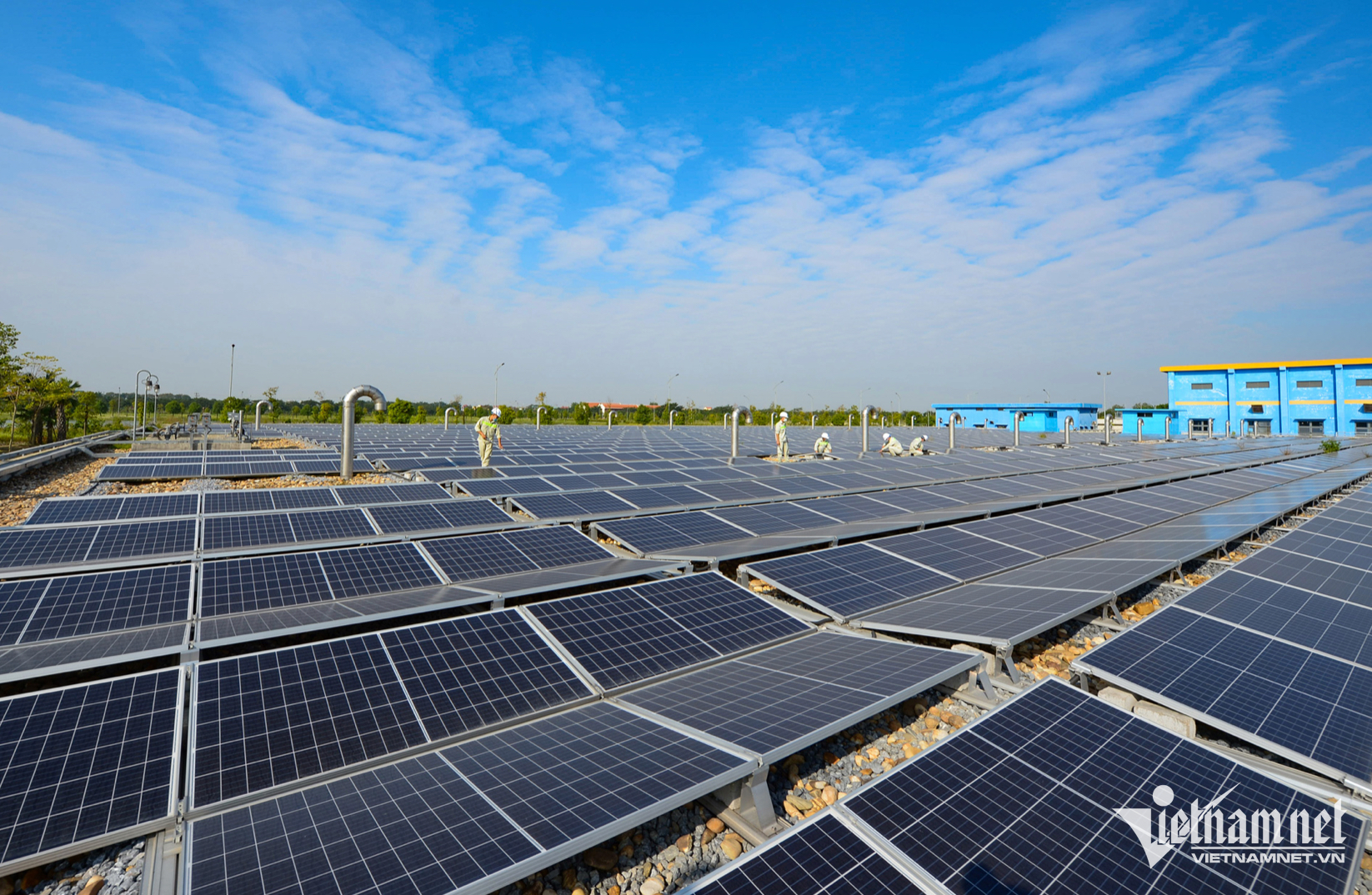
In comments on Vietnam's proposed 2026 electricity generation pricing framework, Vietnam Electricity (EVN) estimates that utility-scale ground-mounted solar projects equipped with battery energy storage systems would have generation prices ranging from VND1,104.43 to VND1,549.70 per kWh (approximately US$0.042-0.059), depending on the region and the investment assumptions for battery storage.
For floating solar projects with BESS, the estimated price ranges from VND1,298.73 to VND1,822.63 per kWh (US$0.050-0.070).
In developing the pricing framework, EVN assumes storage capacity equivalent to 10% of a solar plant's installed capacity. Investment costs for BESS are based on bidding results from several power corporations, the Chinese market and global averages.
Under the current pricing framework issued by the Ministry of Industry and Trade, solar projects with battery storage receive tariffs roughly VND140-190 per kWh (US$0.005-0.007) higher than projects without storage, representing an increase of around 11-14%.
EVN said adding battery storage significantly increases total project investment, resulting in higher electricity generation prices than conventional solar projects.
As a result, electricity buyers are likely to pay more for projects equipped with battery storage, while the investment efficiency and overall benefits to the power system remain unclear.
Speaking with VietNamNet, energy expert Nguyen Huy Hoach said Vietnam's power development strategy calls for substantial growth in solar capacity by 2030. At the same time, rooftop solar incentive policies are expected to accelerate the expansion of distributed renewable generation nationwide.
This means the electricity system needs not only additional generating capacity but also greater flexibility to balance supply and demand throughout the day.
Solar generation typically peaks around midday. However, electricity demand reaches its highest levels during the late afternoon and evening, when solar output declines rapidly or disappears entirely after sunset.
In practice, the widening gap between electricity production and consumption has become one of the biggest operational challenges for the national grid. The value of each kilowatt-hour also varies significantly depending on when it is consumed.
Against this backdrop, Hoach said the greatest value of BESS lies not in producing additional electricity, but in shifting energy from periods of surplus generation to periods of peak demand, helping optimize overall system operating costs. Although this benefit is difficult to capture within conventional project financial models, it plays a critical role in grid operations.
The economic value of battery storage needs clearer measurement
According to Hoach, EVN, as the country's main electricity purchaser and supplier, must carefully assess any factor that could increase electricity costs across the economy.
If solar projects with battery storage receive higher electricity prices while the benefits delivered to the grid remain unclear or difficult to quantify, those additional costs will ultimately be passed on to consumers through higher electricity tariffs.
Vietnam also lacks a fully developed market mechanism for many of the grid services that battery storage can provide, including frequency regulation, voltage control, reserve capacity and overall system balancing. As a result, most battery investment costs currently can only be recovered through electricity prices.
Hoach therefore said EVN's request to clearly quantify the economic value of battery storage before incorporating it into electricity pricing is justified from both technical and economic perspectives.
He stressed that while battery storage increases investment costs at the project level, it can reduce operating costs across the national power system, lower the need for expensive peak-load generation and improve the integration of renewable energy.
The costs of BESS are incurred by individual projects, while many of its benefits are shared across the entire electricity system. As such, mechanisms are needed to measure and allocate the value created by the technology more fairly.
According to Hoach, EVN's proposal is essentially a call for a transparent economic basis before passing battery storage costs on through electricity prices.
Ultimately, he said, the debate is not whether Vietnam should develop battery storage, but how to accurately value the benefits it delivers to the national power system. That question is expected to become one of the defining issues in Vietnam's energy transition over the coming decades.
Overall, battery energy storage can address solar power's greatest weakness, but not without significant cost. Without a clear mechanism to assess its economic value, the electricity system risks paying more for a solution whose overall effectiveness remains open to debate.
Tam An
.svg)
