 Vietnamnet.vn

 Podcast



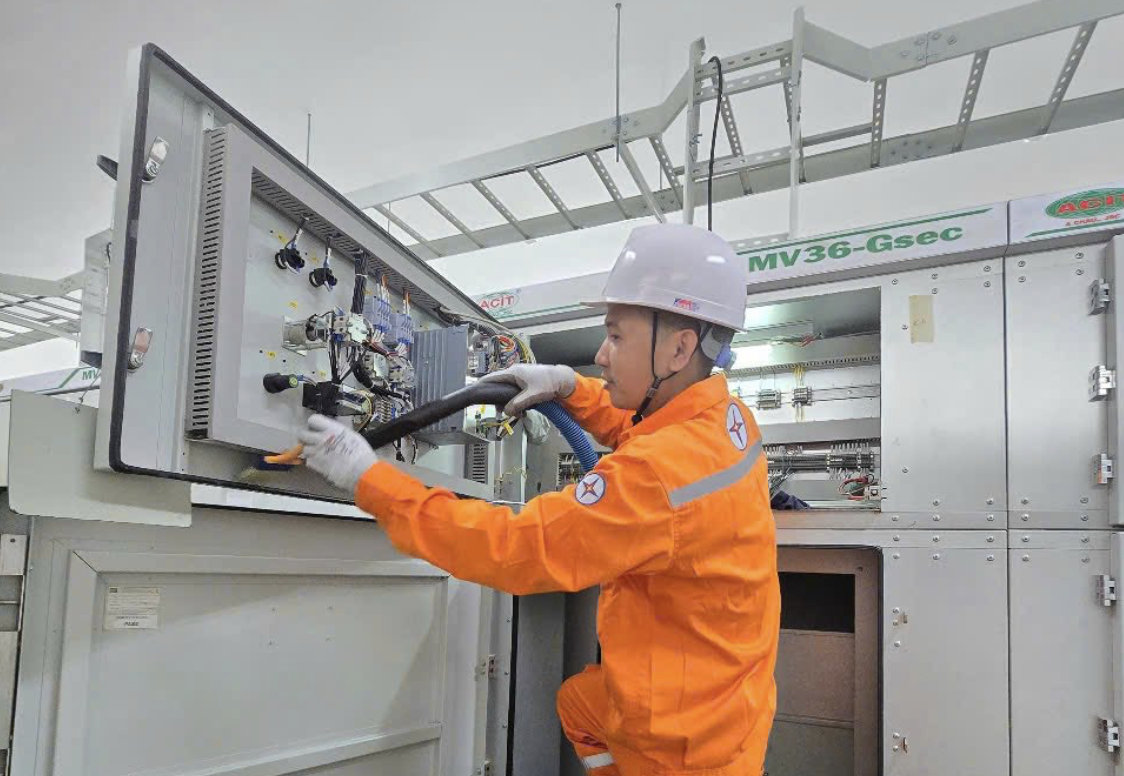
The Ministry of Industry and Trade (MOIT) has issued Decision 963 regulating peak, off-peak and normal hours for the national power system. Under the new framework, peak hours will be concentrated in the evening from 5:30pm to 10:30pm daily, while off-peak hours will run from midnight to 6:00am.
Specifically, peak hours will apply from Monday to Saturday, between 5:30pm and 10:30pm, totaling five hours per day. Peak-hour pricing will not apply on Sundays.
Normal hours will apply from Monday to Saturday during two periods: from 6:00am to 5:30pm and from 10:30pm to midnight, totaling 13 hours per day. On Sundays, normal hours will apply from 6:00am to midnight.
Off-peak hours will apply from midnight to 6:00am every day of the week, totaling six hours per day.
MOIT proposed amending Circular 60/2025 to immediately implement the new electricity time-of-use framework. The National System and Market Operation Company (NSMO) and Vietnam Electricity (EVN) also proposed applying the new schedule as early as June 2026.
However, businesses have expressed concerns that the change could increase production and operating costs, as electricity consumed during peak hours is charged at significantly higher rates than during normal and off-peak periods.
At the seminar “Ensuring Electricity Supply During the 2026 Dry Season” on June 10, Bui Quoc Hung, deputy director general of the MOIT’s Electricity Authority, said that peak hours were previously divided into two periods each day: a midday peak and an evening peak.
Under Decision 963, however, peak hours are concentrated in the evening. The adjustment will affect different customer groups in different ways.
Hung noted that for industrial manufacturers, the level of impact depends on each company’s operating model. Some garment manufacturers, for example, operate only two shifts, while many others run three shifts, resulting in different levels of electricity consumption during peak hours.
For commercial and service businesses, shopping centers typically consume large amounts of electricity from morning through evening, especially during hot midday periods. Restaurants and hotels tend to have higher electricity demand at night, precisely when the new peak-hour period applies, making them more directly affected.
On the supply side, small hydropower plants with reservoirs can adjust operations based on price signals. Instead of generating electricity evenly throughout the day, they may store water during off-peak periods and increase generation during peak hours to take advantage of higher electricity prices.
Hung noted that adjusting the electricity time-of-use schedule will affect both electricity consumers and power generators.
Ngo Son Hai, deputy geberal director of EVN, said that MOIT has issued guidance on the revised schedule and is currently amending the circular to formally establish the effective date, EVN has begun preparations.
The new schedule requires updates to electricity meter configurations. Because many different types of meters are in use, implementation will require considerable time and resources due to the large volume of work involved.
“We will prioritize immediate configuration updates for major customers and those capable of adjusting their consumption patterns in time for upcoming heat waves,” Hai said.
The revised peak-hour schedule will allow businesses to review and adjust their electricity usage plans, helping optimize costs and improve operational efficiency.
The EVN executive also emphasized that the new peak-hour framework primarily affects production and business customers. Household electricity users will not be affected, as retail electricity prices for residential customers remain unchanged regardless of the time of day electricity is consumed.
However, Hai noted that evening peak hours are always the most challenging period for the power system because residential electricity demand rises sharply while solar power generation is no longer available to provide support.
He therefore recommended that all customers, including residential users who are not directly affected by the new peak-hour pricing framework, voluntarily reduce electricity consumption during periods of high demand to help ease pressure on the power system.
According to Hai, the objective of the revised peak-hour schedule is to encourage customers to shift electricity consumption to more suitable periods, thereby reducing strain on the system and lowering overall costs. Businesses should review their production and operating plans to adapt to the new policy.
Tran Chung
.svg)
