 Vietnamnet.vn

 Podcast



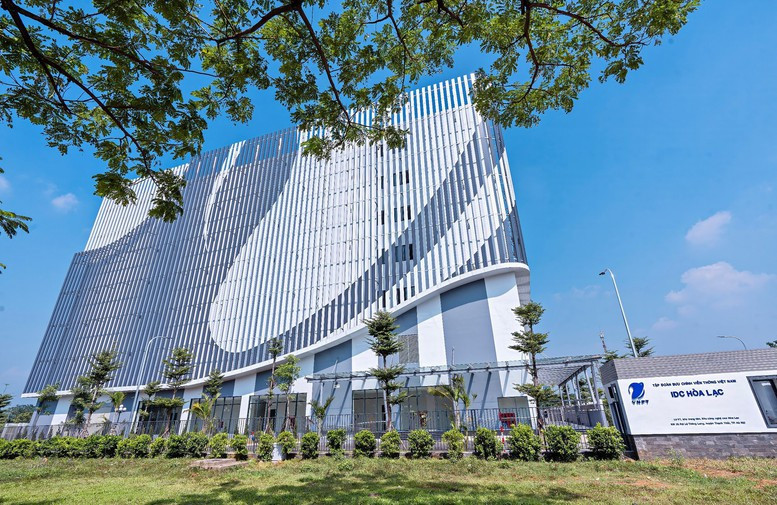
MOIT’s Circular No60/2025/TT-BCT dated December 2, 2025 stipulates the application of electricity prices based on commercial purposes, instead of production purposes, for data centers. Viettel, VNPT, FPT Telecom, CMC, and VNG Data Center have submitted petitions to the Ministry regarding the change in electricity pricing for data centers.
Power companies in various localities have announced the new electricity tariff framework for businesses operating data centers. A representative of CMC Telecom stated that after the first three billing cycles under the new pricing scheme, electricity costs, which account for the largest proportion of data center operating expenses, would increase by more than 50 percent compared to previous levels.
This sharp increase woukd have a substantial impact on financial plans, service pricing structures, and the ability to maintain stable operations and expand investment.
“According to our calculations, Vietnamese technology enterprises operating data centers will have to pay an additional VND1 trillion per year to EVN. This will immediately place significant pressure on data centers, potentially leading to losses. It will also adversely affect foreign investment at a time when Vietnam is seeking to attract major technology corporations in semiconductors and AI in line with the Party and State policies. This move also runs counter to the Politburo’s Resolution 57, which aims to promote high technology and digital infrastructure development in Vietnam,” said Ngo Trong Hieu, General Director of CMC Telecom.
Viettel IDC General Director Le Ba Tan said that shifting electricity rates from "production" to "business" modes will significantly increase costs for enterprises.
This framework will raise immediate costs by VND1 trillion, causing data center operators to suffer losses unless they raise service prices for customers.
“In some localities, we have received notifications of the new price framework. This will push service providers into difficulties and losses because we cannot immediately increase prices for customers due to previously signed contracts. An estimated 20,000 of our customers will face higher prices. It will also heavily affect the national digital transformation process as per the spirit of Resolution 57. Furthermore, it will impact the attraction of large foreign tech corporations and Vietnam's investment environment,” the Viettel representative said.
An expert told VietNamNet that, typically, data center electricity usage accounts for about 2-3 percent of a country's total consumption. In Vietnam, this figure is much lower, at under 2 percent.
Many nations view data centers as digital infrastructure, even the "infrastructure of infrastructures", and have strategic incentive policies to promote them. Data centers are the backbone of digital transformation, requiring supportive development policies.
The expert said that if high electricity rates are applied, tech enterprises will lose interest in investing in this field, which will harm national digital infrastructure and Vietnam's competitiveness.
In their petition to MOIT, Viettel, VNPT, FPT Telecom, CMC, and VNG Data Center argued that data centers must be viewed as production activities rather than business services.
Specifically, a data center operates as a specialized technical-industrial facility with characteristics similar to a manufacturing plant: stable base load, high power consumption, 24/7 operation, multi-layered complex technical systems (power, cooling, safety, backup, monitoring), and electricity consumption serving as a "production line" that creates digital infrastructure capacity.
Electricity in a data center is a direct, essential, and irreplaceable input to "produce" computing, storage, and connectivity capacity, as well as a safe and stable operating environment for the information systems of state agencies, businesses, and social organizations.
The tech firms affirmed that data centers are not commercial retail locations or consumer service outlets; they do not serve on-site electricity consumption purposes.
On the contrary, data centers function as foundational infrastructure enabling other sectors to operate, playing a role comparable to electricity, water, or industrial park infrastructure in the traditional economy.
Data centers serve as cross-sector production inputs and constitute a core component of digital infrastructure, acting as the central node in the digital infrastructure ecosystem, which includes physical infrastructure, digital platforms, IT industry development, IT applications, and cybersecurity.
They ensure continuous and reliable data flows, forming a digital ecosystem and knowledge flows to organizations and citizens, directly linked to cybersecurity and national digital sovereignty.
Moreover, data centers provide production inputs for numerous sectors, including digital government, finance and banking, industry, logistics, energy, e-commerce, healthcare, education, and AI.
Thai Khang
.svg)
