 Vietnamnet.vn

 Podcast



Located atop Thi Vai Mountain in Phu My Ward, Ho Chi Minh City, the 200-year-old Linh Son Buu Thien Pagoda stands out for its striking architecture nestled harmoniously in majestic nature. More than just a place of spiritual retreat, it also preserves a little-known legend involving Emperor Gia Long.
Perched over 400 meters above sea level, Linh Son Buu Thien Pagoda is also known as Thi Vai Mountain Pagoda, To Pagoda, or Upper Pagoda. It was formerly part of Van Hanh Quarter, Phu My Ward, Phu My City, Ba Ria - Vung Tau Province.
Affiliated with the Northern Buddhist sect, the pagoda features a distinct Japanese architectural influence set against the dramatic backdrop of mountain and forest. Within its grounds are two additional pagodas: Lien Tri and Hong Phuc.
Lien Tri Pagoda, often referred to as Lower Pagoda, is situated at the mountain’s base.
According to Venerable Thich Phap Hue, the current abbot of Linh Son Buu Thien Pagoda, the site is tied to a legendary episode from Emperor Gia Long’s life. Before ascending to the throne, Nguyen Anh once lost his way in the Thi Vai mountains and was helped to safety by a nun named Dieu Thien who lived in the area.
When he became emperor and adopted the reign title Gia Long (1802–1820), he honored Nun Dieu Thien with the title “Linh Son Thanh Mau” (Holy Mother of the Sacred Mountain). Her hermitage was officially designated Linh Son Buu Thien Temple, and the mountain was named Thi Vai in her memory.
From its founding until 1945, the pagoda was led by four successive abbots. Over the years, it endured many historical upheavals. In 1964, it was severely damaged and underwent several stages of restoration. In 1999, Most Venerable Thich Tri Quang, then head abbot, oversaw a major reconstruction of the entire complex.
In 2018, Venerable Thich Phap Hue assumed leadership and continued developing the site, adding new structures that contribute to the temple’s solemn and elegant atmosphere.
The path from the base to the summit features over 1,300 winding stone steps spanning about 3 kilometers, shaded by dense forest. Along the way, visitors find rest stops ideal for photography and scenic contemplation.
At the peak, the temple’s towering gate with its double red-tiled roofs resembles the iconic “heaven’s gate” of Linh Quy Phap An in Lam Dong. A large stone stele at the center of the gate recounts the history of the pagoda.
The main hall, or chanh dien, is the spiritual heart of the temple. Its curved roof tiles and intricate carvings exude a timeless elegance. Inside, a solemn statue of Shakyamuni Buddha is enshrined on a high altar in a tranquil setting.
Beside the main hall stands a 9-meter-tall white stone statue of Amitabha Buddha, poised serenely atop a lotus pedestal in a reflective pond.
Also within the temple grounds lies a 6-meter-long reclining Buddha statue, adding to the site’s sense of peace.
Nguyen Thi Hoa, a 45-year-old pilgrim from Dong Nai, shared her impressions of the visit. “Though the climb was tiring, reaching the top brought a deep sense of calm. Surrounded by peaceful nature and the sound of chanting from the main hall, I felt my spirit restored,” she said.
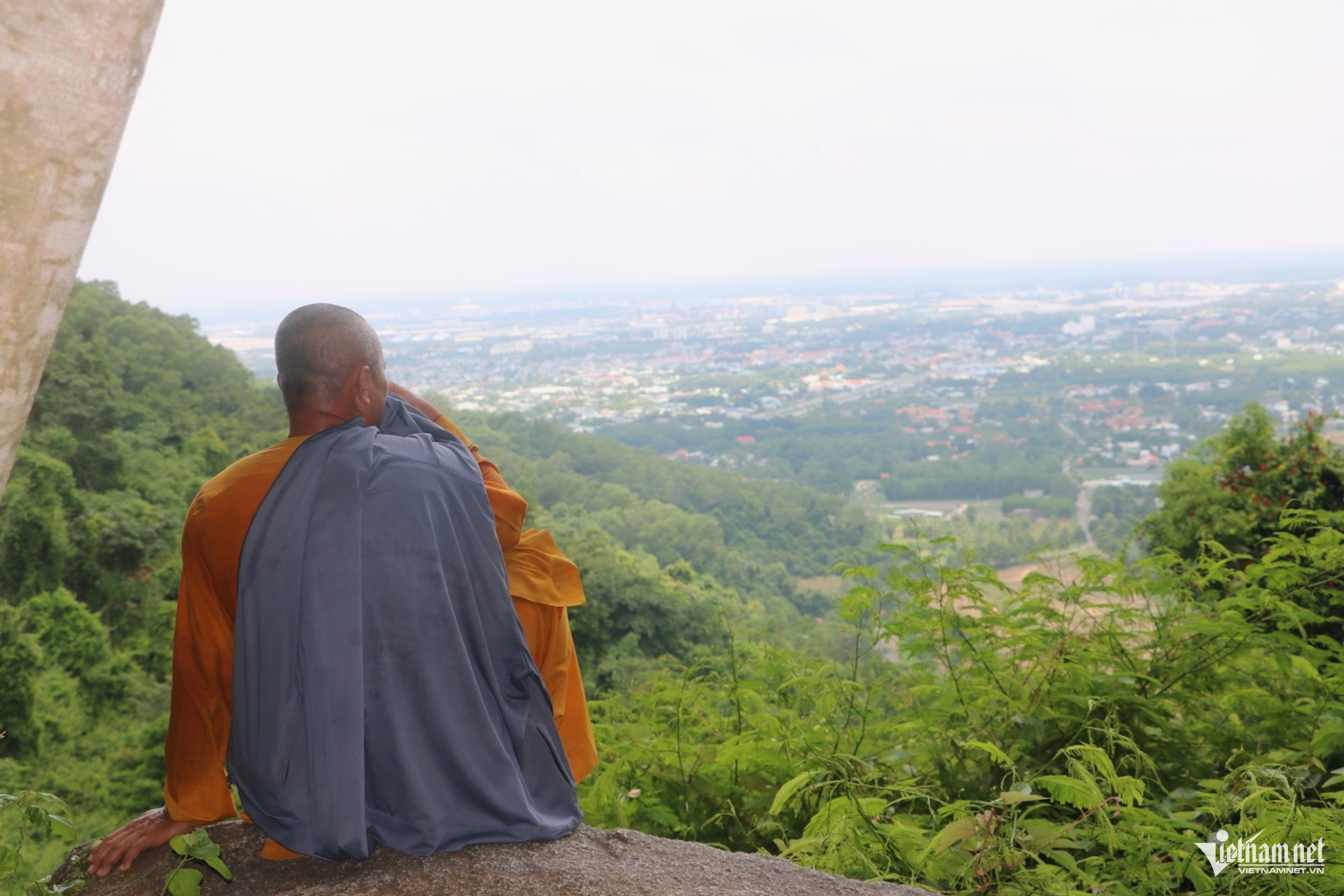
More than just a spiritual destination, Linh Son Buu Thien Pagoda also attracts visitors seeking a place for meditation. Many choose the mountain climb as a personal challenge to test endurance and inner strength.
Each year, the temple hosts several Buddhist festivals based on the lunar calendar, including the opening sutra ceremony on the 4th day of Tet, Vu Lan Festival, and other traditional events.

Linh Son Buu Thien Pagoda atop Thi Vai Mountain is tied to Emperor Gia Long’s legacy.

The ancient pagoda features Northern Buddhist architecture with Japanese influences.

The steep path to the summit includes over 1,300 winding stone steps.
The Lien Tri Pagoda at the mountain’s base is known as the Lower Pagoda.

The temple gate at the mountaintop is compared to Linh Quy Phap An’s iconic entrance.

The main hall features intricate design and houses a statue of Shakyamuni Buddha.

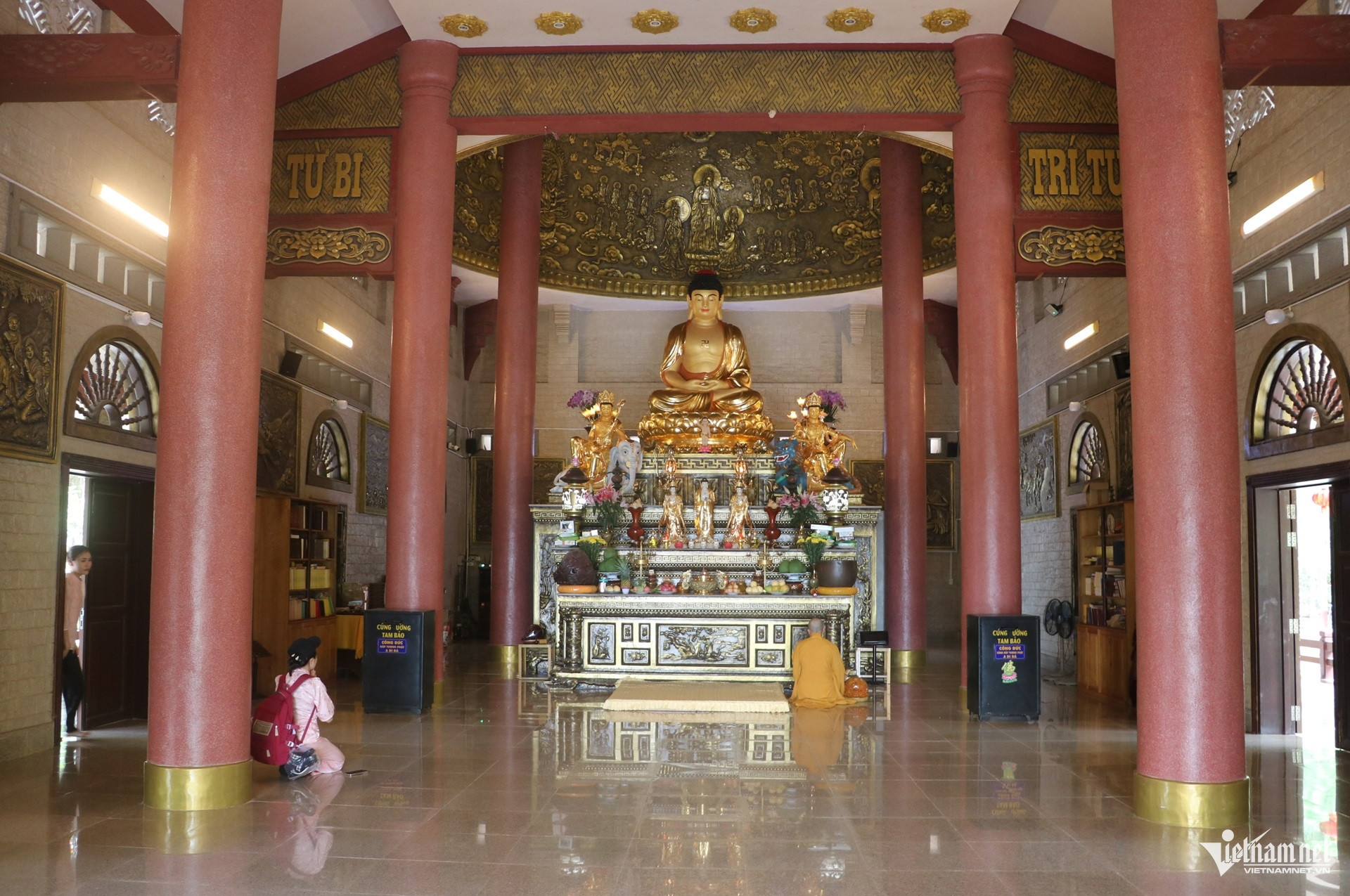

A 9-meter Amitabha Buddha statue stands beside the main hall.
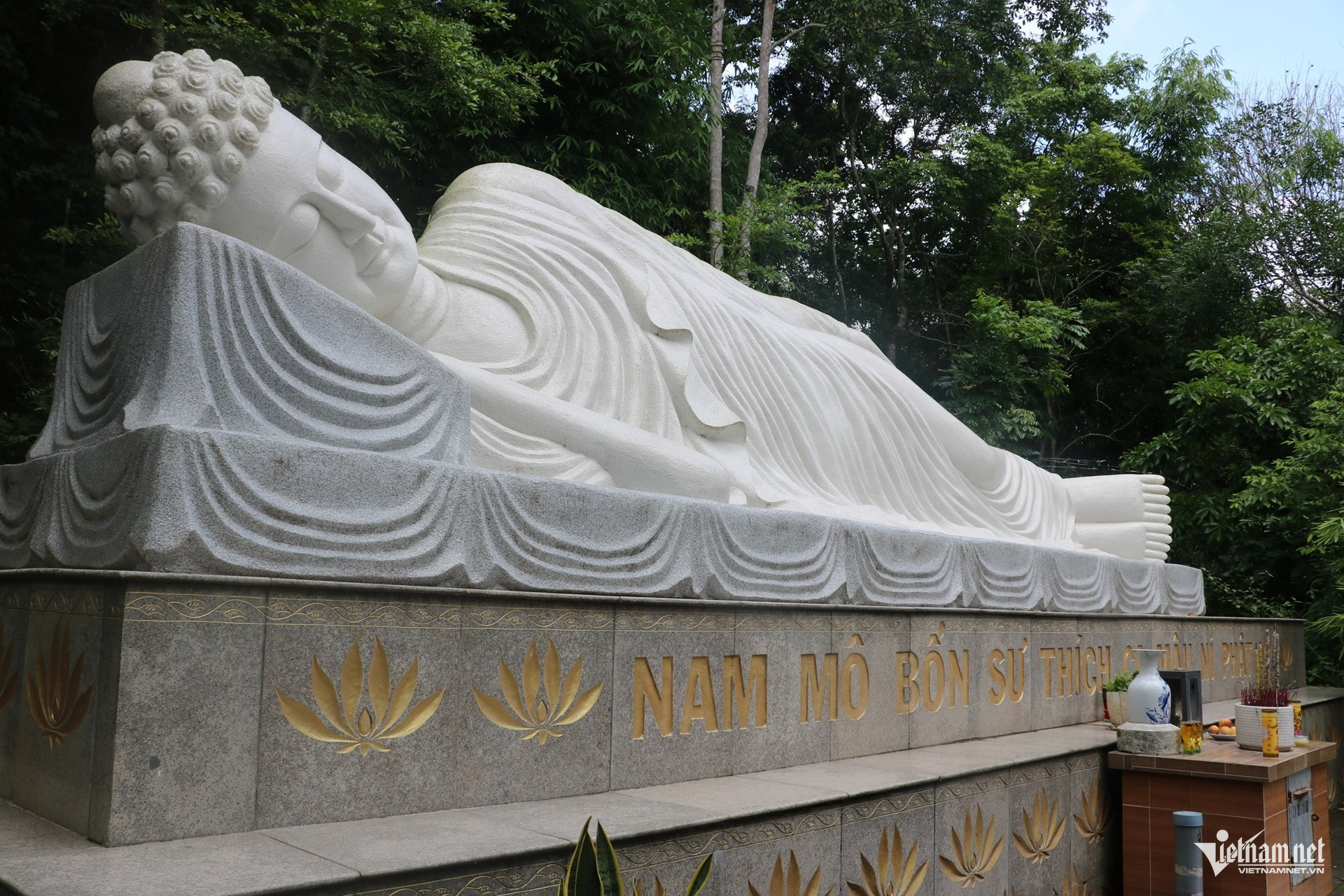
A reclining Buddha statue stretches over 6 meters within the temple grounds.

Quang Hung
.svg)
