 Vietnamnet.vn

 Podcast



Few people have a perfect genome. If they marry someone with the same recessive gene, they will risk giving birth to children with diseases that could lead to disability or even early death.
Nguyen Thi Hoa from Yen Phong district in Bac Ninh province, for example, experienced two pregnancies, both healthy with normal deliveries. However, just three days after birth, her babies stopped feeding, their skin turned purple then yellow and they passed away. She and her husband lost their children in shock and grief, and they could not understand why. Local hospitals couldn’t say why either.
Later, Hanoi Medical University’s doctors discovered that the parents carried a recessive gene that causes a urea cycle disorder, causing their children to inherit the gene and fall ill. The doctors identified the faulty gene, enabling the couple to undergo assisted reproductive intervention to have a healthy child.
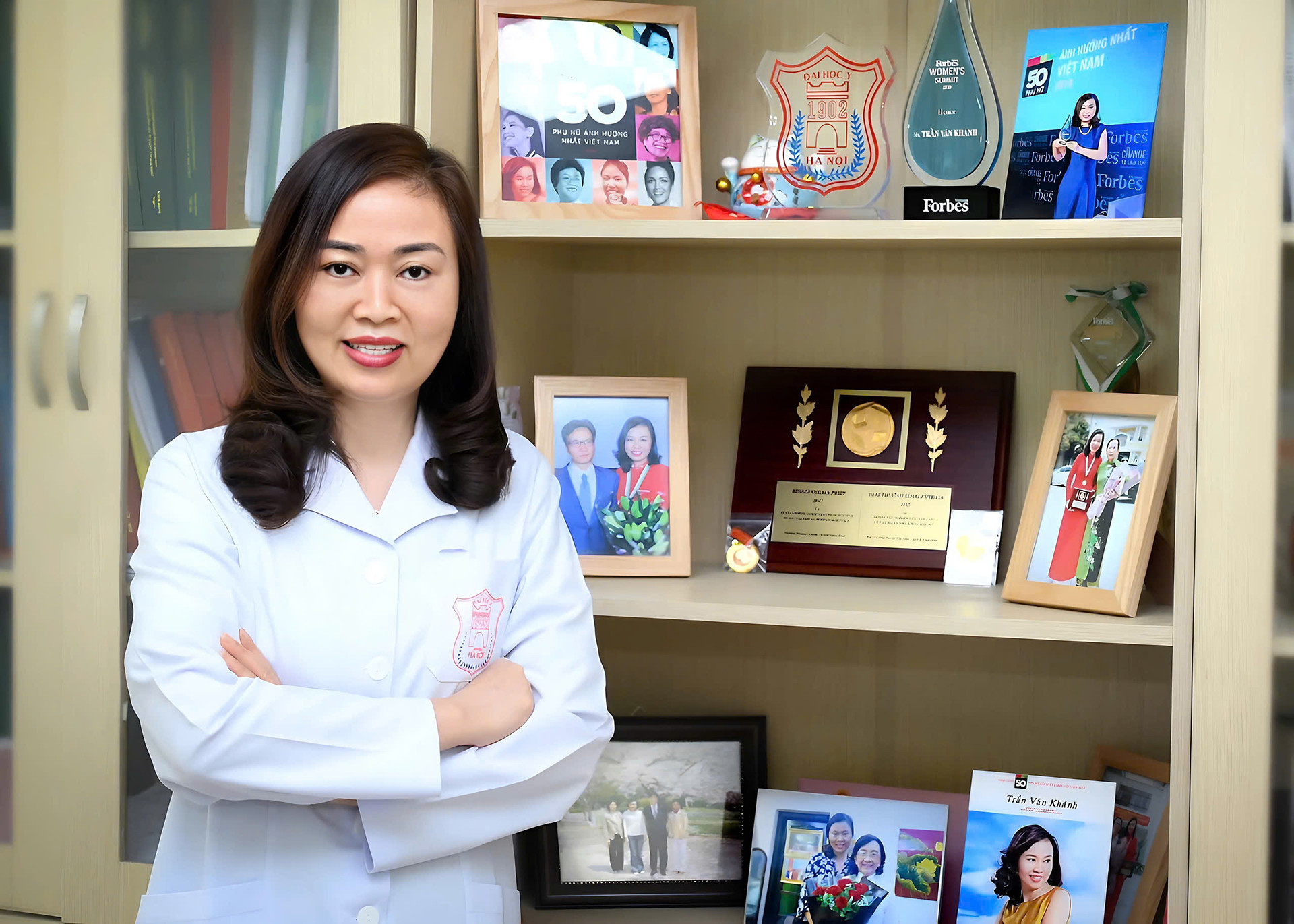
This is just one of many couples that Khanh, head of the Department of Molecular Pathology under the Faculty of Medical Technology, and Director of the Gene-Protein Research Center at Hanoi Medical University helped track down recessive genetic diseases.
VietNamNet spoke to Khanh about her work and molecular medicine development in Vietnam.
Twenty years ago, molecular medicine was not well known in Vietnam. Could you please tell us why you chose to choose this field?
I think the profession chose me. I was a graduate researcher in Japan at a center specializing in genetic diseases. I believe that decoding and detecting disease-causing genes would address the problem at its root.
Each year, about 41,000 children in Vietnam are born with congenital defects, and 80 of them are linked to genetic disorders. That’s why I worked hard to learn the latest knowledge and technologies in Japan to apply them to patients in Vietnam.
Upon returning, I met families with children suffering from thalassemia, muscular dystrophy that robbed them of mobility, and they had congenital metabolic disorders and primary immunodeficiency. I deeply felt their pain. Parents with recessive genes still can be healthy and can work normally, yet their children can’t.
Decoding genes to prevent genetic diseases for Vietnamese is still relatively unfamiliar. What are the challenges for the new field of study?
Researching genes is difficult work. The knowledge of families with affected children about rare diseases remains limited, thus posing challenges.
Many families don’t seek specialists’ help; they keep having children with the same conditions, attributing it to bad luck.
Meanwhile, the funding for scientific research remains modest, making it difficult for research teams to intensify their work. My research team at the medical school is lucky enough to access funding from some ministerial and state-level research projects, so we can expand our research on genetic disorder diseases.
My greatest wish is that patients can understand the problem (having children with inborn defects), and seek experts’ advice, to find the genes causing the defects.
There are thousands of gene-related diseases. These include diseases that I only see in 1-2 cases, and diseases I never see. We have to decode the entire genome (more than 20,000 genes) to find out the exact reasons causing the disease.
Have you and your team ever been stumped by a genome?
Many times. Currently, we can succeed in only 6-7 of every 10 cases, which means that the remaining 30 percent of cases remain unexplainable. I also met some couples who had two children with the same conditions, but I couldn’t find the reason even though we had decoded their entire genomes.
Science is never perfectly precise. In such cases, I advise couples to use donor eggs or sperm for assisted reproduction, hoping the genes from one parent will differ from the donor’s, allowing them to have healthy children.
In these cases, we advise couples to use donor ova or sperm for assisted reproduction.
I know that hundreds of families have undergone gene screening at your center. Which case impressed you the most?
A female teacher from Nam Dinh had a particularly striking story. She lost two sons shortly after birth. For 10 years, the family tirelessly sought treatment in Hanoi. When they came to Hanoi Medical University, we identified their faulty gene as a congenital fatty acid metabolism disorder. Collaborating with the Assisted Reproduction Center, we screened and eliminated defective embryos, selecting ones without gene mutations. Finally, they welcomed a healthy baby.
Phuong Thuy
.svg)
