 Vietnamnet.vn

 Podcast


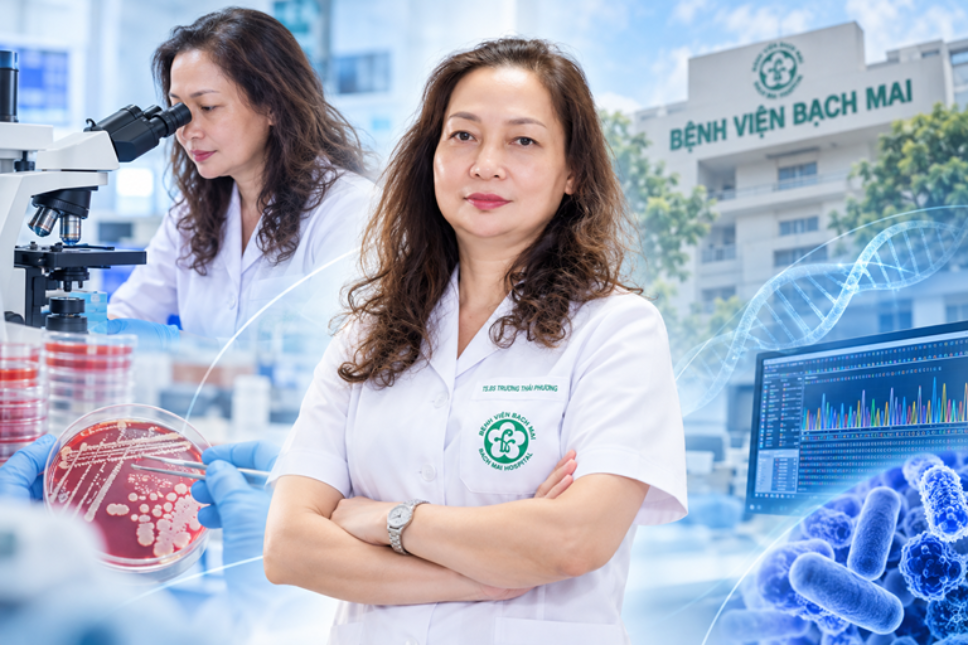
Devoting 23 years to the field of microbiology, Phuong, Deputy Director of the Institute of Medical Laboratory Sciences and Head of the Microbiology Department at Bach Mai Hospital (Hanoi), tirelessly searches for traces of disease-causing agents through every clinical specimen. Every precise result helps clinicians select the appropriate treatment path, offering patients a chance of recovery.
Rather than examining patients directly every day, Phuong works behind the test results, where specimens are analyzed, data cross-checked and traces of microorganisms sought. Before a treatment regimen is selected, hours of meticulous laboratory work may be needed to provide clinicians with the evidence they need.
For laboratory professionals, a specimen is never just a set of machine-generated metrics. Behind it stands a patient waiting for an accurate diagnosis, a family awaiting news, and a physician needing reliable information to determine a course of treatment.
Before issuing any microbiological result, Phuong asks herself: Is this result reliable? Does it align with the clinical presentation? Will this information truly assist in treatment?
Detecting a microorganism is not the end of the testing process. The findings must be analyzed, compared with the patient's symptoms and interpreted within the limitations of the testing method. An inaccurate result or a misinterpretation can affect treatment decisions, with the patient ultimately bearing the consequences.
"What I always strive to uphold is not just technical accuracy, but also my responsibility to every patient behind each result," Phuong said.
After 23 years in the profession, she understands that the contributions of laboratory professionals often go unnoticed by patients. Their reward, however, is knowing that test results help clinicians make the right decisions at the right time.
Racing against time during the Covid-19 pandemic
One of the most profound memories of Phuong's career comes from the Covid-19 pandemic. The number of specimens surged, results had to be delivered quickly, and every test could influence decisions on isolation, outbreak containment and infection control within hospitals. Speed was essential, but accuracy could not be sacrificed.
"During days of continuous work, even when we were exhausted, everyone kept striving to ensure accuracy and never allowed themselves to become careless," Phuong recalled.
The experience reinforced her belief that microbiology, molecular biology and genomic surveillance capabilities must receive sustained investment rather than attention only when outbreaks occur. These capabilities are essential to helping the healthcare sector prepare for future disease threats.
In microbiology, advances in molecular biology and gene sequencing are expanding the ability to detect pathogens while providing more data on microbial characteristics, drug-resistance mechanisms and transmission patterns. However, Phuong said, modern technology cannot replace professional judgment and the caution required of laboratory specialists.
Detecting a microorganism does not automatically establish that it is the cause of a patient's illness. Results must be considered alongside clinical symptoms and other relevant data to avoid inaccurate interpretations.
In her roles overseeing management and training, Phuong regularly reminds young doctors that clinical microbiology professionals do more than operate machines or follow technical procedures. More importantly, they must understand the significance of test results, recognize the limitations of testing methods and remain aware of the responsibility involved in drawing conclusions.
"Young professionals may be more proficient with technology and able to access global knowledge more quickly than our generation. But the most fundamental principle must remain unchanged: responsibility for every result we sign off on and for every patient behind that result," she said.
After 23 years, Phuong continues to pursue accurate pathogen detection as well as trust in the value of every laboratory result. Behind what may seem like dry data is always a person who needs an accurate diagnosis and the right treatment.
Phuong Thuy

