 Vietnamnet.vn

 Podcast



One day, while teaching about placental abruption, an obstetric condition, she maintained her habit of telling a few jokes to ease her students' tension.
Referring to the need for pregnant women to avoid walking on rough or unstable paths, she quoted a folk verse: "Do not cross the wobbly, uneven bamboo bridge."
A student called out: "So can we walk on a wooden bridge with nails, teacher?"
Looking at the youthful, innocent faces before her, she suddenly realized that those students had no idea the teacher standing at the lectern was preparing to leave. Immediately after the class. She cycled to the passport office and returned her documents. When asked why, she simply replied: "This is my country, so I stay."
In 1979, the chance to move to France arose again when her husband returned to Vietnam to sponsor the family. Yet she decided to stay once more. Unwilling to force her husband to live alone abroad, the couple agreed to divorce. She planned to sponsor him back to Vietnam in their later years. However, before that wish could materialize, he passed away in France in 2003.
Looking back on the past, she still carries the lingering pain of a woman who once had to choose between family and ideals. Yet she has never regarded her decision to stay as a simple act of sacrifice.
"France and the US have no shortage of doctors, but the patients here, the people to whom I owe a debt of gratitude, genuinely need my help," she said.
“‘We have to help people have children’”
In the mid-1980s, while treating patients, she encountered an increasing number of women who were unable to have children. One case that stayed with her was a woman from Hai Duong who traveled all the way to HCMC for treatment after having both fallopian tubes removed, leaving her unable to conceive naturally. Phuong searched through available materials, but there was almost no information in Vietnam on how to treat such cases.
In 1984, during a work trip to Thailand, she went straight to the library after work every day to research infertility. That was when she first learned about in vitro fertilization (IVF), which had been performed in the UK since 1978.
Phuong was determined to achieve the same for Vietnamese people, whatever it took. Whenever international delegations visited Tu Du Hospital, after finishing the official business, she would take the opportunity to ask them for equipment that could be used for IVF.
In 1994, after taking part in the surgery to separate conjoined twins Viet and Duc, the Ministry of Health sent her to France for doctoral studies. There, based on her experience, she was appointed professor.
“Professors in France earned quite high salaries. After paying taxes in both countries, I saved as much as I could to buy the equipment piece by piece. Whenever I had free time, I would go to IVF centers in France, carefully taking notes on every machine and every procedure. I then asked companies run by overseas Vietnamese to purchase the equipment and gradually ship it back to the HCMC Department of Health,” Phuong recalled with a gentle smile.
By 1995, when she returned to Vietnam, the laboratory was almost fully equipped. She used the money left over to send several doctors from Tu Du Hospital to France for further training in the technique.
But the biggest obstacle was not equipment. At the hospital, she had to persuade the management board and Party Committee before taking the proposal to the Department of Health and then the municipal People's Committee.
After months of waiting, on August 19, 1997, Tu Du Hospital was given permission to perform IVF.
The first procedure was carried out that very day.
Thirty-six couples were selected for the trial program. If it failed, the project risked being halted because of its enormous cost. The two weeks spent waiting for the results were a period when Phuong could barely eat or sleep.
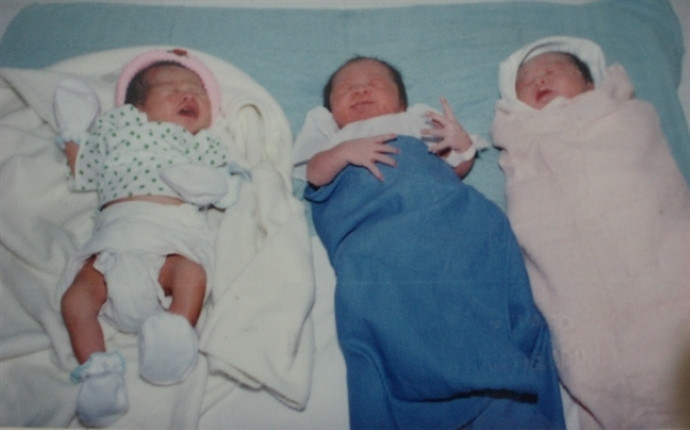
In the end, 11 women became pregnant and gave birth. The first three babies were born on the same day, April 30, 1998. Following that success, IVF was gradually expanded nationwide.
At 82, Phuong is not thinking about retirement.
“As long as I have the strength, I will keep working,” she said firmly.
Ngan Anh - Phuoc Sang
.svg)
