 Vietnamnet.vn

 Podcast



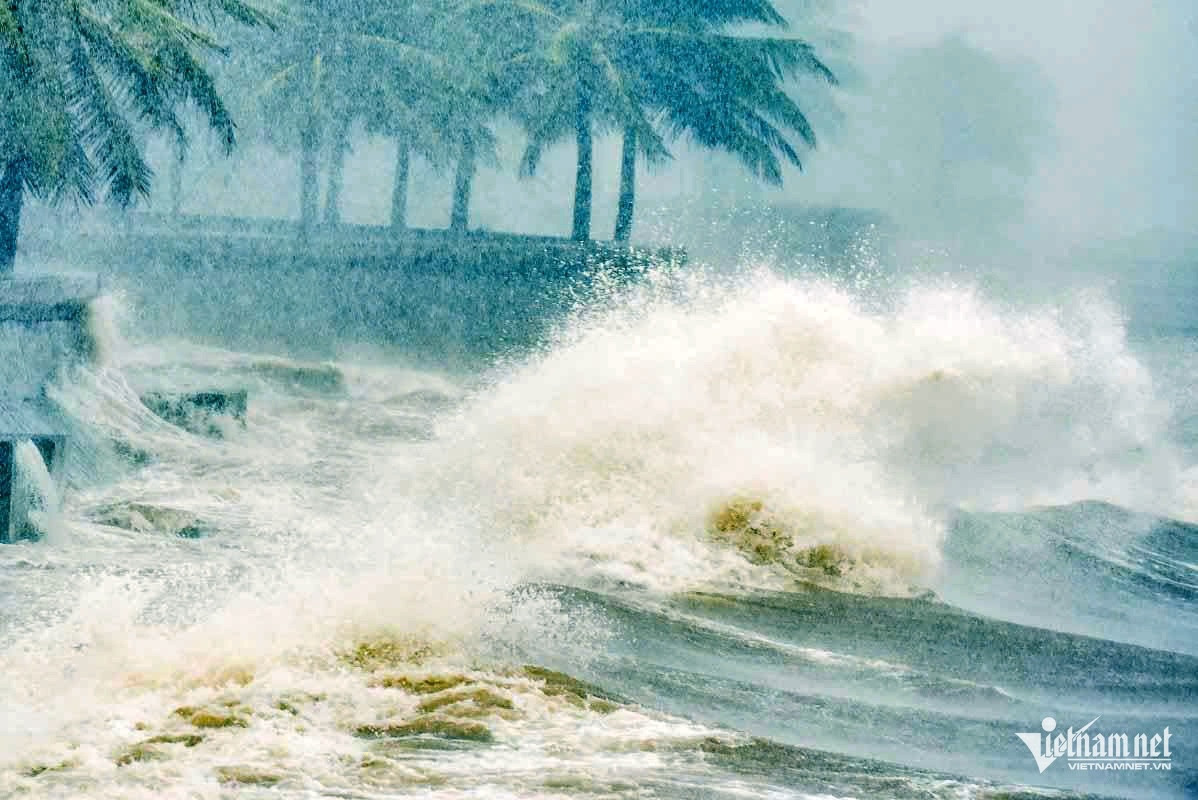
According to Mai Van Khiem, Director of the National Center for Hydro-Meteorological Forecasting, ENSO conditions in 2026 are expected to transition to a neutral phase before leaning toward El Nino in the later months of the year and into early 2027.
Historical patterns show that transitional ENSO phases often bring more volatile and less predictable weather.
“Current assessments suggest that storm and tropical depression activity in the East Sea in 2026 may not exceed the long-term average,” Khiem said.
Seasonal forecasts indicate that from April to June 2026, storm and tropical depression activity over the East Sea, as well as those directly affecting the mainland, will be close to the multi-year average, with around 1.8 systems at sea and 0.3 making landfall.
From July to September 2026, tropical cyclone activity is expected to increase. However, the number of storms and landfalling systems is still forecast to remain near average levels, at approximately 6.5 and 2.9 respectively.
Overall, the total number of storms and tropical depressions in 2026 is expected to be lower than the long-term average of 12.7 systems in the East Sea and 5.1 making landfall.
Storm paths becoming harder to predict
Typically, from June to September, storms tend to affect northern Vietnam more frequently, while from September to December, the focus shifts toward central and southern regions.
However, Khiem noted that under the influence of climate change, storm trajectories and timing are becoming increasingly difficult to predict, with more unusual developments likely.
He emphasized that continuous ENSO phase transitions at a large scale can destabilize the ocean-atmosphere system, increasing the likelihood of extreme weather events such as powerful storms and high-intensity rainfall in 2026.
Notably, higher-than-average sea surface temperatures create favorable conditions for storms to intensify more rapidly and produce heavier rainfall.
As a result, even if the total number of storms is not particularly high, the risk of strong storms accompanied by heavy rain, flooding, flash floods, and landslides remains a serious concern.
Heatwaves and drought risks on the rise
Experts also warn that heatwaves in 2026 may arrive earlier, last longer, and reach higher intensity.
Meanwhile, the number of widespread heavy rain events across the country is forecast to be near or below average, raising the risk of drought, water shortages, and saltwater intrusion, particularly in the Central, Central Highlands, and southern regions.
Strengthening disaster response and coordination
In the context of increasingly extreme weather due to climate change, experts recommend that authorities and the public closely monitor meteorological forecasts, especially short-term updates within one to three days.
Based on these forecasts, agencies and communities should proactively adjust production plans, response strategies, reservoir operations, and ensure the safety of infrastructure, downstream areas, and livelihoods.
The Ministry of Agriculture and Environment stressed the need for ministries, sectors, and localities to完善 legal frameworks for disaster prevention and control in a synchronized and unified manner, clearly defining responsibilities to avoid overlap.
It also highlighted the importance of decentralization tied to accountability at the local level, particularly under the two-tier local government model, to enhance operational effectiveness and ensure close coordination in disaster response and recovery.
The year 2025 was marked by particularly abnormal and extreme hydro-meteorological events, causing significant human and economic losses nationwide and setting multiple records.
Specifically, the East Sea recorded 21 storms and tropical depressions, making it the most active year since records began in 1961, surpassing the previous record of 20 set in 2017.
The 2025 storm season also featured several unprecedented phenomena, including Storm No. 1 (Wutip), which formed in June as the first storm of that timing in over 40 years; Storm No. 9 (Ragasa), which reached level 17 with gusts above level 17, becoming the strongest storm ever recorded in the East Sea; and a late-November tropical depression that moved from the Indian Ocean to the northwest Pacific - a trajectory never previously documented.
Experts say these developments underscore a growing trend of increasingly extreme and unpredictable weather driven by climate change.
Bao Anh
.svg)
