 Vietnamnet.vn

 Podcast



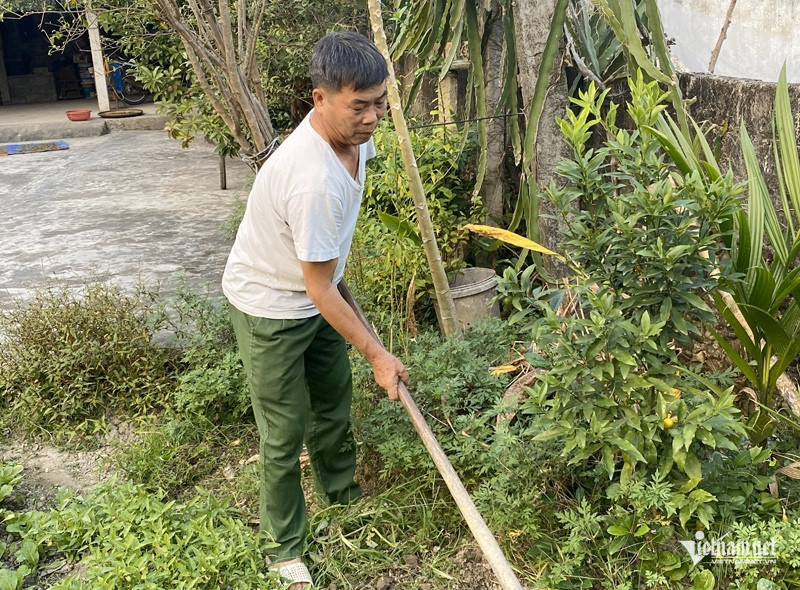
He says the job is “doing good deeds first, receiving reward later,” but it is not something everyone would dare to do.
For the past 10 years, the final months of the lunar year have been the busiest for Nam, born 1965, from Van Phu Commune, Thai Nguyen Province. During this peak season, calls pour in from villagers near and far requesting his services for reburial rituals.
Nam originally made a living with rice farming and tea growing. Nearly 10 years ago, he came to the grave-exhumation profession in an unexpected way. That year, he helped relocate the remains of a relative. Together with others, he cleared the grave, dug the soil, and when it came time to open the coffin.
A strange thing happened: despite being buried for seven years, the body remained perfectly intact when the coffin was opened. Terrified, some family members fainted while others fled. Only Nam stayed there, using a flashlight to inspect the situation and find a solution.
Nhung, Nam’s wife, recalled: “My husband wasn't afraid. He jumped down, handled the body, and arranged the remains into the burial jar so the family could move them to the new site. Since then, word of mouth spread. Relatives sought him out, and eventually, strangers did too. Gradually, it became his profession.”
In his nearly 10 years of work, Nam has encountered three other such "difficult" cases. Not every exhumation goes smoothly. Usually, families wait seven years after death to exhume, but the remains aren't always "dry." "If the remains are clean, it’s quick; but encountering a 'difficult' case means a hundred-fold more hardship," he said.
In November 2024, Nam accepted a job for someone who had passed away eight years prior. He had carefully checked the burial timeline and spiritual factors, agreeing beforehand: if the body was intact, they would go for cremation. If "dry," they would proceed traditionally.
However, upon opening the lid, the body was almost entirely intact. "I’ve seen tough cases, but rarely one like this," Nam recounted.
The descendants panicked and ran away, leaving only Nam and two team members to wait until the family calmed down to discuss a solution. In the end, the family did not want cremation and asked Nam’s team to “do a good deed” and help relocate the remains in the traditional way.
Nam and his co-workers then applied professional measures, handled the remains, carefully arranged them in a reburial jar and moved them to the new burial site. This was the case he remembers most vividly in nearly 10 years on the job.
“I’m not afraid. I just think of myself as a forensic doctor doing my duty. But for the family of the deceased, that scene was heartbreaking. As I worked, I felt sympathy for both the family and the deceased.
“This job truly is about doing good deeds. In such awkward situations, you need not only courage but also a kind heart to see it through,” Nam shared.
He said this is a special job. As long as the reburial is meticulous and the deceased is settled in a clean "new home," his mind is at peace. Most of this work happens at night, during hours chosen by the family. During peak times, he works from the afternoon until dawn, completing 3 to 5 graves in a single stretch.
The work usually takes place at night, according to the time chosen by the family. On peak days, he works continuously from the previous afternoon until dawn, completing relocations for three to five graves.
At the end of 2024, Nam handled about 20 graves in one month, with some nights involving five consecutive cases. Everything went smoothly, giving peace of mind to both him and the families. This year is a leap year, with fewer relocations, so he is temporarily less busy, but he predicts the end of next year will be busier.
At first, seeing her husband immersed in “work for the dead” night after night, Nhung felt uneasy. She once advised him to quit because the income was low, while the work was hard and full of odd situations.
Nam told his wife: “I do this with my heart, as a way of building merit. If people ask, I’ll help. Helping others brings some income, and my conscience feels at peace.” From then on, he received full support from his wife and children.
Thanh Minh - Nguyen Hanh
.svg)
