 Vietnamnet.vn

 Podcast



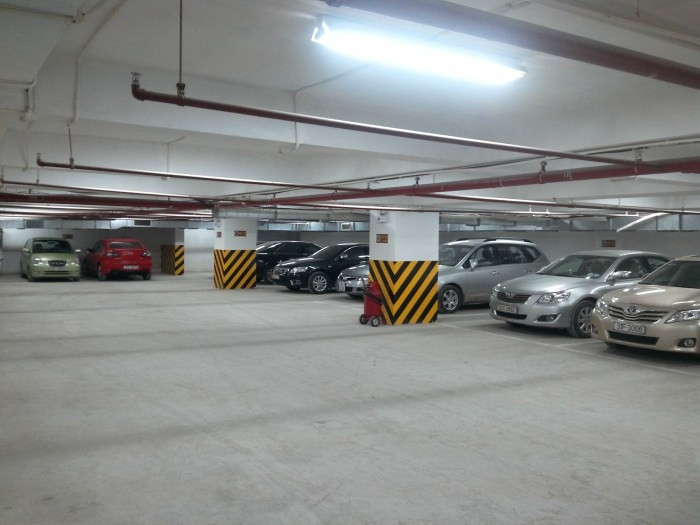
As a frequent luxury shopper, Nguyen Thanh Hung (Cau Giay, Hanoi) shared an unpleasant experience regarding parking fees at a major shopping center.
After a meal and a shopping spree totaling over VND5 million, Hung was still asked to pay VND50,000 for car parking upon exit. While the amount was not large, he described it as a feeling of being "over-taxed." Currently, car parking fees are VND20,000-30,000 for the first two hours, with an additional 10,000 VND for every subsequent hour.
Hung believes that rigid hourly parking fees at large downtown malls create psychological time pressure. During their shopping journey, many people have to constantly monitor the clock to avoid higher fee brackets, leading them to shorten their stay and reducing the likelihood of impulsive spending.
In contrast, he noted that many suburban malls, especially large-scale models, offer free parking for both cars and motorbikes. Consumers can comfortably stay for several hours, combining dining, shopping, and movies without worrying about extra costs. This peace of mind has led his family to drive further in exchange for a more pleasant and "value-for-money" experience.
Actual observations show that downtown malls typically apply high, hourly-based parking fees, particularly for cars. Conversely, suburban centers often have policies for free parking for many hours, or even the entire day.
While downtown parking lots are often cramped, with steep ramps and difficult navigation, suburban malls boast spacious, well-planned, and modern facilities that are easy to access, allowing customers to stay longer with peace of mind.
If parking were free, there would be no space left
Thanh Tung, a senior building and shopping mall manager, said that malls in core urban areas within Ring Road 1 cannot apply free parking policies like those in suburban areas.
Given scarce inner-city land and heavy traffic pressure, if hourly fees were not charged, parking areas would quickly be “filled up” by people parking to go to nearby offices rather than by shopping customers.
Tung noted that with high operating costs for ventilation, lighting, security, and risk insurance in “golden land” basements, parking revenue in reality can hardly fully cover expenses.
Mall operators understand the inconvenience to customers but are forced to maintain this barrier to regulate use and prioritize space for those with genuine shopping needs.
In Singapore, large malls such as VivoCity still charge hourly parking fees of around SGD2–4 per hour (about VND35,000–70,000). However, they often offer one to two free hours or refunds if customers reach a certain spending threshold.
Suburban malls apply free parking policies not because operating costs are lower or management is more “lenient,” but due to customer attraction and retention strategies.
First, being far from city centers, customers usually have to travel by car or motorbike. If high parking fees were still charged, they would lack motivation to travel long distances, especially when many more convenient entertainment options exist.
Second, suburban malls have large land space, allowing for spacious parking planning, with significantly lower cost per parking space compared to inner-city areas.
In this context, parking is not considered a direct revenue source, but rather part of the investment cost for customer experience, aimed at extending dwell time. Without parking worries, consumers are willing to stay longer, dine, shop more, and incur additional unplanned spending.
Third, suburban malls often position themselves as all-day destinations for families and groups of friends, not just quick shopping spots. Free parking creates a relaxed, comfortable feeling, encouraging customers to view malls as weekend living spaces.
In the long run, revenue from dining, entertainment, and retail far exceeds parking fees, making free parking an effective investment in building consumer habits and loyalty.
How should parking fees be set?
Tran Khanh Minh Son, an expert, said that many eateries and restaurants in central areas have provided free parking tickets to customers. This practice shows that businesses understand that parking costs, though not large, directly affect consumer psychology.
From a retail and service perspective, supporting parking fees is not just a small perk, but an effective tool to reduce experience barriers and increase overall value. When parking is subsidized or free, customers tend to stay longer and are more willing to return.
According to Son, the argument that central areas lack parking space and therefore cannot offer free parking is operationally valid, but insufficient from a retail strategy perspective.
A reasonable solution is conditional and targeted free parking. Shopping malls could offer two to three free hours for customers with shopping, dining, or cinema receipts, while increasing fees for those who park without spending or exceed the standard time limits.
Hoang Hiep
.svg)
