 Vietnamnet.vn

 Podcast



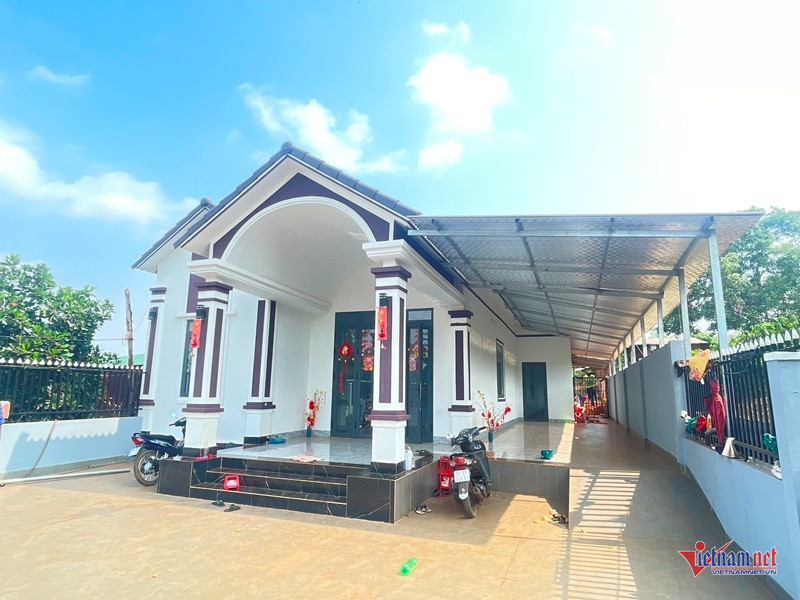
Under the scorching peak of the dry season, we arrived at Triel village (Ia Pnon commune, Gia Lai), home to nearly 90 Jrai households of Cambodian origin. Looking at today’s solid houses and lush farms, few would imagine the journey of blood and tears behind them.
Welcoming us was Ksor Biu (born 1986), Party secretary and village head of Triel, a second-generation Cambodian living in Vietnam. After pouring tea, he began recounting the life-and-death escape of thousands of Cambodians during the genocide period.
According to Biu, his father said that around 1975, when Pol Pot massacred innocent people, many families were forced to flee their homeland to survive.
“At that time, people could not bring much with themselves, only a few clothes and personal belongings. Adults carried children, trekking through forests and streams, running as far as possible in search of safety,” he said.
The journey was marked by hunger and danger. Some collapsed along the way, others were separated from family members. By the time they reached Vietnam, they had nothing left but their lives.
Local authorities later received them and arranged settlement in what is now Triel village. In the early days, life was extremely difficult. With no land or capital, they had to clear forests, cultivate fields, and seek seeds to grow cassava and rice. Thanks to support from authorities, border guards, and local residents, their lives gradually stabilized.
Later, when returning to visit their homeland, relatives encouraged Biu’s family to go back, but he declined. “I was born and raised in Vietnam. My father rests here, so I have no intention of leaving,” he said.
Building wealth on new land
As someone who rose from poverty, Ro Cham Nek (born 1978) shared that he and his wife were born and raised in deprivation, working many jobs but still struggling to eat. Not resigned to poverty, they continued to farm but also applied to work as rubber workers. Whenever someone took a sudden leave, he took over their tapping shift. Hearing someone returning a rubber garden, he immediately took it on to increase income.
"Rubber tapping usually takes place from 9pm to 11pm; if I took on more, it lasted until 1am, or even all night. After finishing, I went straight to the fields without sleeping," Nek shared.
"Not only was making a living hard, but we also nearly lost our first daughter while tapping rubber. Since then, we have always carried our children on our backs, never leaving them for a second," he said, his voice still trembling.
Thanks to diligence and boldness in switching crops, in 2012, he built a solid house. Currently, he owns 0.6 sao (1 sao = 360 sqm) of coffee land, 0.9 sao of rice, 3 hectares of cashew trees, and a herd of 15 cattle, with an annual income of about 250 million VND.
Recently, Nek invested over VND150 million to buy a tractor and trailer to transport farm produce. Besides serving his own farm, he also provides plowing and transport services for hire, becoming the first in the village to apply agricultural mechanization.
Starting with empty hands as well, Ro Mah Thuy (born 1982) worked as a rubber worker after getting married while developing his family economy.
From the wasteland left by his parents, Thuy mobilized all resources to clear and plant 7 hectares of cashews, 1 hectare of rubber, 0.5 sao of rice, and raise cattle. While the cashew trees were small, he intercropped cassava, earning about VND70 million annually to "use short-term crops to sustain long-term ones".
Realizing that rubber yielded low value, in 2019, he boldly switched to coffee. Thanks to that decision, his family income now reaches about VND300 million per year.
From desperate refugees, with support from the Vietnamese Party and State, Cambodians in the Gia Lai border region have built stable and prosperous lives.
Nguyen Hue, chair of Ia Pnon commune People’s Committee, said that with support from authorities, local residents, especially those of Cambodian origin, have significantly improved their livelihoods. From lacking land and capital, they have actively reclaimed land, shifted crops, applied technology, and gradually increased income.
“Many households have become well-off, contributing to local socio-economic development while maintaining security and order in the border area,” he said.
Tran Hoan
.svg)
