 Vietnamnet.vn

 Podcast



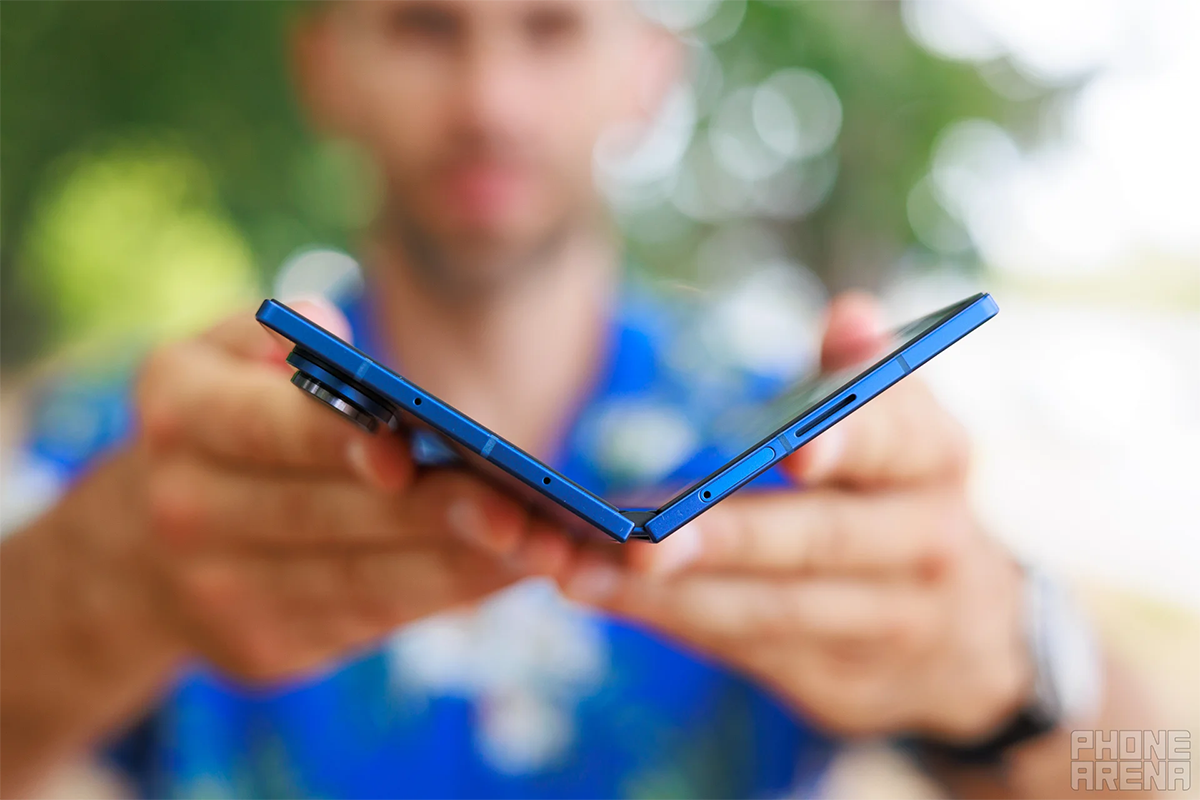
Despite years on the market, they continue to face familiar criticisms.
The first hurdle is weight. By design, foldables stack two halves on top of each other, making them heavier than traditional smartphones. To their credit, by 2025, manufacturers have made considerable strides in slimming these devices down.
Then there’s the square-ish screen aspect ratio, which doesn’t always lend itself well to everyday tasks like watching videos or multitasking. The crease, that telltale scar of flexible OLED, though increasingly subtle in newer generations, hasn’t vanished entirely.
And most of all, concerns about durability and sky-high pricing continue to make potential buyers hesitant.
And yet, the curiosity persists.
Even Apple - famously cautious when it comes to radical form factors - is rumored to be entering the foldable space. If history is any guide, Apple doesn’t usually invest in half-baked ideas.
The all-in-one dream device
The greatest allure of a foldable smartphone lies in the promise that traditional phones still can’t fully deliver: a true hybrid experience.
Modern smartphones already double as music players, communication hubs, browsers, and cameras. But when it comes to productivity, they still lack the screen real estate to truly replace tablets or laptops.
What users long for is the moment they can simply unfold their phone and be greeted with a spacious screen - perfect for spreadsheets, videos, e-learning, gaming, portfolios, or social media.
That vision is what’s driving the industry toward the next frontier: the tri-fold phone.
Devices like the Galaxy Z TriFold expand to nearly 10 inches, approaching tablet proportions. But for many, it’s still not the answer.
While unfolding a tri-fold device feels undeniably futuristic, it’s also the kind of gadget you'd hesitate to carry around. Expensive, fragile, and arguably impractical for daily use.
Huawei’s Mate XT, with its zig-zag folding design, lets users open the screen partially for a square layout or fully for maximum display space. However, part of the flexible OLED screen remains exposed as the device’s outer edge - a questionable position for such a delicate surface.
Samsung’s approach with the Galaxy Z TriFold folds all three panels inward like a greeting card. This better protects the interior screen, but also makes the device bulkier and limits usage to when fully opened.
Compared to traditional foldables, tri-folds introduce new drawbacks: higher prices, more weight, increased durability risks, complex manufacturing, and even tighter constraints for camera systems.
The future may be rollable
Despite their charm, foldables might only be a transitional step. The real future of smartphones could lie elsewhere - in rollable designs.
The concept has been around for years, surfacing in patents, prototypes, and trade show demos. The idea is simple: use flexible OLED panels that roll in and out from within the device, giving users more screen when needed.
Some rollable prototypes resemble regular phones - until a press of a button extends the screen horizontally. Bolder designs imagine lightsaber-like cylinders with displays that pull out manually and lock into place.
Naturally, rollables come with their own challenges: mechanical parts add weight, raise durability concerns, and increase cost. However, not all designs rely on motors. A simple manual pull-out mechanism could lower production costs, lighten the device, and ease maintenance.
More importantly, rollables offer what foldables cannot: adaptive screen dimensions, compact forms, and - crucially - no crease.
So, while foldable smartphones are still captivating in 2026, the industry’s final bet might be on rollables - once the technology matures enough for mass production. That could be the moment when the future of mobile devices truly unfolds.
Hai Phong
.svg)
