 Vietnamnet.vn

 Podcast



The Tay people have a saying: "Warm as fire, faithful as old friends." Around the household hearth, generations of Tay families have developed customs and beliefs that create a unique spiritual connection between humans and the divine, expressed through a coherent system of rituals honoring the fire deity.
The principle of yin and yang harmony in the home
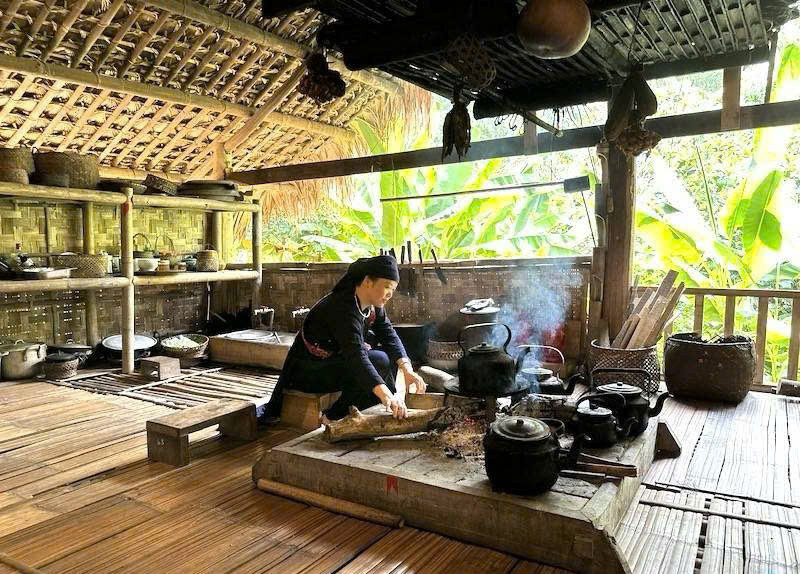
Visitors join Then singing and tinh lute performances around a traditional Tay hearth at the Thai Hai Ecological Stilt House Village Preservation Area in Thai Nguyen. Photo: Vietsense
The Tay regard the hearth as a sacred deity. Families with members who practice Then rituals or serve as spiritual shamans are required to establish an altar dedicated to the Fire God, also known as the Kitchen God.
The hearth is believed to bring warmth, happiness, prosperity and good fortune. For this reason, the fire is never allowed to go out.
According to traditional Tay customs, once a new house is completed, the first ritual is to invite the Fire God into the home. Every hearth contains a large log known as "Po Phay," or "Father Fire."
Traditionally, Tay hearths are built in a square shape inside stilt houses. The hearth itself represents yin, while Po Phay represents yang. Only when yin and yang exist in harmony can life flourish and multiply.
The "Father Fire" log is never allowed to burn out. When one log is consumed, another replaces it. To rekindle the fire, family members simply stir the embers beneath the Father Fire and add kindling and firewood.
The spiritual culture surrounding fire is inseparable from the traditional stilt house. The Tay view the house as a symbol of the man of the family - strong, stable, generous and protective.
The hearth, by contrast, embodies the woman of the household. Fire represents warmth, care and the positive energy that sustains every family member.
Burning day and night, the hearth provides warmth while warding off illness and misfortune. Maintaining the fire means preserving the soul of the home and nurturing the vitality and energy of the family.
Preserving warmth and abundance
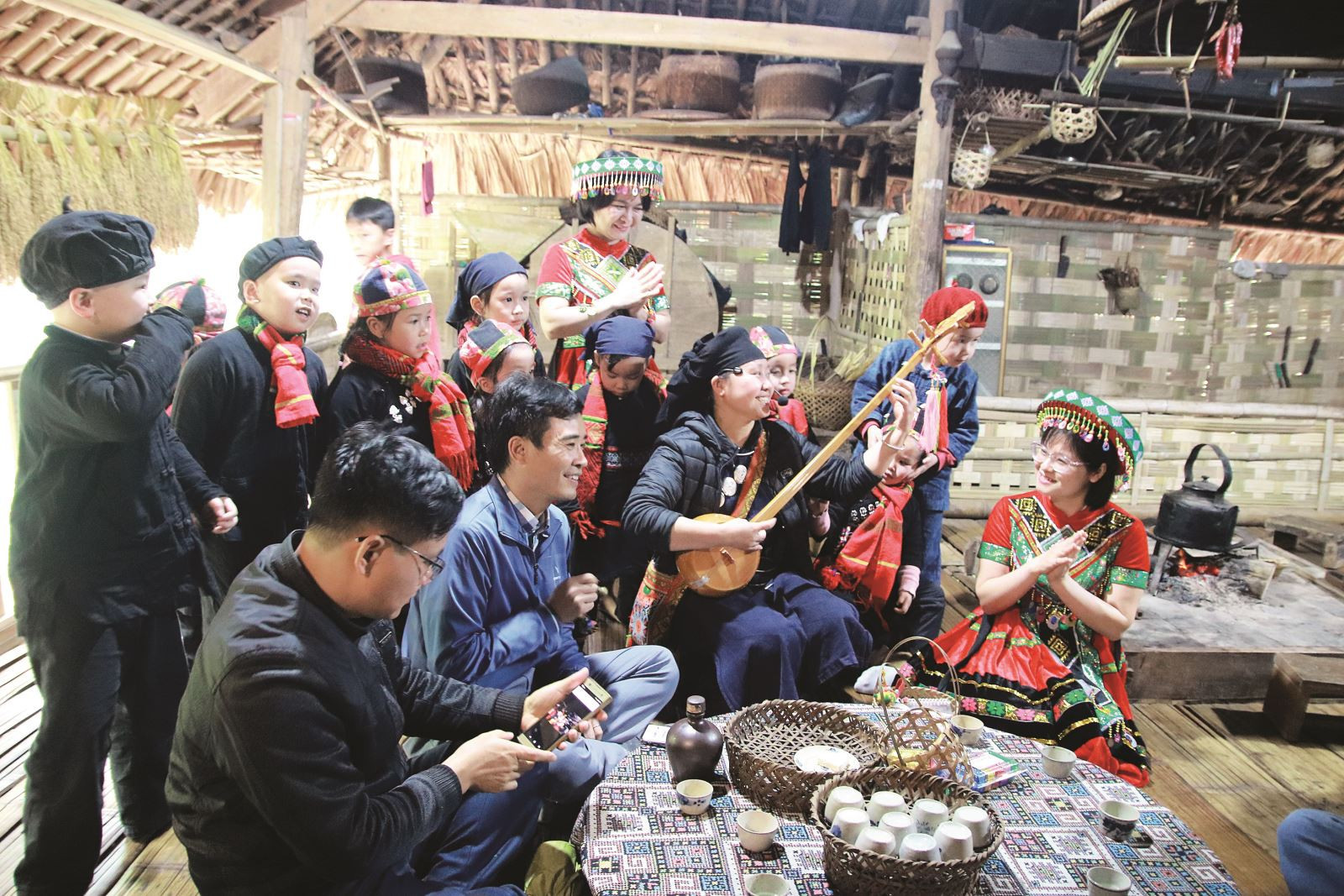
Visitors join Then singing and tinh lute performances around a traditional Tay hearth at the Thai Hai Ecological Stilt House Village Preservation Area in Thai Nguyen. Photo: Thai Hai Ecological Stilt House Village Preservation Area
Above the hearth, Tay families traditionally hang a bamboo rack known as an "an xa," used for drying and storing household items and agricultural products.
The rack may hold stream fish, lap xuong sausage, dried bamboo shoots, seeds or sweet potatoes.
During winter, men gather around the fire to weave baskets and repair farming tools, while women sew and embroider. Elderly family members warm their hands beside glowing embers as children roast cassava and sweet potatoes in the ashes.
These scenes remain among the most familiar and cherished images of Tay family life.
Smoke from the hearth rises continuously, permeating wooden walls, bamboo beams, yin-yang roof tiles and woven trays suspended above the fire.
The smoke not only dries and preserves food and seeds but also strengthens roofing materials and extends the lifespan of bamboo and wooden household items.
Thanks to the hearth smoke, food supplies can be stored longer throughout the cold and rainy seasons. The hearth therefore serves not only daily meals but also quietly becomes a source of food security, helping sustain each Tay family throughout the year.
According to Master of Cultural Studies Ly Thi Chien, a researcher of ethnic culture and a member of the Tay community, fire plays an essential role in both material and spiritual life.
In daily life, fire is used for cooking, boiling water, preparing herbal remedies and heating medicinal baths for children and women after childbirth. Spiritually, however, fire carries a far deeper and more profound significance.
Rules for tending the sacred fire
Within the kitchen is a small altar dedicated to the Kitchen God and Fire God. The altar is simple, typically made from a bamboo frame measuring about 50 centimeters long and 20 centimeters wide, suspended beside the hearth. Even the incense holder is often made from a bamboo tube.
For generations, the Tay have regarded the hearth as a sacred space within the home. Grandparents and parents therefore teach younger family members to observe strict rules when near the fire.
When placing firewood into the hearth, the burning end must not be inserted first, as this is believed to hinder crop growth and negatively affect fertility.
Families in mourning are forbidden from burning wood from certain sacred trees believed to be inhabited by spirits, including banyan trees and moc trees. Rice straw is also avoided because burning it is thought to destroy the soul of the rice and plants.
People sitting beside the hearth must not place their feet on the cooking stand or hearth structure. Objects arranged for rituals should never be moved carelessly.
Firewood should be placed gently into the fire rather than thrown. Chopping wood inside the kitchen is prohibited, as is spitting near the hearth or sitting with one's back facing the flames.
These taboos stem from the belief that the Kitchen God deserves respect and that the place where fire is kept must remain pure and dignified.
The opening through which firewood is fed into the hearth is also traditionally positioned toward the rear of the house rather than directly facing the main entrance.
Today, many Tay households use gas and electric stoves alongside traditional hearths. Yet the custom of maintaining a fire remains deeply valued.
For the Tay, the hearth continues to symbolize family warmth, abundance and the bond between people, ancestors and spiritual beings.
Preserving the hearth means preserving family traditions, maintaining codes of conduct passed down through generations and safeguarding the cultural identity of the entire community.
Hong Phuc
.svg)
