 Vietnamnet.vn

 Podcast



A diverse and immersive learning environment
At Bach Mai Hospital in Hanoi, this trend began more than two decades ago and has gained strong momentum in recent years. While only around 10 to 15 international students trained there in 2000, the hospital now hosts between 200 and 300 trainees annually from countries such as the UK, Germany, Denmark, New Zealand, France, and Australia, along with regional doctors pursuing advanced specialization.
What sets the training environment apart is its emphasis on real-world exposure. In many Western countries, students face limitations in direct patient interaction. At Bach Mai Hospital, however, under the guidance of doctors and nurses, trainees participate in ward rounds, attend professional briefings, and communicate directly with patients. The openness and cooperation of patients in Vietnam further enrich this hands-on learning experience.
At leading specialty departments, students also gain access to infectious and tropical diseases - conditions rarely encountered in Western countries. This exposure broadens diagnostic thinking and fosters a more multidimensional approach to medical practice.
Beyond clinical training, programs often include cultural experiences such as visits to Trang An, Bat Trang pottery village, and the Temple of Literature, alongside traditional holiday exchanges. Each training period thus becomes a journey that blends academic depth with cultural immersion.
Associate Professor Dao Xuan Co, Director of Bach Mai Hospital, emphasized that international cooperation and training are key strategies to elevate the hospital’s reputation.
“Becoming a training destination for students from many countries is clear recognition of the academic environment and professional quality at Bach Mai Hospital,” he said.
Specialized strengths attract global learners
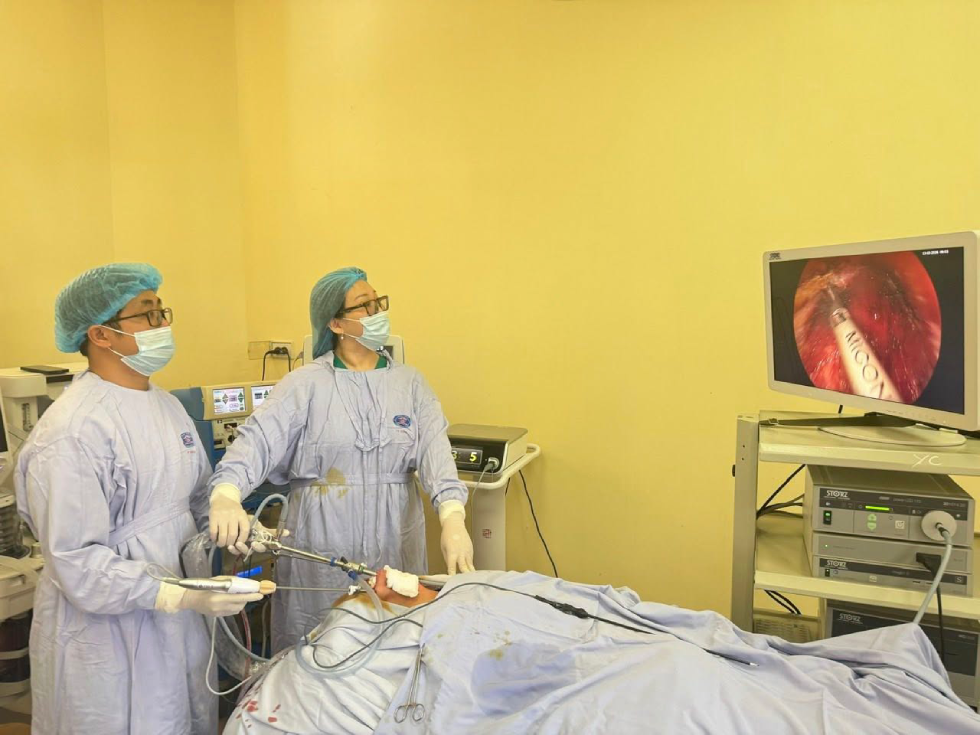
K Hospital is also strengthening its position in international training, particularly in advanced techniques. Through cooperation with Cipto Mangunkusumo Hospital and the University of Indonesia, many Indonesian doctors have come to Vietnam to learn transoral endoscopic thyroidectomy via vestibular approach (TOETVA) - one of the hospital’s flagship procedures.
Under the direct guidance of Dr. Ngo Quoc Duy, Deputy Head of the On-Demand Treatment Department at Tan Trieu campus, trainees are taught through a hands-on approach. The TOETVA technique stands out for leaving no visible scars, enabling access to both thyroid lobes, and allowing central neck lymph node dissection in cancer treatment.
After completing their training, Indonesian doctors have returned home and begun successfully implementing the technique, opening up sustainable cooperation between medical institutions in both countries.
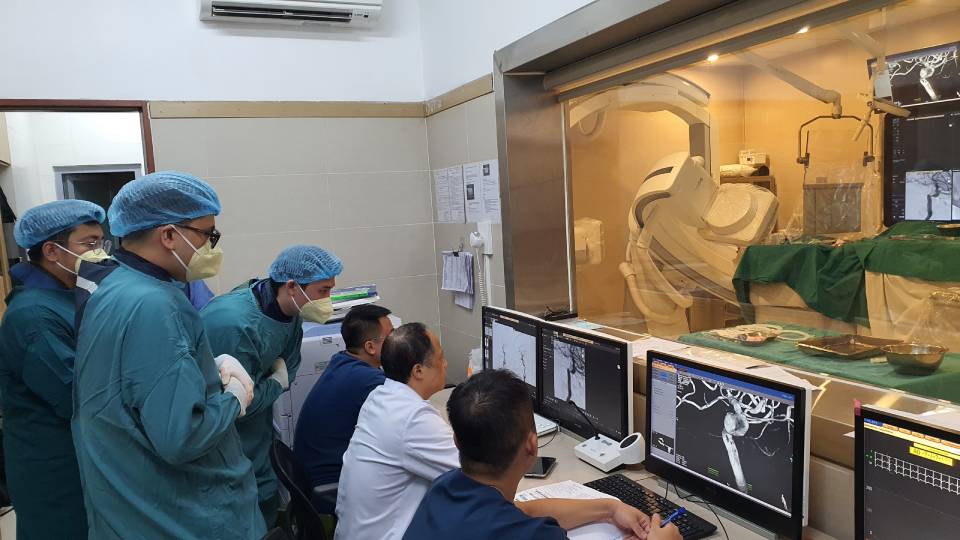
In the field of stroke treatment, the 115 People’s Hospital in Ho Chi Minh City has also become a learning destination for international medical teams. Associate Professor Nguyen Huy Thang, Head of the Department of Cerebrovascular Diseases, expressed both surprise and pride when a delegation of 14 doctors from the Philippines chose the hospital’s stroke center for training, despite having access to more developed countries.
According to Thang, what attracts international doctors is not only the techniques but also treatment efficiency at scale. The number of vascular recanalization procedures performed in the Philippines is equivalent to what the 115 People’s Hospital handles in just one to two months.
Cost is another defining factor. A thrombectomy procedure in the Philippines costs around VND400 million (approximately US$16,400), while in Vietnam it is about VND80 million (approximately US$3,300), and even lower with health insurance.
More importantly, Vietnam’s treatment philosophy places patient opportunity at the center.
“We always strive to provide every patient with a chance, regardless of their financial situation,” Thang said.
The growing number of international doctors choosing Vietnam for training reflects not only advancements in medical expertise but also the appeal of a human-centered healthcare model, reasonable costs, and a rich clinical environment. This momentum is laying the foundation for Vietnam to gradually assert its position on the regional and global medical map.
Phuong Thuy
.svg)
