 Vietnamnet.vn

 Podcast



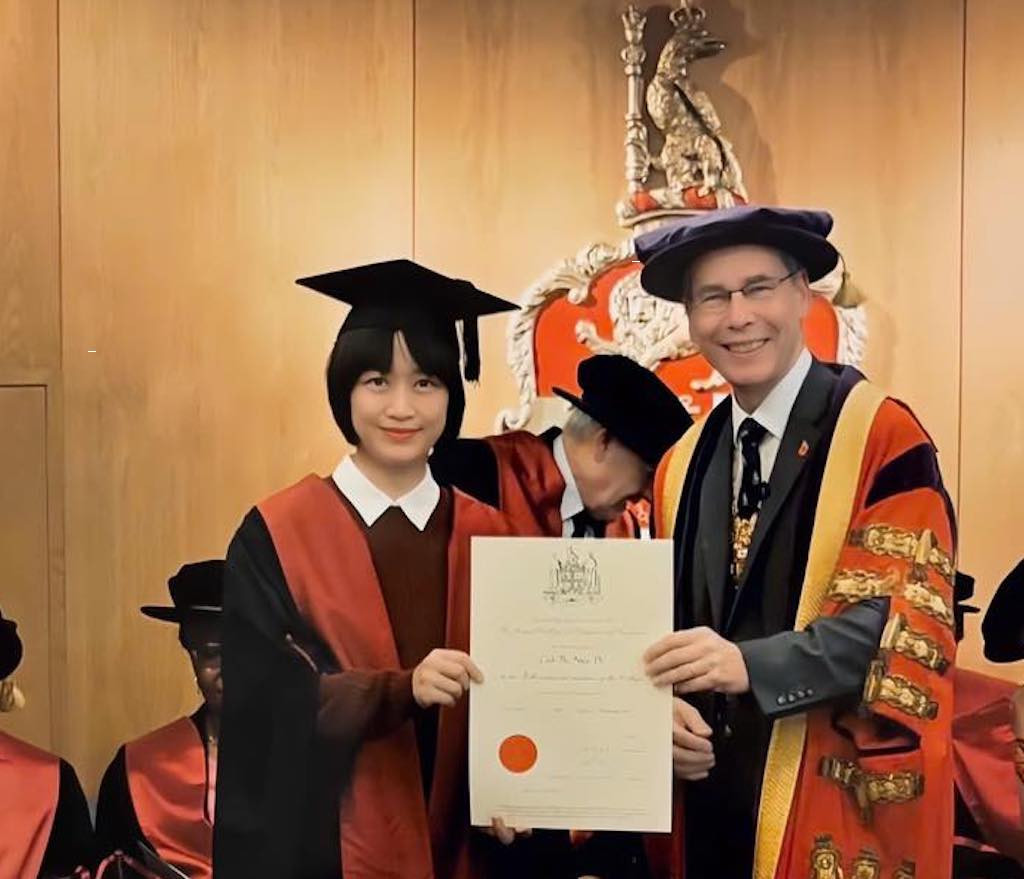
Dr Linh said she was deeply honored to receive the recognition after a rigorous review process. After nearly two years of preparation and completing the application dossier, along with evaluations at multiple levels, she officially received approval.
According to Dr Linh, in the UK, many foreign doctors are studying and practicing, but the number of Vietnamese doctors remains limited. She hopes that her role as an RCS member, together with support from Facing The World (a UK-based charity that has provided significant assistance to Vietnam’s craniofacial and plastic surgery specialty), can serve as a bridge to support Vietnamese doctors who wish to study and work in the UK.
Challenging early days
Few know that to achieve today's success, Dr. Do Thi Ngoc Linh underwent a long and arduous journey. As one of the first residents in Plastic Surgery at Hanoi Medical University, she joined the Emergency Department at Viet Duc Friendship Hospital after graduation.
Surgical fields are demanding, and for a female doctor, the difficulties are multiplied.
“For female doctors in the field of surgery, maintaining professional practice can sometimes involve additional challenges related to health and time during periods of pregnancy, childbirth, and caring for young children. In order to continue developing my professional expertise, I have had to make great efforts to balance my work and family life,” Linh said.
With a desire to further her professional development, she made the difficult decision to leave her young child at home to participate in training programs abroad. This included a year of study in France, followed by advanced training in the UK, Taiwan (China), and Canada.
These experiences updated her specialized knowledge, broadened her academic perspective, and supported her professional practice.
Fruits of labor
In 2006, after training in France, Linh returned to Viet Duc Friendship Hospital to implement microsurgery techniques for treating complex injuries.
She and her team performed reattachments of severed body parts using microsurgery, expanding treatment capabilities for such injuries in Vietnam. These were highly complex surgeries, successfully performed for the first time in Vietnam and later documented in international scientific reports.
Linh explained that in labor, domestic and traffic accidents, severed parts such as the scalp, ears, nose, or hands can lead to severe functional, aesthetic, and psychological consequences if not reattached, affecting long-term quality of life.
Dr Linh said surgeons must receive training in microsurgery and have solid practical experience. After one year of intensive training in France, upon returning to Vietnam she successfully participated in surgeries for several severe trauma cases, including a female patient whose long hair was caught in a machine motor while working.
“The female patient was admitted with her entire scalp completely torn off, exposing the skull. Using a microscope and ultra-fine surgical sutures, my colleagues and I reconnected the blood vessels of the detached scalp, allowing coverage of the skull and enabling hair to grow back,” Linh recalled.
Beside microsurgery, since 2008, plastic surgeons and vascular interventionists in Vietnam have researched arteriovenous malformations (AVM) in the head, face, and neck.Dr. Linh and her colleagues participated in researching and treating this rare group of diseases, considered one of the most difficult forms of vascular abnormalities due to complex progression, severe complications, and high recurrence risk.
Team sets diagnostic standards
Previously in Vietnam, the diagnosis and treatment of head and neck AVMs lacked unified standards, with varying approaches between medical facilities. This led to inaccurate diagnoses or inappropriate treatments, increasing complication risks.
Therefore, the research group synthesized clinical experience, referenced international guidelines, and exchanged expertise at domestic and international workshops. The clinical features of head and neck AVMs were systematized, contributing to clear diagnostic criteria.
Since 2008, the team has coordinated endovascular intervention and surgery to handle complex AVM cases. This multi-modal approach reduces bleeding risks, shortens surgery time, improves treatment efficiency, and lowers costs for patients.
Dr Linh said that the research results were reported at numerous domestic and international professional conferences, and were also shared and transferred to lower-level medical facilities, helping improve diagnostic and treatment capacity and reduce professional errors.
N. Huyen
.svg)
