 Vietnamnet.vn

 Podcast



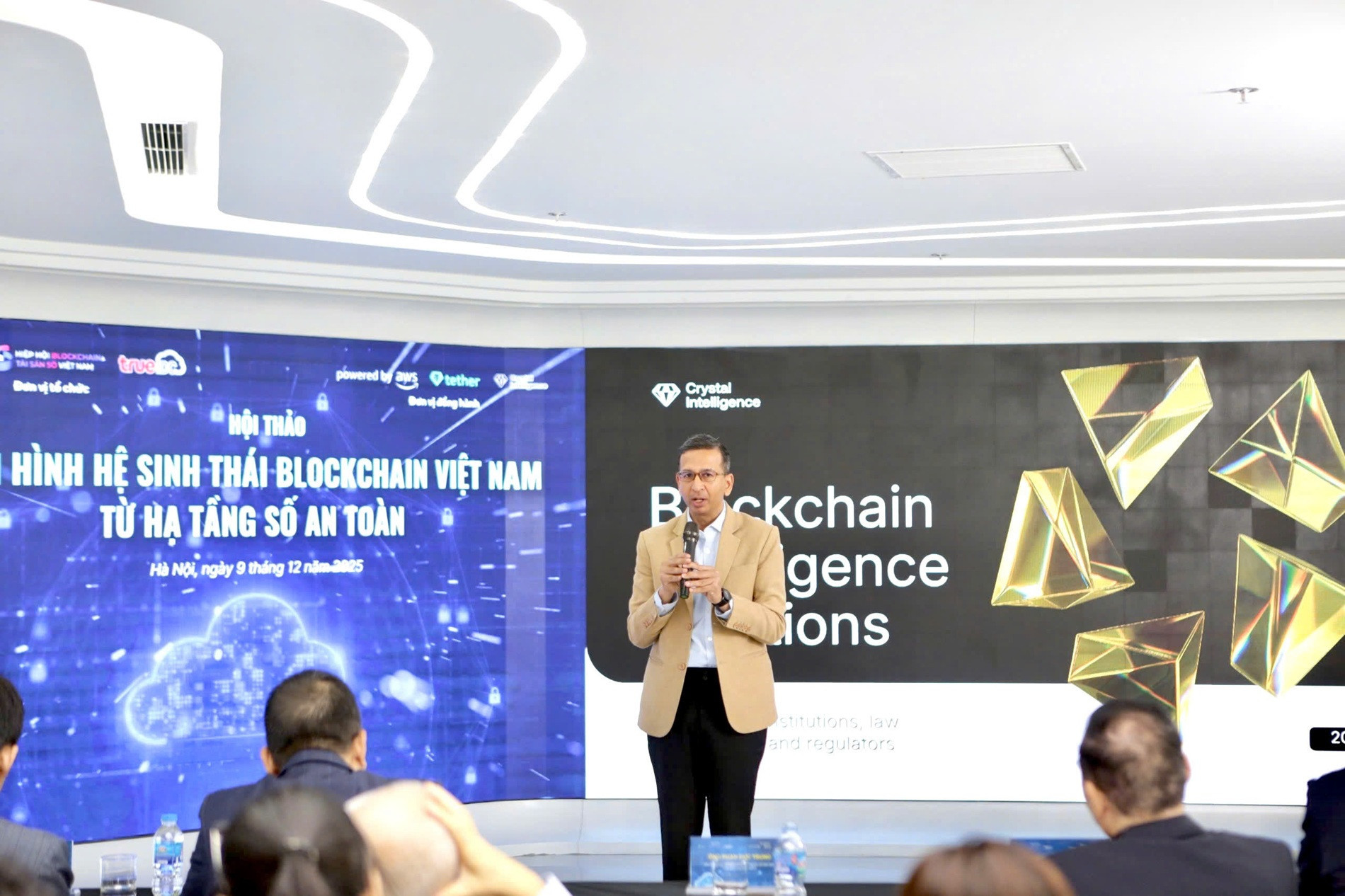

At the same conference, Phan Duc Trung, Chairman of the Vietnam Blockchain and Digital Asset Association (VBA) and Chairman of 1Matrix, said that developing blockchain infrastructure requires a balanced approach.
This includes safeguarding national sovereignty by storing sensitive data in government-licensed domestic data centers; optimizing performance and scalability via foreign cloud services; and building a robust traceability system to meet anti-money laundering and counter-terrorism financing (AML/CFT) requirements.
Nguyen Dinh Hung, CEO of True IDC Vietnam, discussed the surge in demand for cloud infrastructure driven by large-scale data, AI, and blockchain applications.
He cited projections that the public cloud market in Asia will exceed USD 200 billion by 2025, growing at an annual rate of 19.32% between 2025 and 2029.
In Vietnam, the market is forecast to grow by 25.24% annually and surpass USD 1 billion in 2025.
To address infrastructure challenges, the Vietnam Blockchain Service Network (VBSN) has been designed with a five-layer architecture that maximizes scalability, security, and interoperability.
This network supports long-term digital transformation goals by enabling businesses to develop applications without needing to reinvest in infrastructure. It also enhances transparency and oversight for government regulators.
A standout feature of VBSN is its support for deploying multiple independent Layer 1 chains. These chains can be customized with consensus algorithms and processing speeds to suit different application groups.
The multi-chain structure allows for load distribution, reduces congestion, and maintains network stability when handling large volumes of transactions.
Experts emphasized the need for a comprehensive on-chain traceability system. Such a system not only facilitates transaction monitoring but plays a critical role in detecting, preventing, and mitigating increasingly sophisticated activities like money laundering, terrorism financing, and digital asset abuse.
By enabling regulators to proactively manage risks, this system will help create a safer investment environment for players in the Web3 space.
Du Lam
.svg)
