 Vietnamnet.vn

 Podcast



Alongside efforts to harness the existing potential and advantages of forests through strategic planning and development, localities across Vietnam are intensifying forest protection initiatives. This is viewed as a crucial key to building a stable and sustainable forest-based economy.
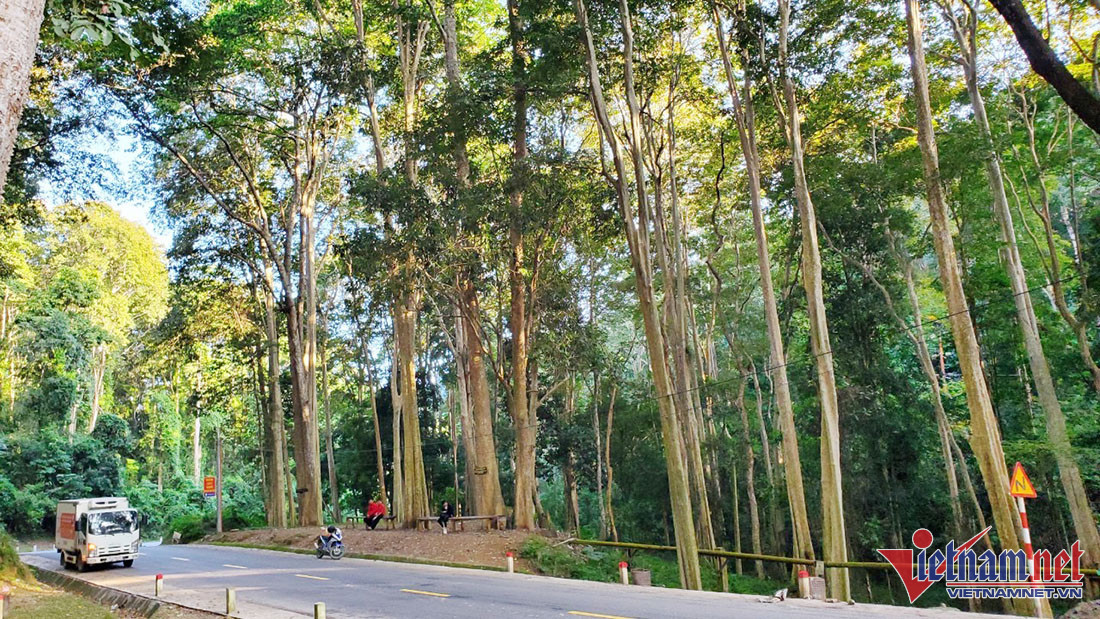
More than five years since the implementation of Directive No. 13/CT-TW by the Party Secretariat, aimed at strengthening the Party’s leadership in forest management, protection, and development, there has been a significant shift in awareness at all levels of society about the role and importance of forest resources and the forestry sector in the country’s sustainable development.
Economically, the forestry production structure has been reshaped to increase value across the forestry production chain. This is reflected in indicators such as the structure of production forest area, investment socialization, resource mobilization, and forestry products. The value of forestry production has maintained a stable annual growth rate of 5.5 to 6%.
In 2022, exports of wood and non-timber forest products exceeded USD 17.9 billion. Revenue from forest environmental services reached an average of around USD 126 million per year, becoming an essential and sustainable financial source for the forestry sector.
The production forest sector has grown both in area and quality, supplying more than 70% of raw timber for processing, both for domestic consumption and export. Vietnam’s participation in global forest product value chains has been steadily increasing.
Export revenues remain high and stable, while income from forest environmental services continues to be a sustainable pillar for forestry development.
According to Director General of the Vietnam Administration of Forestry, Tran Quang Bao, despite these gains, the ecosystem value of forests still faces many challenges. These include the absence of dedicated zoning for large timber plantations, limited value generated from existing plantation areas, and lack of chain-based production organization.
There are also no regulations on carbon forest ownership or measurement, regulatory gaps in forest-based infrastructure development for tourism and services, and insufficient compensation relative to forest ecosystem value. Moreover, national surveys on forest economic models are lacking, and current policies hindering collaboration must be reviewed and updated.
Forest development must not rely on a single sectoral approach but instead adopt integrated, multi-sectoral, and multifunctional strategies to unlock greater value.
Another limitation is the challenging terrain and poor transportation infrastructure. In provinces like Son La, Dien Bien, Lai Chau, Ha Giang, and Cao Bang, difficult access has deterred major investment in high-value forest product processing, hindered product distribution, and increased production costs, reducing competitiveness.
Poor infrastructure also hinders the recruitment of skilled labor for modern agricultural and forestry processing facilities and eco-tourism development. Furthermore, the lack of planned and scalable raw material zones remains a major barrier to forest economic growth.
Although several centralized plantation zones have been established in infrastructure-advantaged provinces such as Phu Tho, Tuyen Quang, Yen Bai, Lao Cai, and Quang Ninh, these zones mainly produce small-diameter timber, which is not ideal for high-end wood export production. Non-timber forest products, especially medicinal plants, are still grown in scattered, low-volume operations with limited large-scale commercial capacity.
The forest economy in many localities also faces shortages of processing facilities, both in quantity and quality, which affects raw material consumption and product value enhancement. Currently, northern midland and mountainous provinces have only 747 forest product processing enterprises, accounting for 12.7% of the national total, mostly concentrated in Phu Tho, Quang Ninh, Yen Bai, and Bac Giang. Attracting enterprises with strong capital and technological capacity for processing and distribution remains a considerable challenge.
A key obstacle is the lack of effective linkage and chain-based production from planting and harvesting to processing and distribution. Forestry production remains fragmented and small-scale, making it difficult to establish large commodity-producing zones. Post-harvest processing technology remains basic, resulting in low added value.
Minister of Agriculture and Rural Development, Le Minh Hoan, emphasized that "we must repay our debt to nature" by protecting forests effectively. Based on existing potential and advantages, forested localities must promptly develop strategic orientations for a stable and sustainable forest economy.
Sustainable forestry hinges on efficient management and use of forest resources, balancing socio-economic goals with environmental protection, and leveraging regional climatic and land advantages.
Forest development and utilization must follow a multifunctional, multi-value approach tailored to the specific potential of subregions and localities. Growth models should shift from area expansion to enhancing productivity, quality, and product value.
Vietnam is currently promoting multi-use forest development and participating in emission reduction agreements. On October 22, 2020, the Emission Reductions Payment Agreement (ERPA) for the North Central Region was signed between the Ministry of Agriculture and Rural Development and the International Bank for Reconstruction and Development (IBRD), the trustee for the Forest Carbon Partnership Facility (FCPF).
Under this agreement, the Ministry represents ownership, management, and transfer of 10.3 million tons of CO2 in emission reductions from natural forests in six North Central provinces (Thanh Hoa, Nghe An, Ha Tinh, Quang Binh, Quang Tri, and Thua Thien Hue) to the FCPF through IBRD. This transfer is expected to generate about USD 51.5 million. The agreement has been institutionalized under Decree No. 107/2022/ND-CP on pilot emission reductions and financial management of the ERPA.
Forests provide timber, non-timber products, environmental services, tourism, and other income sources for approximately 25 million Vietnamese people who depend on forest ecosystems. Developing a forest-based economy has become an important goal requiring strategic planning at the local level.
After five years of enforcing the government's policy on closing natural forests, many provinces have introduced effective measures to improve the livelihoods of forest-dependent communities, contributing to both economic development and sustainable forest protection.
In Linh Son commune, Anh Son district (Nghe An), over 90% of households rely on tea cultivation, with the commune's total tea area exceeding 430 hectares. Linh Son and Cao Son are two mountainous communes with the largest tea-growing areas in the district, which totals over 2,200 hectares, much of it in forest buffer zones. Together with other crops and livestock raised under the forest canopy, tea is regarded by local authorities as a key crop for poverty reduction.
Tea cultivation generates nearly USD 840,000 annually for local farmers. In Con Cuong district, home to Pù Mát National Park - the core of the western Nghe An biosphere reserve recognized by UNESCO in 2007 - ecotourism and forest-based economy are among the key drivers of growth.
The district boasts scenic tourist attractions like Khe Kem waterfall, Khe Nuoc Moc stream, Pha Lai dam, Giang River cruises, and primitive forest explorations with diverse cave systems and flora.
With a core area of 94,804 hectares and a buffer zone of 86,000 hectares, the forest provides livelihoods for thousands of Dan Lai, Thai, and Hoa ethnic households. Community tourism, forest farming, livestock raising, and aquaculture in buffer zones provide stable and sustainable income for residents long tied to the forest.
In Hamlet 5, Thanh Son commune, Dinh Quan district (Dong Nai), ethnic minority elder Dieu Thi Ut Lan of the Cho Ro people shared that recent land and forest allocation policies have significantly improved farmers’ lives. Currently, 120 households in the hamlet are contracted by La Nga Forestry One-Member Company Limited to manage over 70 hectares of production forest land. Each hectare brings in an annual payment of USD 210 and about USD 84 in labor wages for forest care.
Before the state’s natural forest closure, many residents lived off hunting and forest exploitation. Now, they earn from forest protection and under-canopy economic activities like growing medicinal herbs and livestock, leading to marked improvements in living standards. Cho Ro residents now have sturdy houses, access to education, and expanded infrastructure, thanks to government and business investment.
In northern mountainous provinces, the forest economy has brought high incomes to forest-dependent households. In Son La province, there are models of amomum cultivation in Pung Banh commune (Sop Cop district), Muong Giang, and Muong Gion communes (Quynh Nhai district), yielding USD 630 to USD 1,260 per hectare annually.
Projects include lemongrass cultivation for essential oil extraction in Pi Toong commune (Muong La district), medicinal and hibiscus tea zones in Chieng Den and Chieng Co communes (Son La city), and medicinal herb farms and processing plants in Co Ma, Long He, and Muong Bam communes (Thuan Chau district), and Moc Chau.
Hoa Binh province has many successful livestock models under forest canopies. For example, in Dong Noi hamlet, Dong Tam commune, Lac Thuy district, Nguyen Van Hoat has raised chickens under the forest canopy since 2015. He currently keeps over 5,000 chickens, including 2,000 breeders, generating a net annual income of USD 8,400 to USD 12,600.
In Seo hamlet, Cao Son commune, Da Bac district, beekeeper Khuong Manh Thu started with 10 hives and now manages 70. In 2022, his family sold over 70 bee colonies and 400 liters of honey, earning over USD 4,200. He also shares bee strains and beekeeping techniques with other locals.
In Dien Bien province, public awareness and responsibility for forest management, protection, and development have improved significantly. The province now has over 900 hectares of non-timber forest crops, with about 500 hectares of medicinal plants under forest canopies, yielding roughly 400 tons annually worth USD 680,000. Most of this area is concentrated in highland districts such as Nam Po, Tuan Giao, and Muong Nhe.
According to Tran Quang Bao, about 25 million Vietnamese people depend on forests. Among them, 1.15 million households and communities manage 4.1 million hectares, 136 forestry companies manage 1.7 million hectares, 383 conservation boards manage 5.2 million hectares, 24,284 forest protection personnel are employed nationwide, and 6,234 forest product processing enterprises employ over 500,000 workers.
Forests provide 31 million cubic meters of raw wood, meeting 75.6% of production needs, with annual forest product exports averaging USD 17 billion. Vietnam also has about 2.6 million hectares of non-timber forest products, exporting over USD 500 million annually.
Additionally, tourism activities generate about USD 12.6 million per year, forest environmental services bring in USD 54.6 million annually, and forest carbon absorption and storage services are a major emerging contributor, with average annual revenue reaching USD 168 million.
Nhan Dan
.svg)
