 Vietnamnet.vn

 Podcast



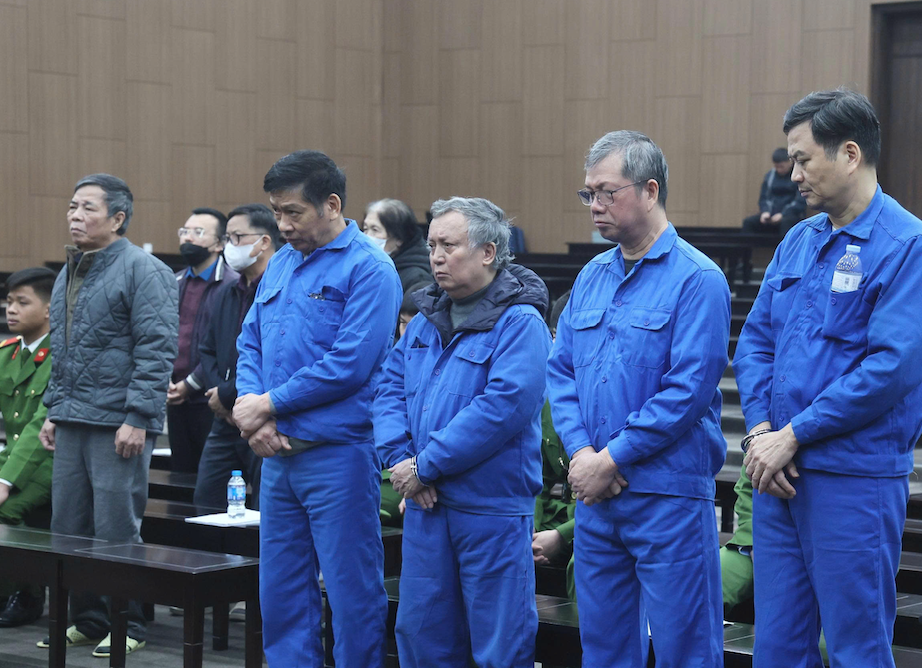
The ruling was delivered on February 3 by the Hanoi People’s Court, which concluded the first-instance trial of 14 defendants involved in violations related to the management and use of state property, and bidding regulations, during the planning and execution of the Vicem tower project in Hanoi.
According to the verdict, Le Van Chung was convicted of violating regulations on the management and use of state assets, leading to waste and losses totaling more than 381 billion VND (approximately USD 15.3 million).
Nguyen Ngoc Anh, former CEO of Vicem, received a 15-year sentence for the same charge, along with additional convictions for violating bidding rules that caused serious consequences.
Other defendants received sentences ranging from 30 months of suspended imprisonment to 12 years and 6 months behind bars, depending on their level of involvement and charges.
Inflated costs, derailed plans
The court found that Chung held the highest level of responsibility in the case. He not only approved the proposal to develop the Vicem tower project but also signed off on exaggerated revenue projections, inflated cost estimates, and an investment plan that far exceeded what had been legally approved.
Despite knowing the figures were falsified, Chung failed to request proper evaluation of the project and signed off on a total investment of over 1.245 trillion VND (around $50 million). However, the tower was never completed or put to use, resulting in major financial losses to the state.
Motives and consequences
In its reasoning, the court noted that the former Vicem leaders, including Chung, did not act for personal gain but were motivated by a desire to construct a new and impressive headquarters.
They believed Vicem’s internal capital and future economic recovery would sustain the project. Yet in reality, the planning was flawed. The defendants distorted financial indicators, misjudged economic feasibility, and approved a project that lacked practical viability.
The result: a half-finished, unusable structure that has sat idle for years and consumed hundreds of billions in state funds.
Court considerations and final ruling
The court stated that the crimes committed were especially serious, undermining trust in state-owned enterprises, distorting the bidding process, and violating transparency and financial discipline in public investment.
When deciding on sentences, the judges considered the defendants’ roles, positions, degrees of wrongdoing, and damage caused. They also took into account mitigating factors such as cooperation during the investigation, truthful testimony, and lack of personal enrichment.
Nonetheless, the court concluded that the actions had damaged the reputation of government institutions and fueled public discontent over the misuse of state resources.
T. Nhung
.svg)
