 Vietnamnet.vn

 Podcast



Dam Chuon Lagoon, Hue
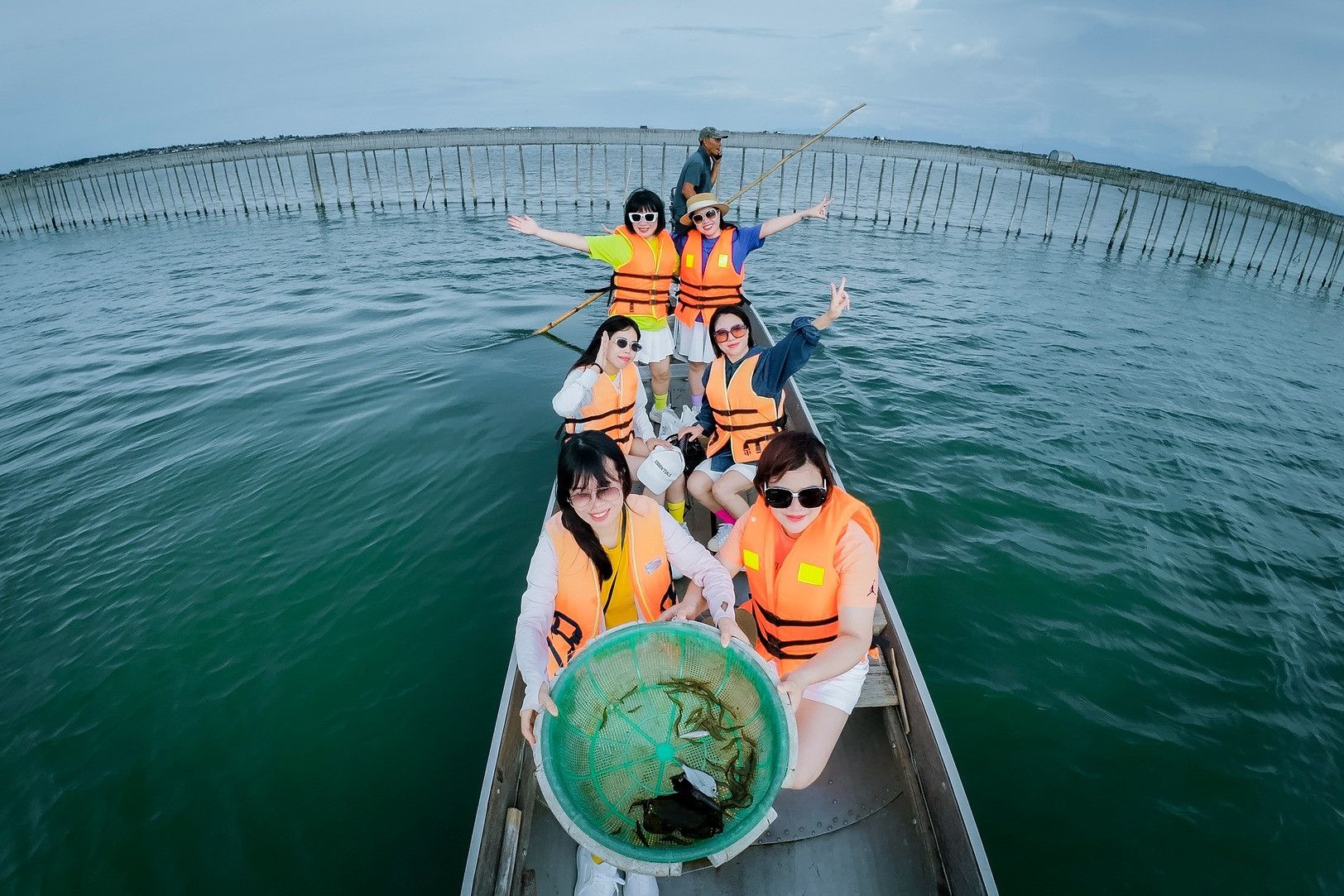
Dam Chuon Lagoon is located in My Thuong commune, Hue (formerly Phu An commune, Phu Vang district), about 10km from Hue city centre. Covering more than 100 hectares, it is part of the Tam Giang - Cau Hai lagoon system, the largest brackish lagoon complex in Southeast Asia.
With its vast waterscape, gently bobbing boats, and simple stilt houses made of bamboo and wood, the lagoon is often described as a “hidden gem” within the Tam Giang lagoon.
Dam Chuon is also known for its rich aquatic resources, including rabbitfish, mullet, shrimp, and brackish-water crabs. In recent years, it has developed into a community-based ecotourism destination, attracting visitors with hands-on fishing experiences such as clam digging, net casting, and line fishing.
If combining fishing activities with sunrise viewing, visitors are advised to start their journey from around 5am. Fresh seafood can be steamed or grilled right on the floating huts in the lagoon.
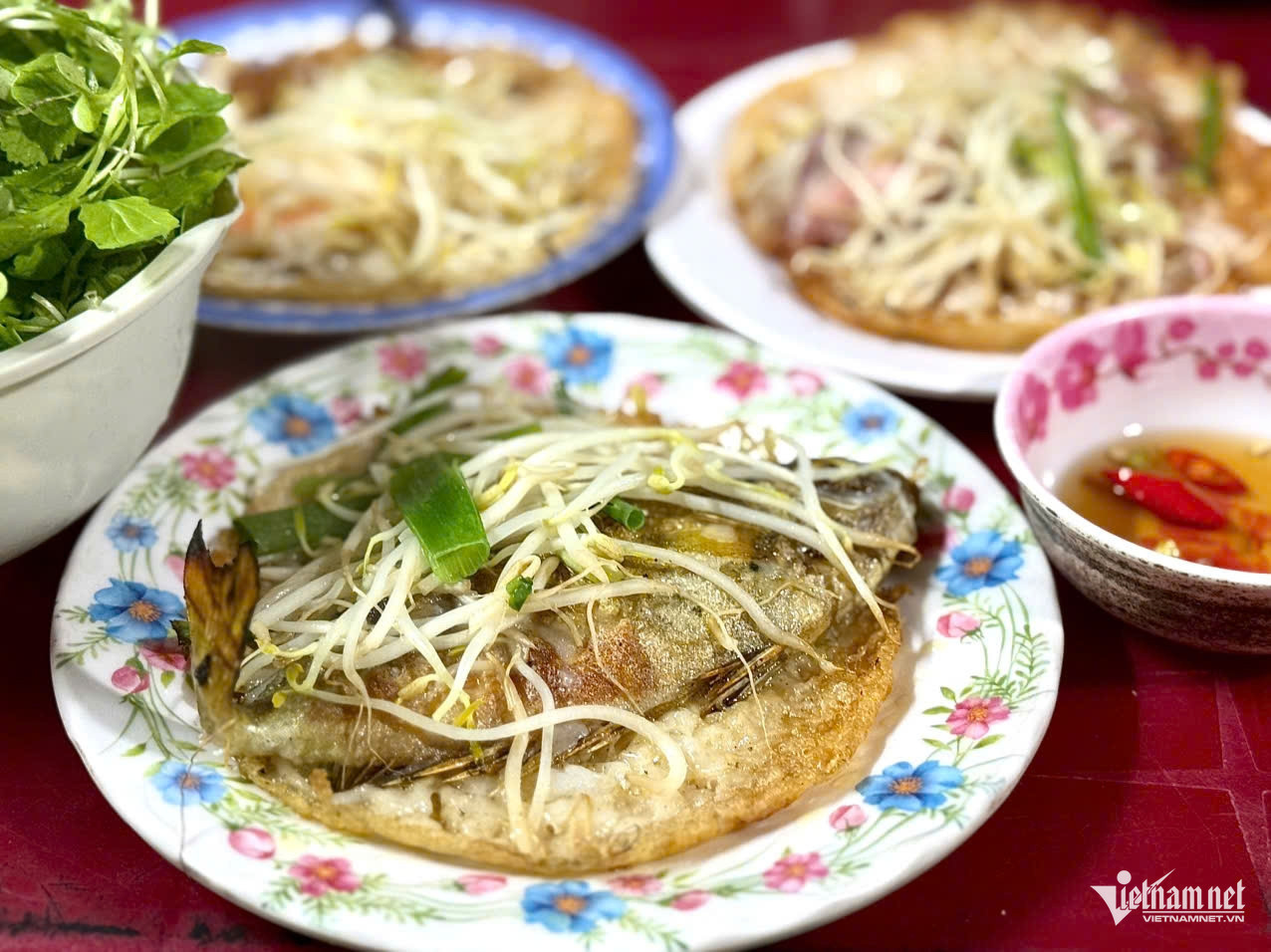
Each fishing experience tour lasts 2 to 2.5 hours and costs between VND200,000 and VND600,000 (US$8-24) per person, depending on group size and itinerary. After returning to shore, visitors can explore Chuon village market and sample local specialties such as fish banh khoai, squid banh khoai, and shrimp banh khoai.
A hot plate of banh xeo served with fish sauce and fresh herbs is priced at around VND25,000 (US$1).
Go Co Village, Quang Ngai
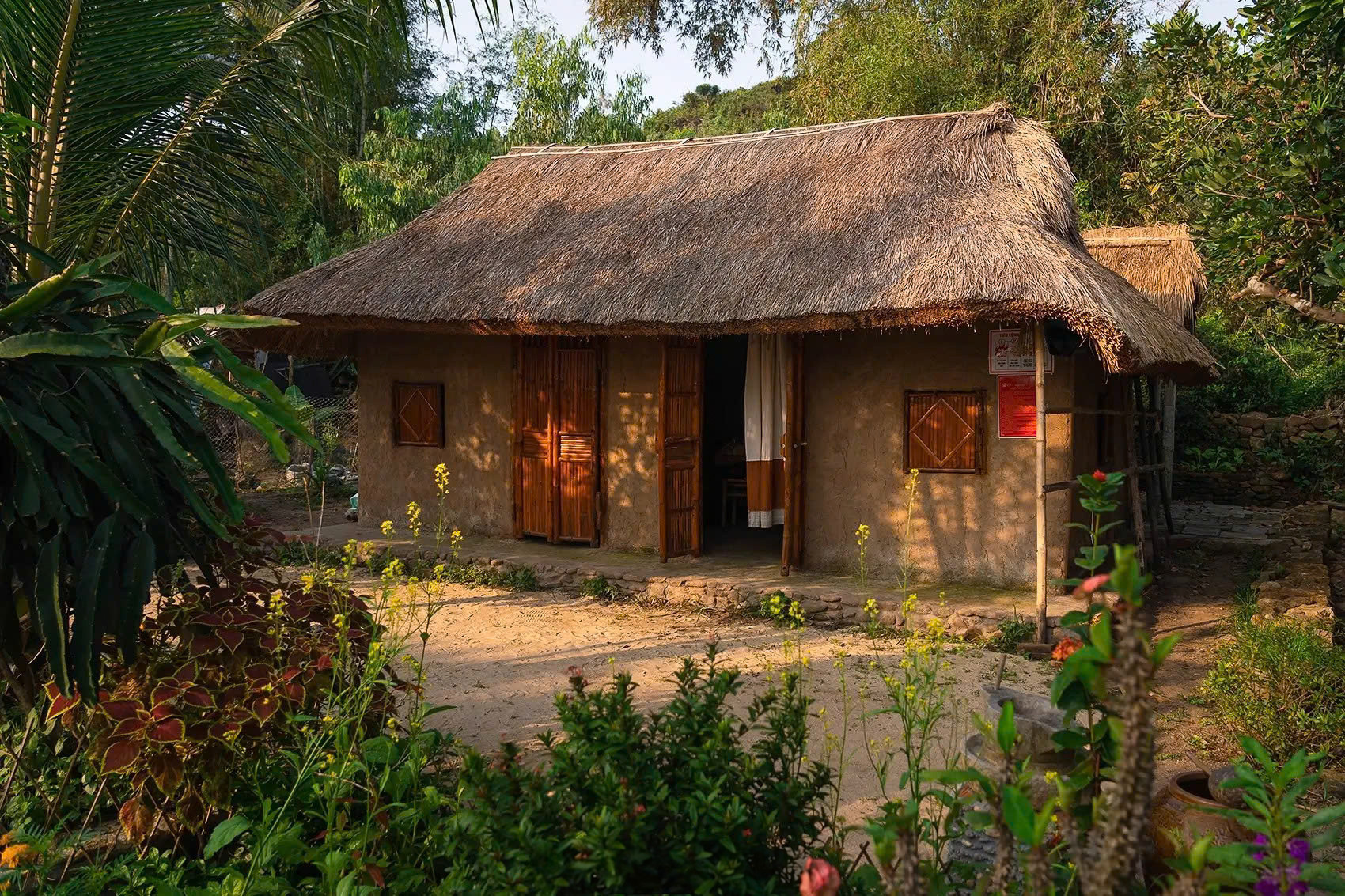
Go Co Village is a unique stop within the Sa Huynh cultural heritage site in Quang Ngai, ideal for travellers seeking to explore a simple coastal rural lifestyle rich in community spirit.
The village is known for its “many no’s” - no bustling shops, many homes without air conditioning, and no televisions.
Scattered throughout the village are ancient stone slabs, stone paths, wells, and bridges built by earlier generations. Homestays here follow strict community guidelines: hosts must be local residents with at least three generations rooted in the village.
Visitors are welcomed as family members, sharing meals, accommodation, and daily activities with locals. Each homestay is named after features the village takes pride in, such as ancient wells, bai choi folk art, rocky outcrops, sea urchins, or wild pineapples.
Located next to a beautiful coastline, the village offers opportunities to explore rocky shores by basket boat at sunrise or sunset. Visitors can also enjoy local dishes such as cactus soup cooked with fish or shrimp, sea urchin patties, squid, oyster soup, and fish skin salad.
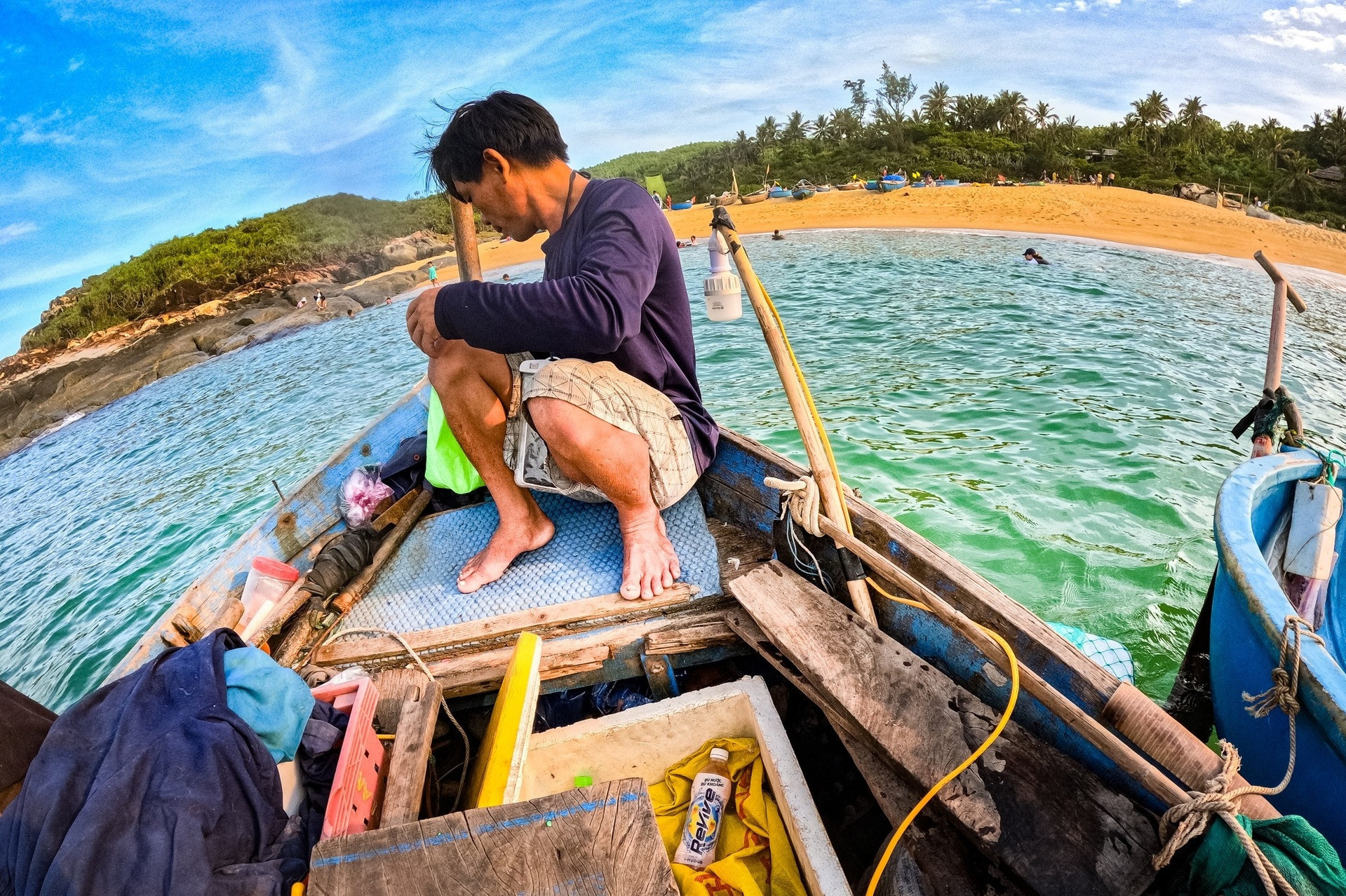
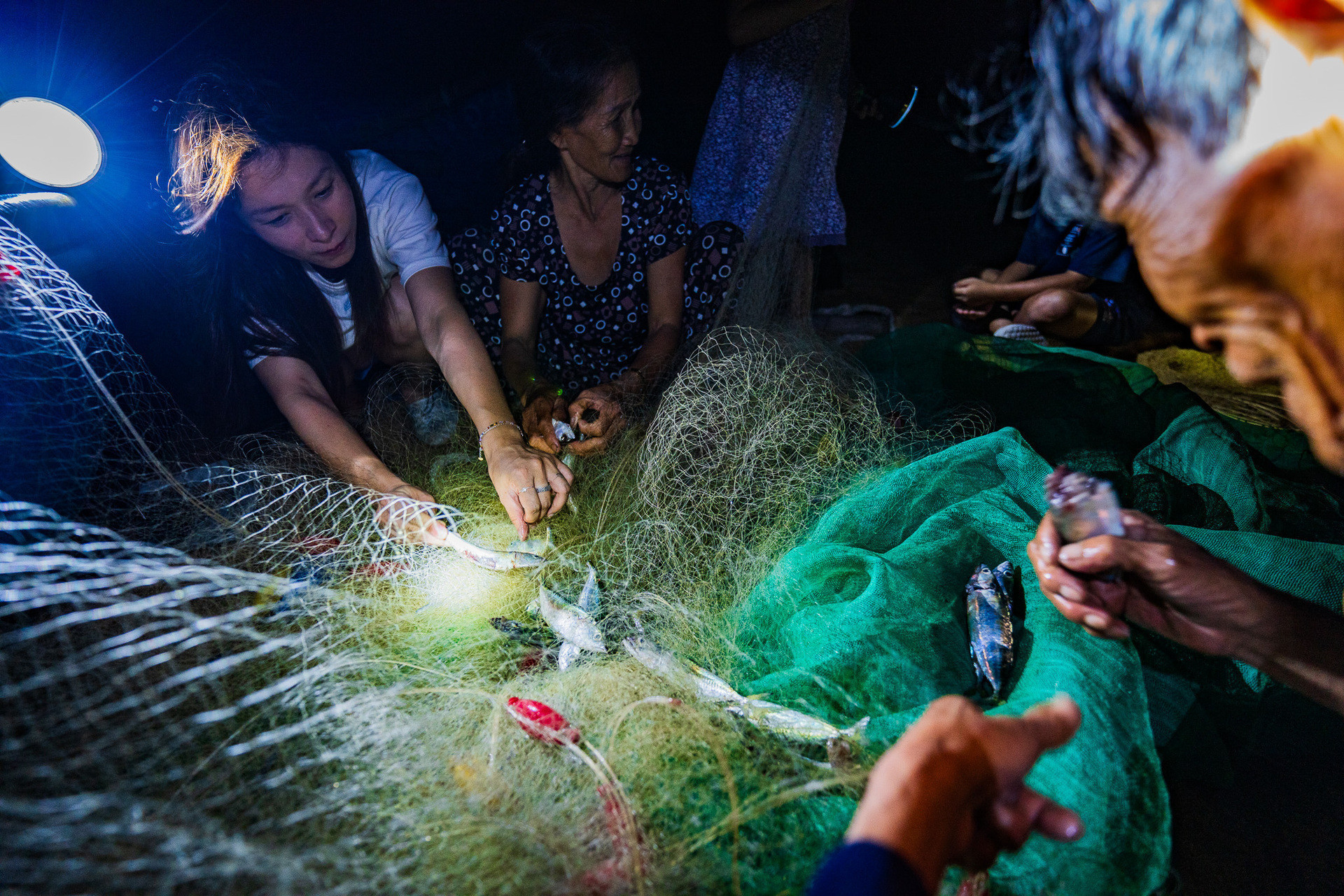
Visitors can join locals in fishing and net casting in Go Co Village. Photo: Nguyen Hong Nhat
Trung Luong fishing village, Gia Lai
Less well-known than Nhon Ly, Bai Xep, Hai Minh, or Nhon Hai, Trung Luong offers a peaceful escape where visitors can slow down, enjoy the sea, and connect with friendly locals.
The village is located in Cat Tien commune, about 30km from the former Quy Nhon city centre. Traditionally, residents relied on nearshore fishing using basket boats. Today, many have transitioned into tourism while preserving the simplicity and warmth of coastal life.
The beach here is gently sloping, with white sand and clear blue water, making it ideal for families with children. From the shore, visitors can also see wind turbines, creating picturesque views.
A seafood market about 1km from the village operates in the early morning and again from 3pm to 6pm, offering a wide variety of fresh seafood at affordable prices, including oysters, crabs, and shellfish.
With more time, visitors can explore nearby attractions such as Thien Hung Zen Monastery - home to a 69m-high statue of the Buddha with a diameter of 52m - as well as Eo Gio and Nhon Ly fishing village.
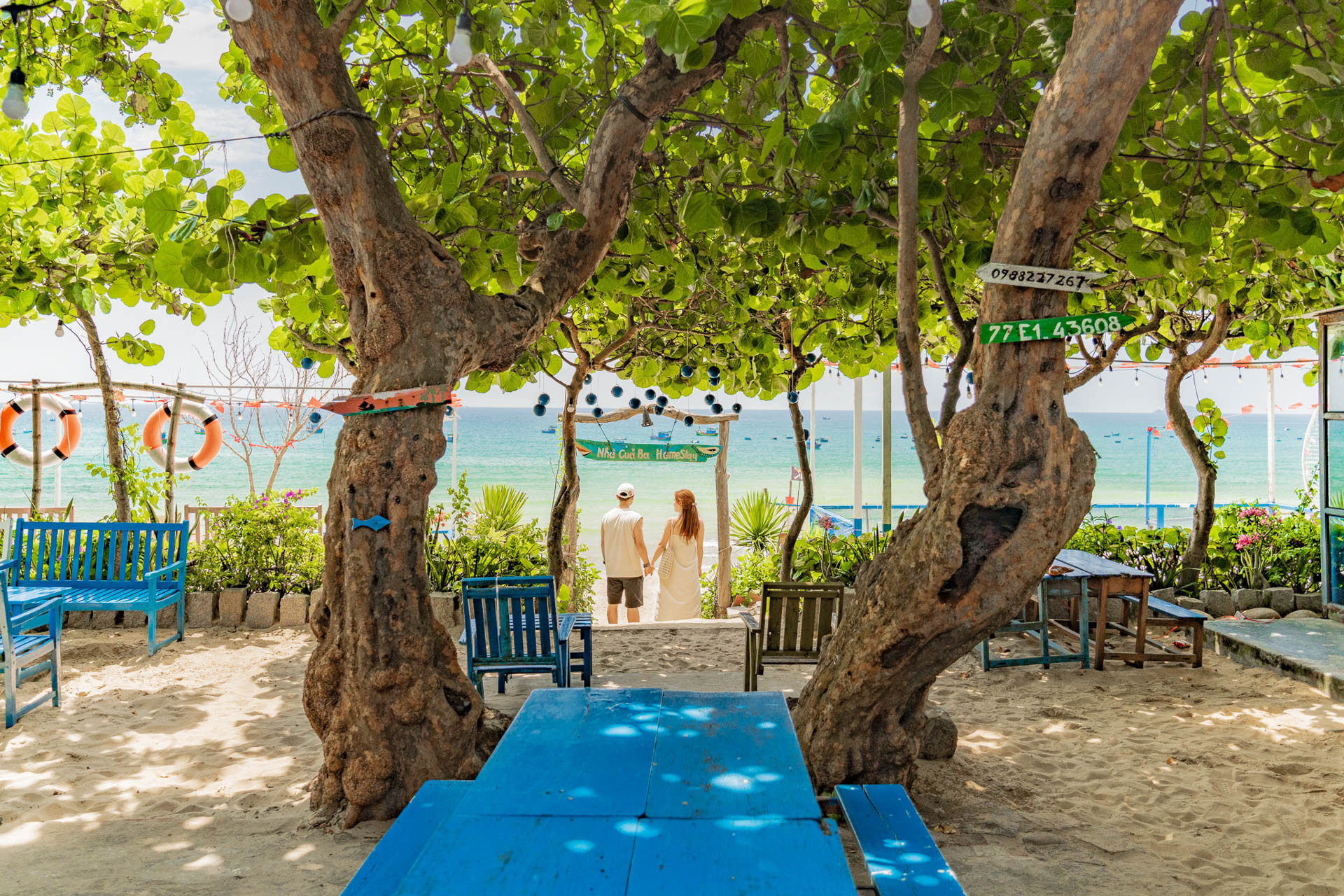
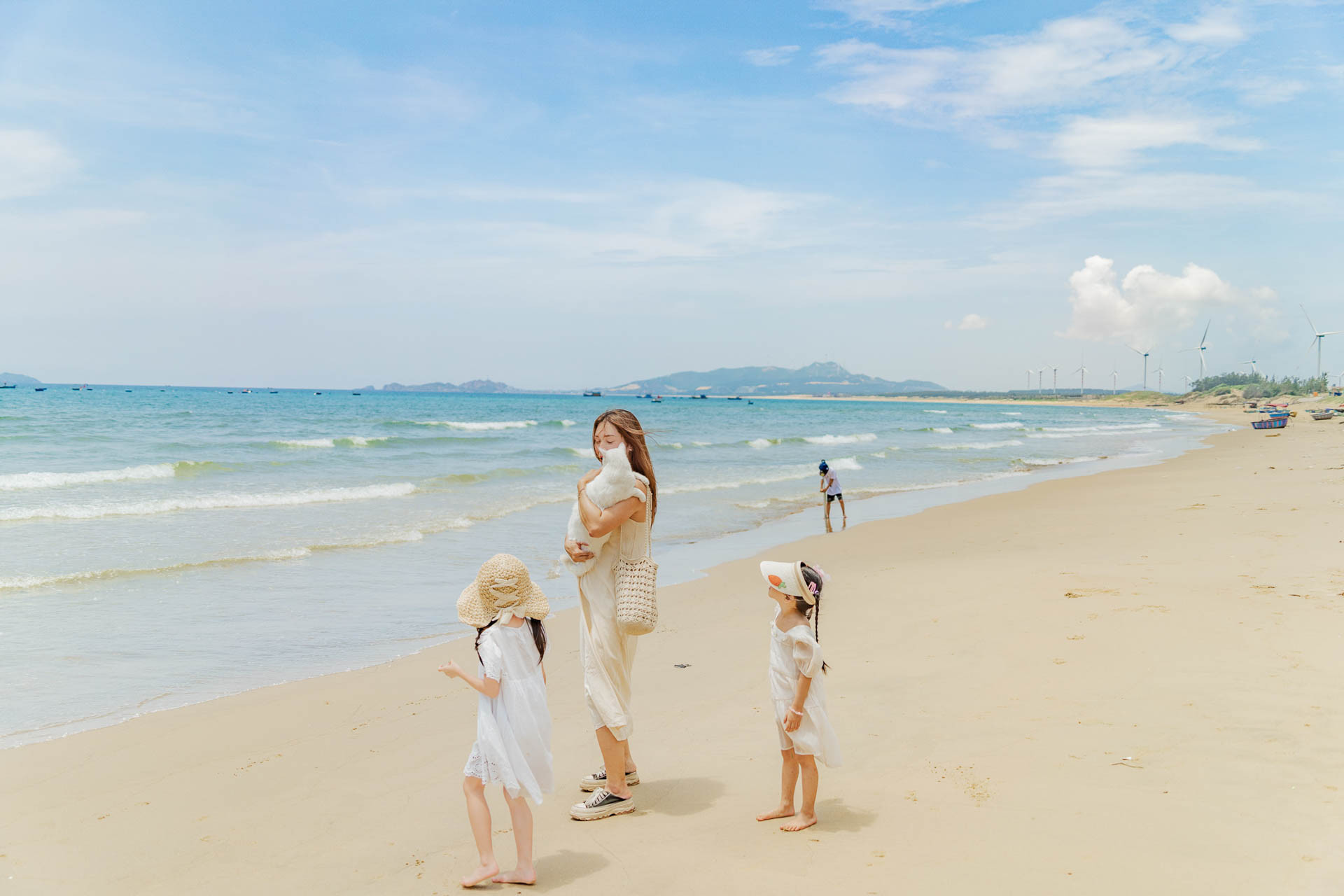
The peaceful fishing village of Trung Luong sits beside clear blue waters. Photo: Nguyen Hong Nhat
Phuoc Dong fishing village, Dak Lak
Phuoc Dong fishing village has seen a growing number of homestays to meet rising tourist demand. However, it continues to preserve its simple, uncommercialised charm, making it an ideal place to “escape the city and slow down.”
Early mornings offer a chance to visit the local fishing dock, where seafood caught overnight is sold fresh at very low prices. One must-try delicacy is “nhay squid” - freshly caught squid that still flickers with bioluminescent spots, delivering an intense taste of the sea.
Street food here is notably affordable: banh xeo costs just VND3,000-5,000 (US$0.12-0.20) per piece, while dishes like noodles or banh mi are available for VND10,000-15,000 (US$0.40-0.60).
The village is also conveniently located near well-known attractions in the former Phu Yen area, such as Hon Yen, Bai Xep, Ganh Da Dia, and Ong Cop wooden bridge. Visitors can also take boats from here to Mai Nha Islet.
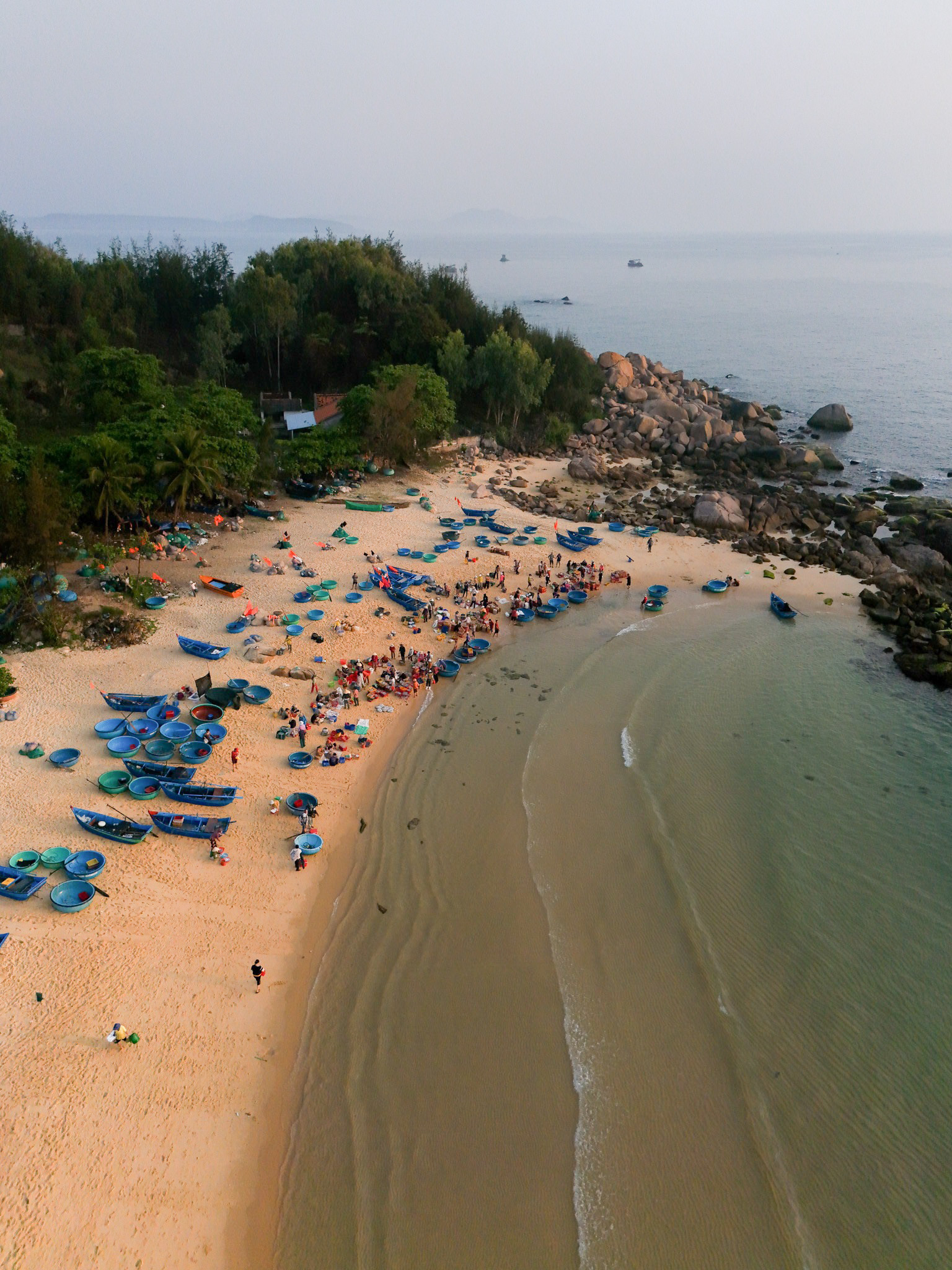
Early morning scenes at Phuoc Dong fishing village draw visitors. Photo: Thua Hoa
Linh Trang
.svg)
