 Vietnamnet.vn

 Podcast



Behind these famous specialties is a journey of farmers, chefs, and the locality to elevate mountain goats into a value chain worth tens of billions of VND.
Located in the center of Hoa Lu ward, the parking lot of the goat restaurant run by a Gen Y owner was overflowing. Inside, there was not a single empty table; people stream in and out, and many customers had to wait nearly 30 minutes for their turn.
This was the scene during the recent April 30 holiday at the restaurant of Vu Tri Thuc (born in 1991, Hoa Lu ward, Ninh Binh). Welcoming about 300 guests and consuming 20 goats daily, this establishment now generates a revenue of nearly VND 1 billion per month.
Few know that Thuc spent his childhood following goat herds across the limestone mountains of Ninh Xuan. Born and raised alongside these animals on the Trang An mountains, he understands the instability of farming.
Before 2008, Ninh Binh goat meat was not as popular as it is today. Thuc's parents struggled with herding, facing risks of theft or goats being killed by dogs. When it came time to sell, traders squeezed prices down to only VND 8,000–12,000 per kg of live weight. After costs, the batches brought little profit, sometimes even resulting in a loss.
Refusing to accept constant price-gouging, Thuc's parents decided to find their own market by opening a goat meat restaurant in 2008. The beginning was rough; there were times it took two days to consume just one goat.
After finishing high school, Thuc went to culinary school. Thanks to his family background, his father passed down the experience of identifying and selecting standard meat goats. Starting with basic dishes, he began experimenting with new ingredients to create many dishes from goats.
Diversifying the menu and standardizing food quality helped the family's small eatery grow into a large-scale chain, creating jobs for 30 workers with salaries of VND 7–10 million per month.
While Vu Tri Thuc represents the young generation bringing local cuisine to regional competitions, Nguyen Minh Duc, 65, is a testament to perseverance in traditional processing.
Duc also started his career from scratch. After leaving the military service and trying many jobs, in 1988–1989, he and his wife began buying goats from local households and butchering them. Without a shop, the couple carried slabs of goat meat on shoulder poles and sold them throughout the streets of Ninh Binh. The nickname “Duc De” became associated with him during those difficult years.
After nearly 40 years in the trade, Duc now owns two restaurants. Customers mainly come for his goat spring rolls. According to him, other dishes can be made by many restaurants, but goat spring rolls require extremely strict techniques.
His spring rolls are so favorite that during holidays and Tet, the entire family must work day and night to fulfill customer orders.
Turning a dish into a billion-dong specialty
To maintain a stable number of customers every day, the key for restaurants such as those owned by Duc and Thuc lies in securing ingredient supplies. As market demand has surged, goat farmers in Ninh Binh now don’t rely solely on traditional free-range methods but have proactively shifted toward large-scale farming combined with herbal feed.
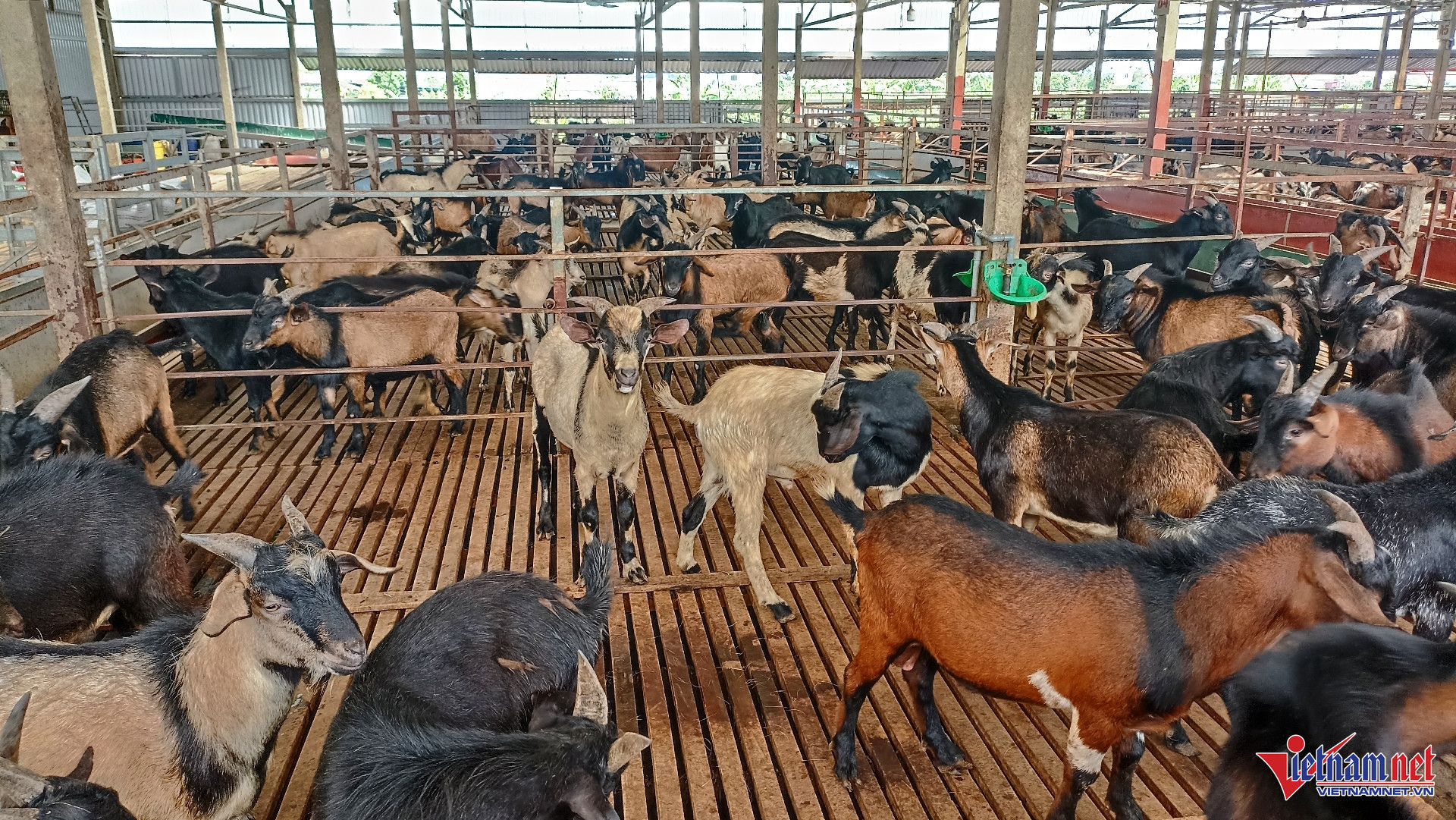
Nguyen Van Thien, Director of Khanh Thanh Herbal Goat Cooperative, said mountain goats naturally eat almost every type of leaf, including toxic plants. Based on this characteristic, the cooperative rented 3ha of land in 2020 to develop barns and cultivate raw material plants.
According to Do Van Nhuong, technical manager of Khanh Thanh Cooperative, the unit currently maintains 800-1,000 goats per breeding cycle. On average, the herd consumes around 1.5 tons of feed daily. Notably, besides grass and corn stalks, the diet is supplemented with large amounts of herbs and traditional medicinal plants. Herbal feed strengthens the goats’ immune systems, reduces disease risks, and minimizes veterinary costs.
This model has expanded beyond a few isolated farms and is creating broader community linkages.
Bui Van Thao, Director of the Ninh Binh Goat Breeding Cooperative, shared that the cooperative is linked with over 50 households, supplying 5,000–6,000 meat goats to the market annually. This partnership creates a closed-loop cycle, from providing breeding stock and transferring herbal goat farming techniques to deep processing.
To date, products such as goat spring rolls, goat bone glue, goat milk, and smoked goat meat from the cooperative have achieved 3-star OCOP standards, with an annual output of over 10 tons.
Ha Nguyen
.svg)
