 Vietnamnet.vn

 Podcast



In Ca Mau, there is a crustacean with eight legs and two claws that closely resembles the common field crab. Yet locals know it by a different name - ba khia. For many visitors from other regions of Vietnam, the creature can be puzzling at first glance, often mistaken for field crabs or the similar-looking chu u.
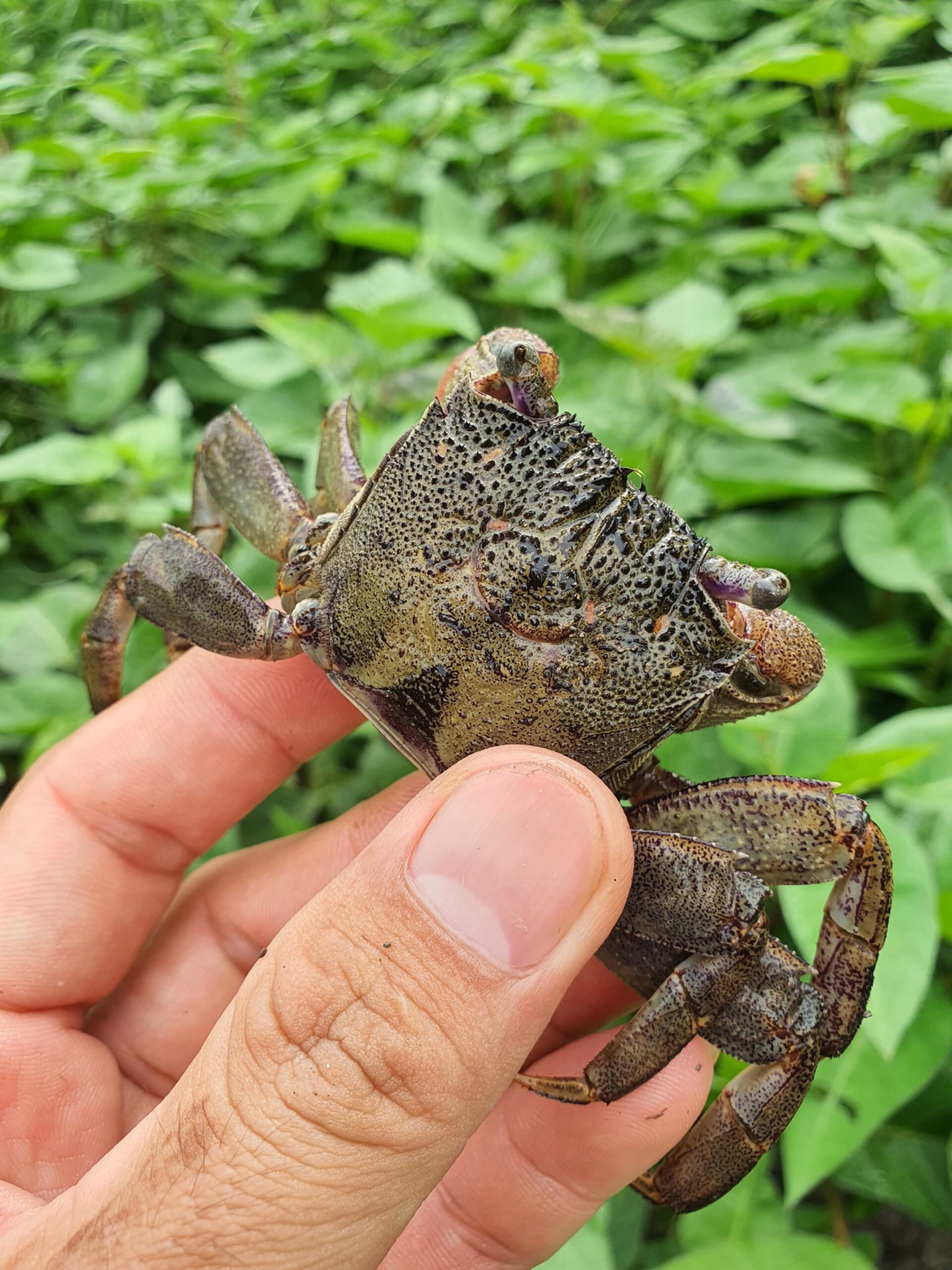
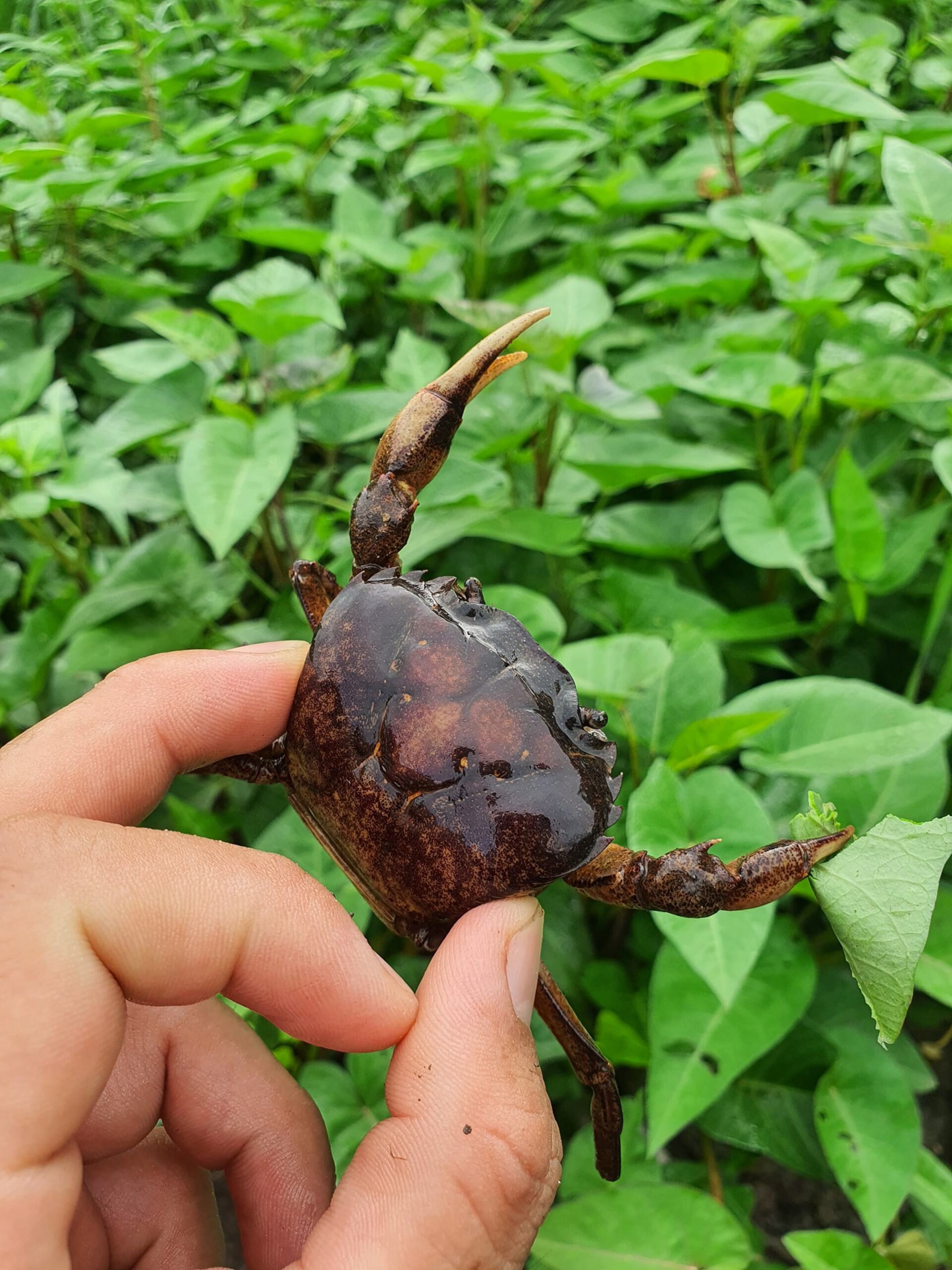
Ba khia and field crab. Photos: Do Suot Anh
In fact, ba khia belongs to the crab family. Its name comes from the three distinctive stripes running across its back. Like field crabs and chu u, ba khia typically digs burrows in brackish or salty environments along riverbanks, especially beneath mangrove forests.
Do Suot Anh, born in 1993 and a native of Ca Mau who often shares images of daily life and cuisine from the Mekong Delta, said the easiest way to tell ba khia apart from field crabs is by its shell.
“The shell of ba khia is slightly rough and has three stripes on its back,” Suot Anh explained. “Field crabs, on the other hand, have a smooth shell, usually dark red, with one large claw and one smaller claw.”
According to him, the most flavorful ba khia are the smaller ones carrying eggs. Their meat is firm and comes off the shell cleanly once opened.
Ba khia can be found throughout the Mekong Delta, but they are especially abundant in the southernmost region known as Dat Mui in Ca Mau. The area widely regarded as producing the best ba khia is Rach Goc in Phan Ngoc Hien commune, formerly Ngoc Hien district. Covered by mangrove forests and facing the sea, the waters there are clean and rich in natural food sources for the crabs.
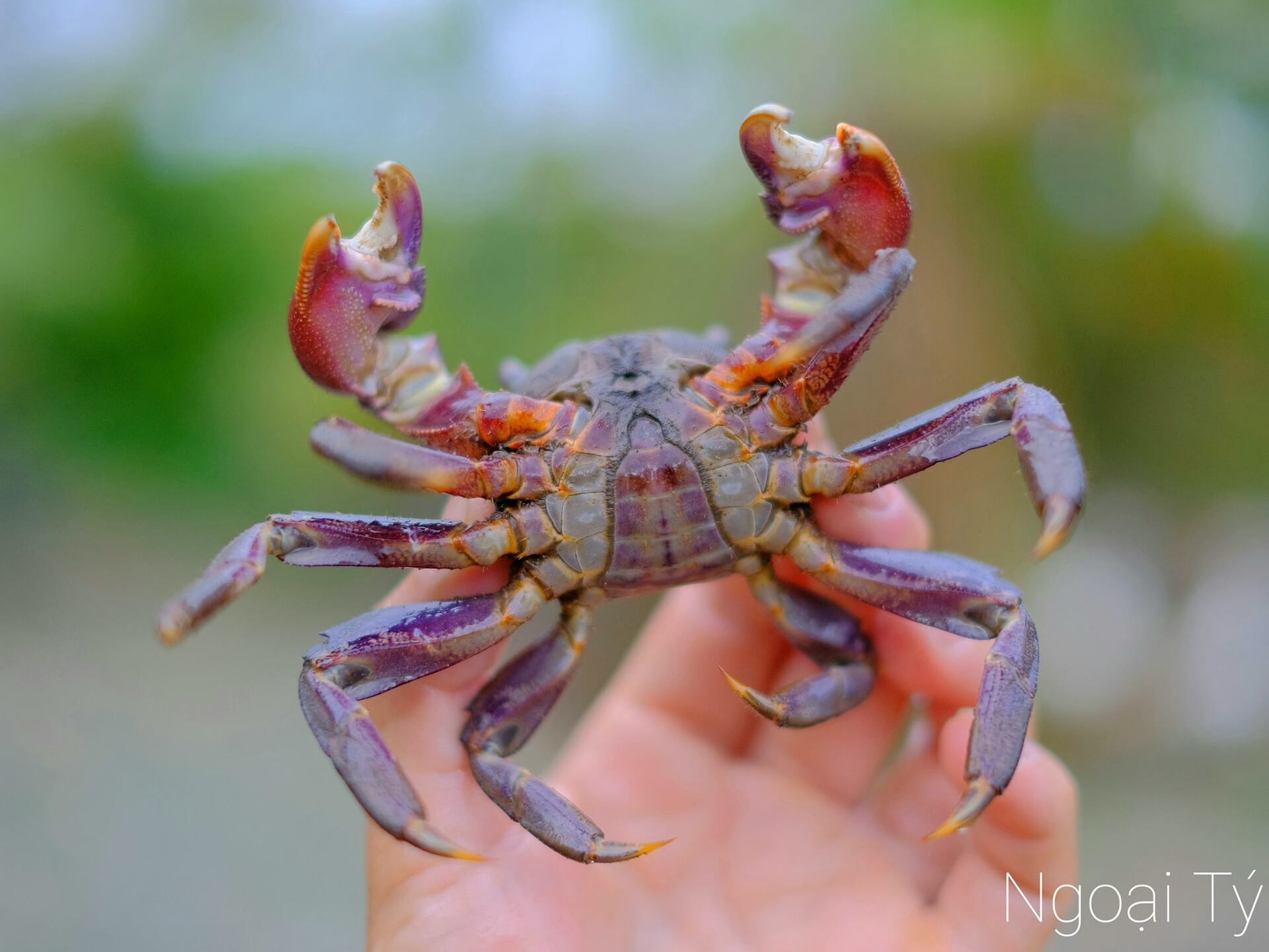
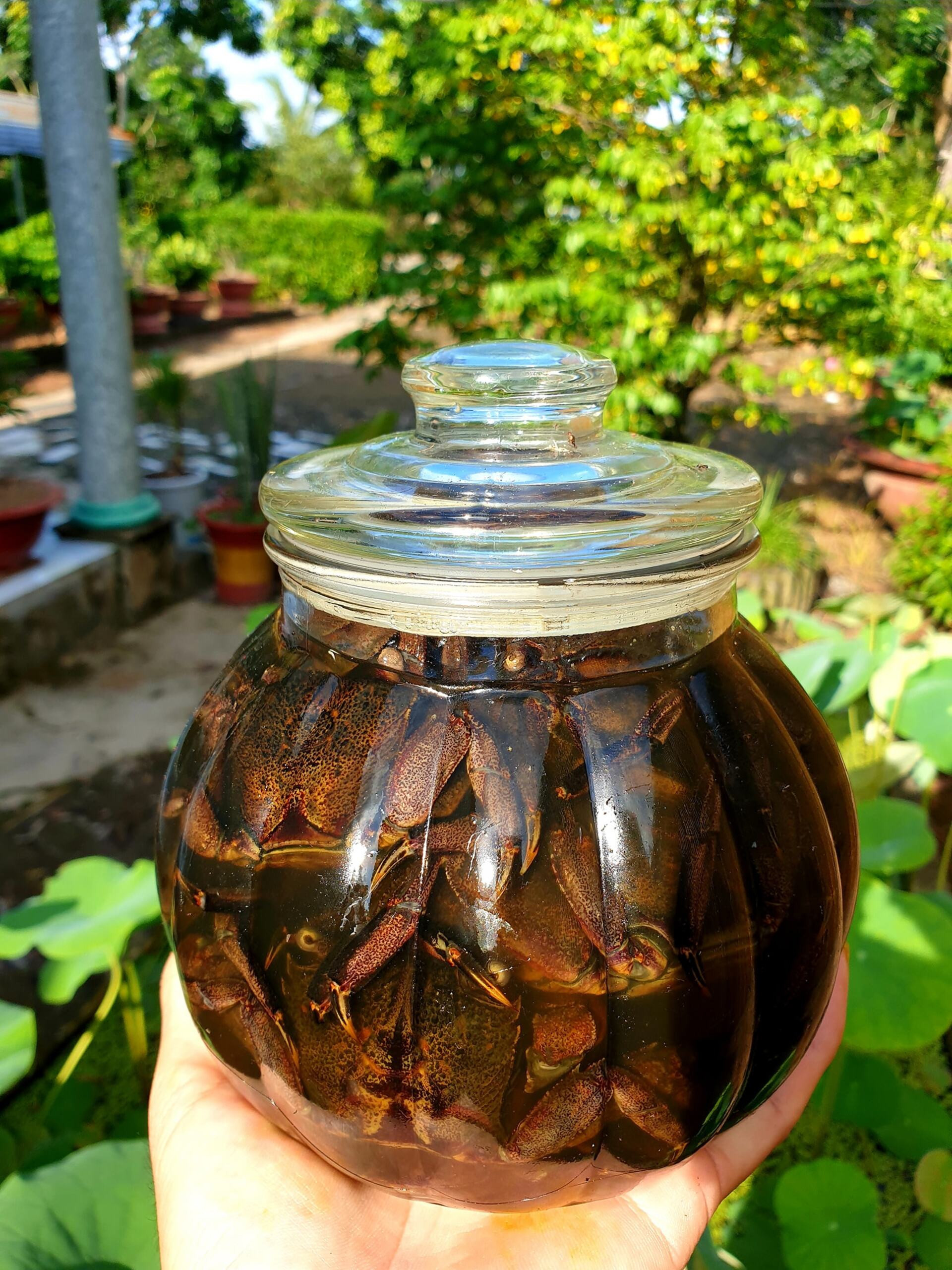
Salted ba khia prepared by local families for later use. Photo: Do Suot Anh
Locals have long shared a saying: “If you want to taste ba khia and oc len, head to Rach Goc - you may forget the way home.”
Ba khia are harvested and prepared year-round in Ca Mau, though the main season runs from the eighth lunar month to mid-October. During this time, the crabs are considered at their best, with firmer meat and richer roe.
In the past, ba khia were extremely plentiful. At certain times of the year, locals could see them crawling everywhere, and they were sold at very low prices. During peak season, residents developed a way to preserve them for long-term use - by salting.
The craft of making salted ba khia has since become closely tied to everyday life in many Mekong Delta provinces. In Ca Mau, where natural resources are abundant, the practice has flourished and evolved into a distinctive traditional craft.
Freshly caught ba khia are first cleaned and drained before being placed into jars or ceramic containers. A carefully prepared saltwater brine is then poured over them. The jars must be sealed and kept in a cool place throughout the fermentation process. If the temperature becomes too high, the meat may soften and lose its desirable texture.
After about a week, salted ba khia are ready to eat. Stored at room temperature, they typically keep for around 15 days. When refrigerated, however, they can last for several months.
Salted ba khia can be eaten directly or shredded and mixed with lime juice, sugar, garlic, chili and Vietnamese coriander to create a flavorful dish. They are also used in salads and other preparations.
In 2019, Vietnam’s Ministry of Culture, Sports and Tourism officially recognized the craft of making salted ba khia in Rach Goc, Phan Ngoc Hien commune, as a National Intangible Cultural Heritage.
Since then, the brand of salted ba khia from Ca Mau has received increasing attention from both local authorities and producers. Instead of relying solely on traditional manual production, many facilities have invested in machinery and applied modern techniques to improve both output and product quality.
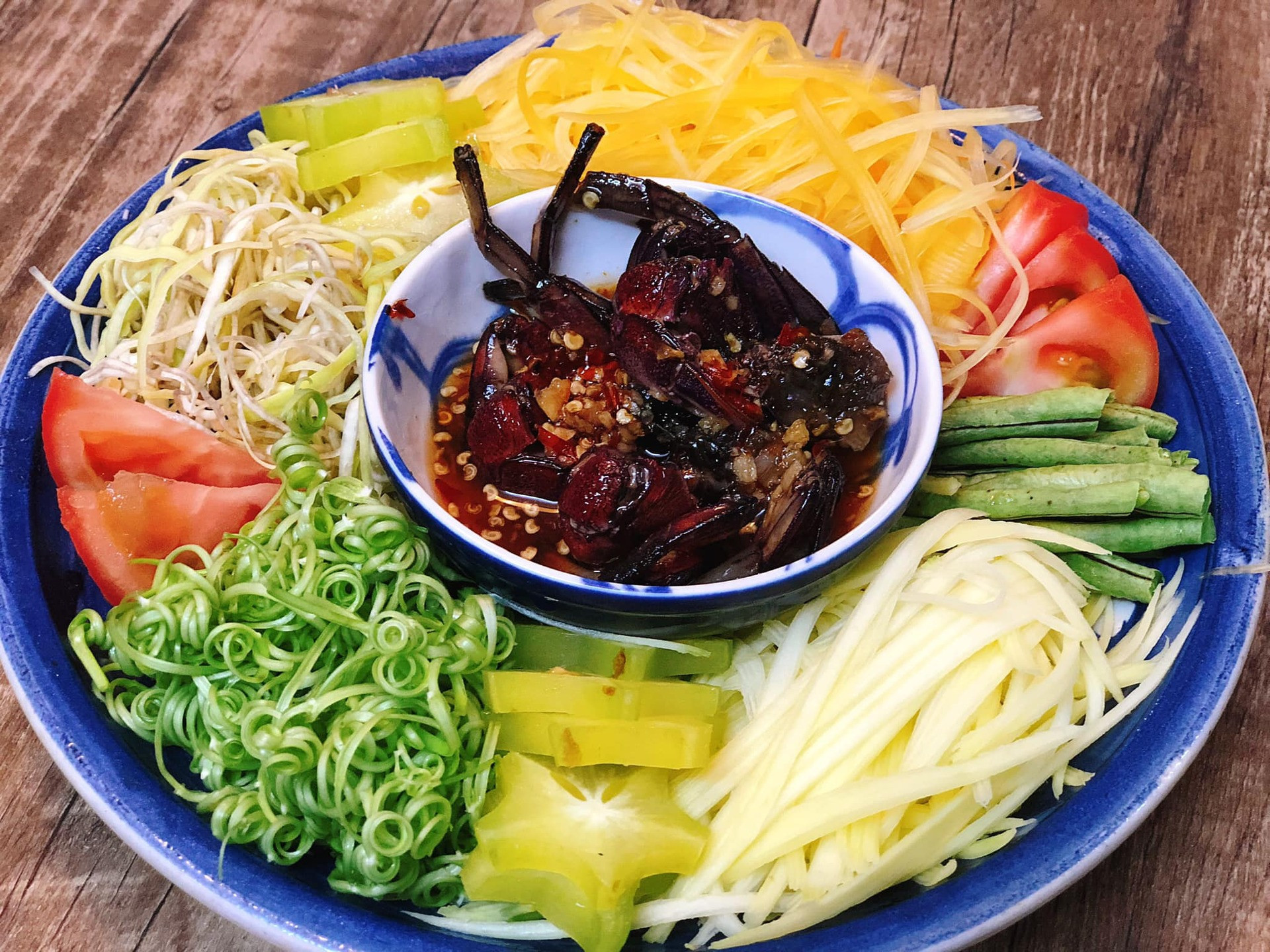
Today, numerous producers across Ca Mau supply salted ba khia as well as ready-mixed seasoned versions for markets both inside and outside the province.
At restaurants, ba khia are now transformed into a variety of creative dishes such as tamarind stir-fried ba khia, beer-steamed ba khia and salt-roasted ba khia, offering diners diverse flavors.
For tamarind stir-fried ba khia, the crabs are cleaned and their shells removed before the bodies are drained. Garlic is first sautéed in hot oil, then the crabs are added and stir-fried until cooked. Tamarind juice and a little water are poured into the pan and mixed well. The dish is seasoned with sugar, salt and fish sauce, then simmered over low heat. Before serving, cooks sprinkle Vietnamese coriander and crushed roasted peanuts on top.
Ba khia combined with premium fish sauce - mam nhi - also delivers a distinctive aroma and rich taste.
For many people, the flavor of ba khia is inseparable from childhood memories and the sense of home.
Today, some tourist destinations in Ca Mau even allow visitors to experience catching ba khia at night with flashlights or to tour local facilities that produce salted ba khia.
Khoi Vy
.svg)
