 Vietnamnet.vn

 Podcast



The reality behind VND3 million TVs
As consumers grow more cautious with spending, electronics retailers are actively promoting budget televisions, making this segment increasingly vibrant. With just VND3-5 million (US$120-200), buyers can now own a new television, including internet-enabled smart TVs.
However, behind the appealing price tags are trade-offs that consumers should carefully consider.
Display quality on most low-cost models is generally “adequate,” with limited brightness and contrast, and colours that lack vibrancy. Performance is another drawback, as users often report slower operation over time, particularly with budget smart TVs.
Diesel prices drop sharply
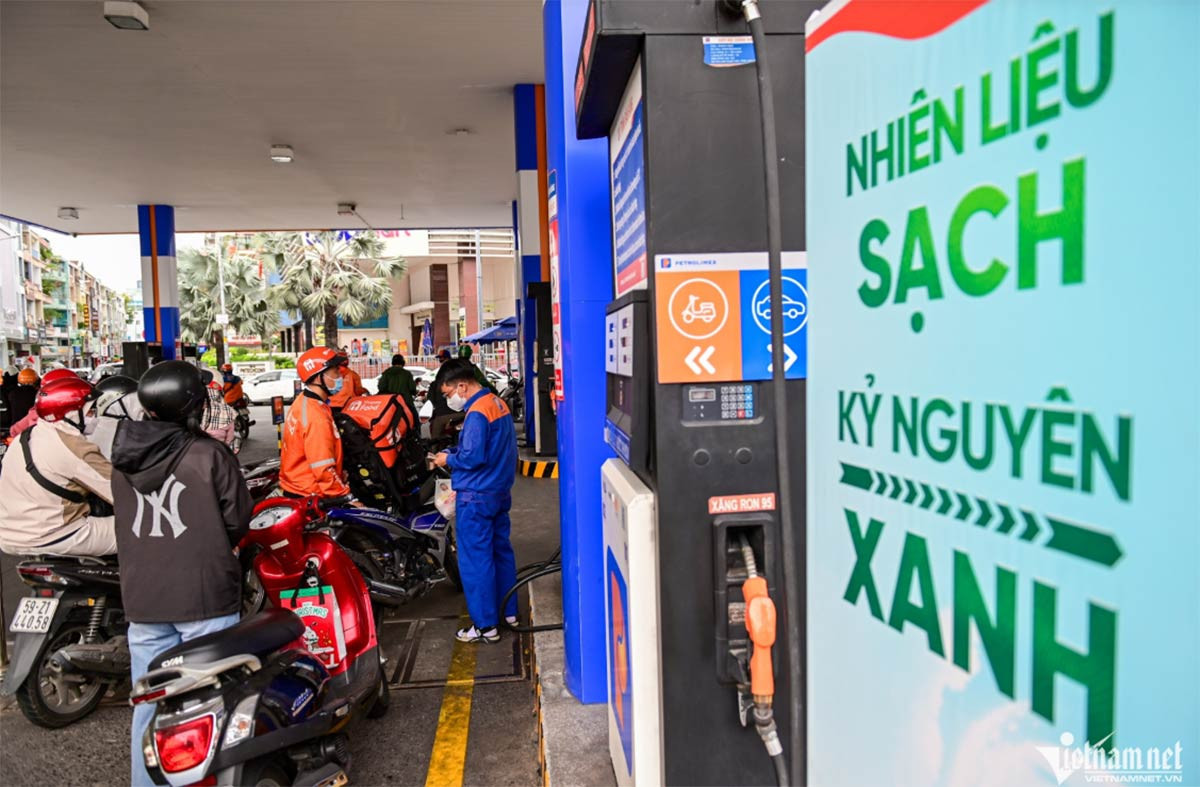
The Ministry of Industry and Trade and the Ministry of Finance adjusted retail fuel prices from midnight on April 16.
In this round, diesel prices were reduced by VND1,928 per litre (US$0.08), bringing the price down to VND31,041 per litre (US$1.24). The price of mazut 180CST 3.5S fell by VND2,281 per kilogram (US$0.09), capped at VND20,332 per kilogram (US$0.81).
In its statement, the Ministry of Industry and Trade provided further details on global fuel price movements and domestic adjustments during the April 16 pricing cycle.
E10 gasoline cheaper than RON95, compatible with over 90% of vehicles
The Ministry of Industry and Trade has proposed revisions to the roadmap for blending biofuels with traditional fuels. Under the proposal, from April 30, all unleaded gasoline must be blended into E10 fuel for use in gasoline engines nationwide.
According to the ministry, studies show that E10 gasoline is compatible with more than 90 percent of vehicles without requiring engine modifications.
During the April 9 pricing cycle, PVOIL and Petrolimex listed E10 gasoline at VND23,070 per litre (US$0.92), down VND2,620 (US$0.10). At this level, E10 is VND470 per litre (US$0.02) cheaper than RON95-III, but VND730 per litre (US$0.03) higher than E5 RON92.
New proposal on fuel pricing mechanism
The Ministry of Industry and Trade is collecting feedback on a draft decree governing petroleum trading. In its 10th draft, the ministry addresses several key issues in the sector.
The draft includes proposals on principles for adjusting fuel prices, pricing formulas, and regulations on the disclosure of retail fuel prices.
Fuel prices drop 30%, but food services stand still
When fuel prices surged, the cost of everyday items - from tofu and sticky rice to bowls of pho and cups of coffee - rose quickly. Now, despite a significant decline from peak fuel prices, many businesses have yet to lower their prices.
Although fuel prices have fallen by 26-30 percent from their peak, many vendors remain hesitant to adjust prices downward.
Speaking to VietNamNet, Do Thi Ha, who runs an online kitchen in Dinh Cong, Hanoi, said reducing food prices would have to wait.
Economic expert Nguyen Hoang Dung noted that while fuel costs account for only about 5-10 percent of the direct cost of a bowl of pho, their ripple effects can influence 20-30 percent of total costs due to transportation and logistics.
According to economist Le Quoc Phuong, rising fuel prices naturally push up goods prices, as fuel is a key input for many industries.
As for why prices have not decreased alongside fuel costs, he pointed out that fuel prices have been fluctuating frequently. In such a volatile environment, goods prices cannot adjust up and down on a daily basis like fuel prices.
Electricity consumption hits new record as summer approaches
The National System and Market Operation Company Limited (NSMO) reported on the operation of the power system and electricity market in week 15 (April 6-12).
Due to widespread heatwaves across the country, electricity demand reached a new record in 2026.
Average daily electricity consumption nationwide during working days of week 15 reached 1.074 billion kWh, up 9.5 percent compared to week 14.
On April 8, the power generation mix included hydropower at 18.5 percent, coal-fired thermal power at 58.7 percent, gas turbines at 9.6 percent, biomass at 0.5 percent, wind power at 2 percent, solar power at 5.1 percent, rooftop solar at 4.3 percent, and other sources at 1.3 percent.
Vietnamese pomelos officially enter Australia after two years of negotiations
The first batch of Vietnamese pomelos has officially been exported to Australia after more than two years of negotiations and the completion of stringent technical requirements, opening new opportunities for the country’s fruit exports.
The launch ceremony for the first shipment to the Australian market was held on April 13 in Vinh Long. This marks the first time Vietnamese pomelos have entered this market following the completion of legal and technical procedures between the two countries.
Proposal to adjust peak electricity hours raises concerns
The Ministry of Industry and Trade is seeking feedback on a draft decision regulating peak, off-peak, and normal hours for the national power system.
Vietnam Electricity (EVN) has provided feedback on the proposal, expressing concerns about potential overload risks and operational errors if changes to peak-hour frameworks are implemented.
Hanh Nguyen
.svg)
