 Vietnamnet.vn

 Podcast



During the tourism season from January to October, her family business is busy, but she no longer has to deal with rush-hour crowds or endure homesickness in a cramped rental room.
Each day, Thi can watch the sunrise from her doorstep, stroll to the market, and buy fresh seafood at low prices. At noon, without an air conditioner, she rests in a hammock, reading books to the sound of waves.
“After eight years in the city, I never stopped missing the island and my mother’s home-cooked meals,” she said.
Binh Hung Island belongs to Nam Cam Ranh commune, about a 10-minute boat ride from the mainland. Twenty years ago, when Thi was a child, living and studying conditions on the island were still limited. At the age of 10, her parents left her at her grandparents in Cam Ranh so she could attend school more easily.
“Each year, I could only return home twice because the trip on a wooden boat took about 1.5 hours and was very exhausting,” she recalled.
At 18, Thi was admitted to the University of Science, Vietnam National University – HCMC, majoring in chemistry. After graduation, she juggled multiple jobs to stay in HCMC. In addition to tutoring math, physics, and chemistry for secondary and high school students, she ran a seafood business sourced from her hometown.
“Every day, I rode 30–40 km by motorbike to pick up and deliver seafood, then rushed back to prepare lessons and teach. I also took on online work, building a travel fanpage and helping my parents promote their floating raft business and consult with customers remotely,” she said.
At that time, Thi had a good income, about VND30-40 million a month. However, she could not find a sense of happiness or belonging. "In 2022, I decided to quit all my jobs in the city and return to Binh Hung. My parents do business in tourism, so they were very happy when their daughter returned to help.
“However, my paternal grandparents were somewhat regretful, thinking their granddaughter spent many years of effort only to return to her hometown in the end, failing to stick it out in the city," Thi said.
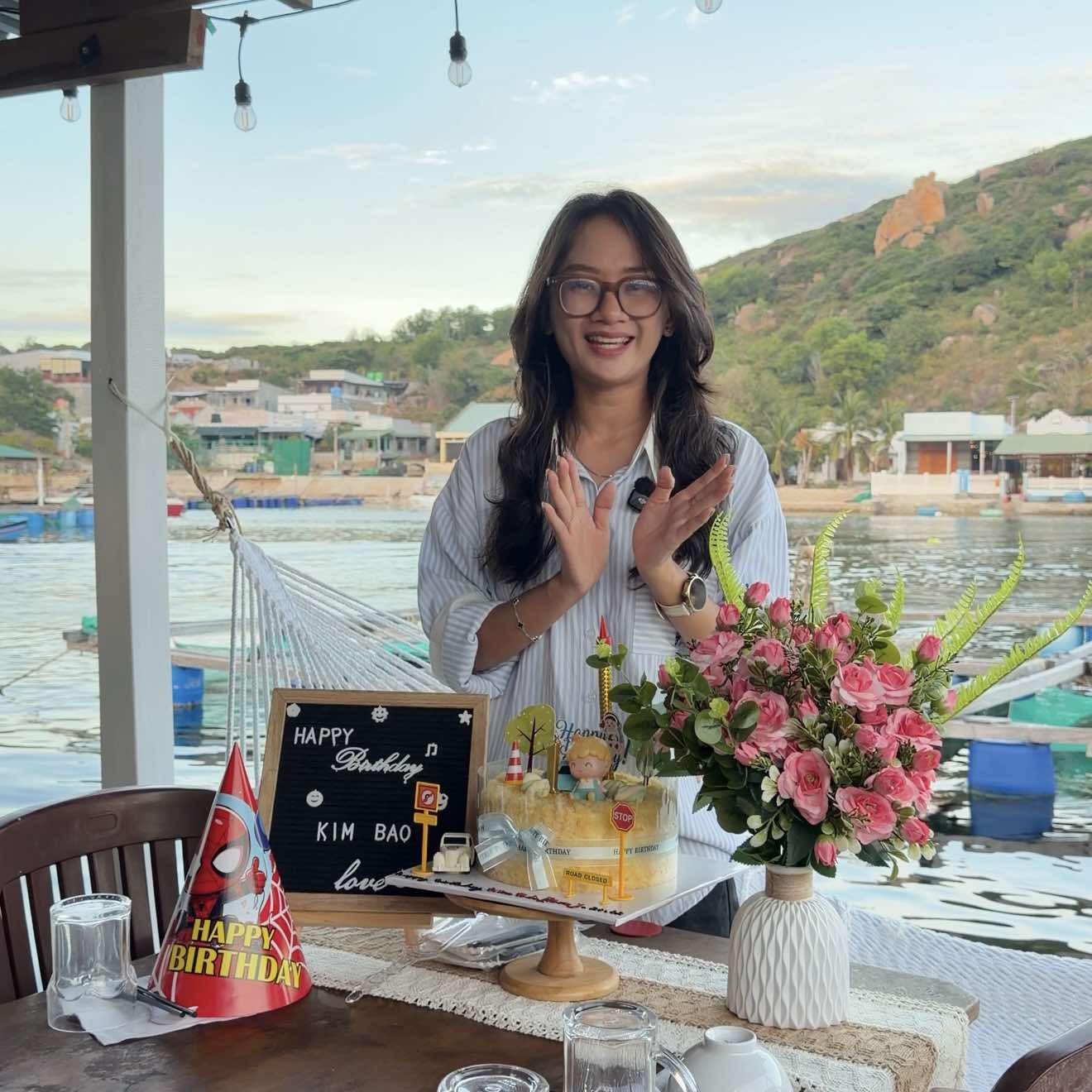
Returning to the island, Thi and her family ran a houseboat and tourism services. And she took online courses to build a TikTok channel to introduce the beauty and life on the island, while also supporting her parents in selling seafood.
Recently, she accepted 10 ninth-grade students for tutoring. “There are no extra classes on the island, so neighbors asked me to help. Unlike before, when I had to take many classes to earn money, I now teach for joy. During some sessions, I buy milk tea for the students that costs more than their tuition fees," Thi said.
Interesting life
By the time Thi returned, the island had been in the tourism business for over a decade, so the economy was much better than before.
"In the past, the main occupation of the locals was near-shore fishing. Later, besides raising lobsters, people also started tourism houseboats. Families became wealthier and could invest in sending their children to the mainland for high school and university," Thi recalled.
"However, what remains intact is that the islanders are always plain, honest, and live simply and peacefully. If guests arrive, everyone is ready to welcome and help enthusiastically," she said.
On the island, seafood is always fresh and cheap. In their spare time, Thi's family can fish or squid-fish right in front of their house for cooking. During the rabbitfish season, with just a "lo" (a basket-like tool), people can catch a whole basket of fish to bring home for sour soup or frying.
Thi calls these "zero-dong meals," rustic but never tiring to eat.
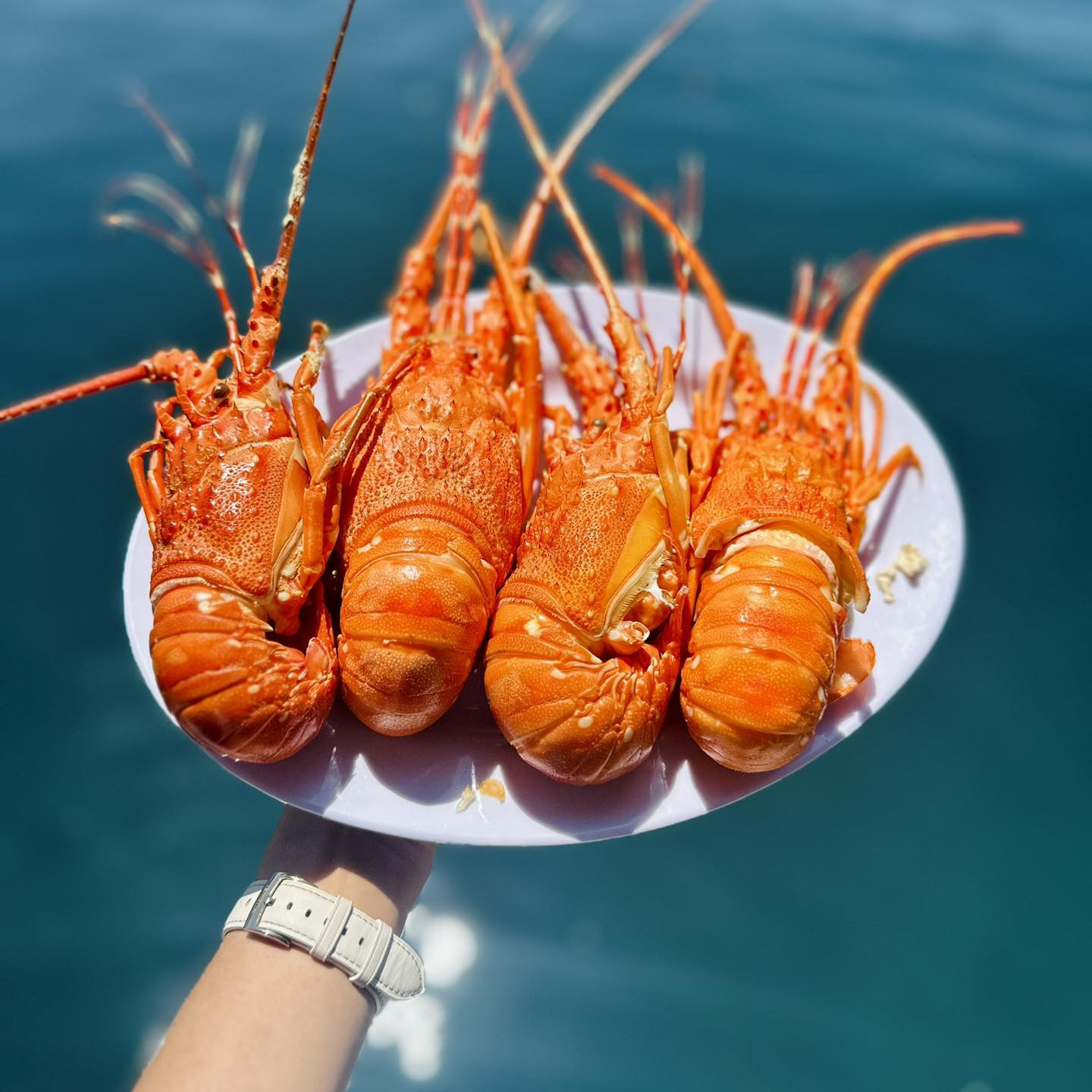
“Most families on the island raise lobsters, so we can eat them whenever we want. On Binh Hung Island, lobster meat is sweet and favored by tourists, but for locals, it is just a 'common' dish. Conversely, small fish are more preferred,” Thi said.
Ha Nguyen
.svg)
