 Vietnamnet.vn

 Podcast



As part of an ongoing survey on the implementation of policies and laws related to food safety control within supply chains, a working delegation from the National Assembly’s Committee for Science, Technology and Environment, led by Chairwoman Nguyen Thanh Hai, conducted an intensive working session in Bac Ninh province.
This effort is intended to support the appraisal of the revised Food Safety Law, which is expected to be submitted to the National Assembly at its second session of the 16th tenure.
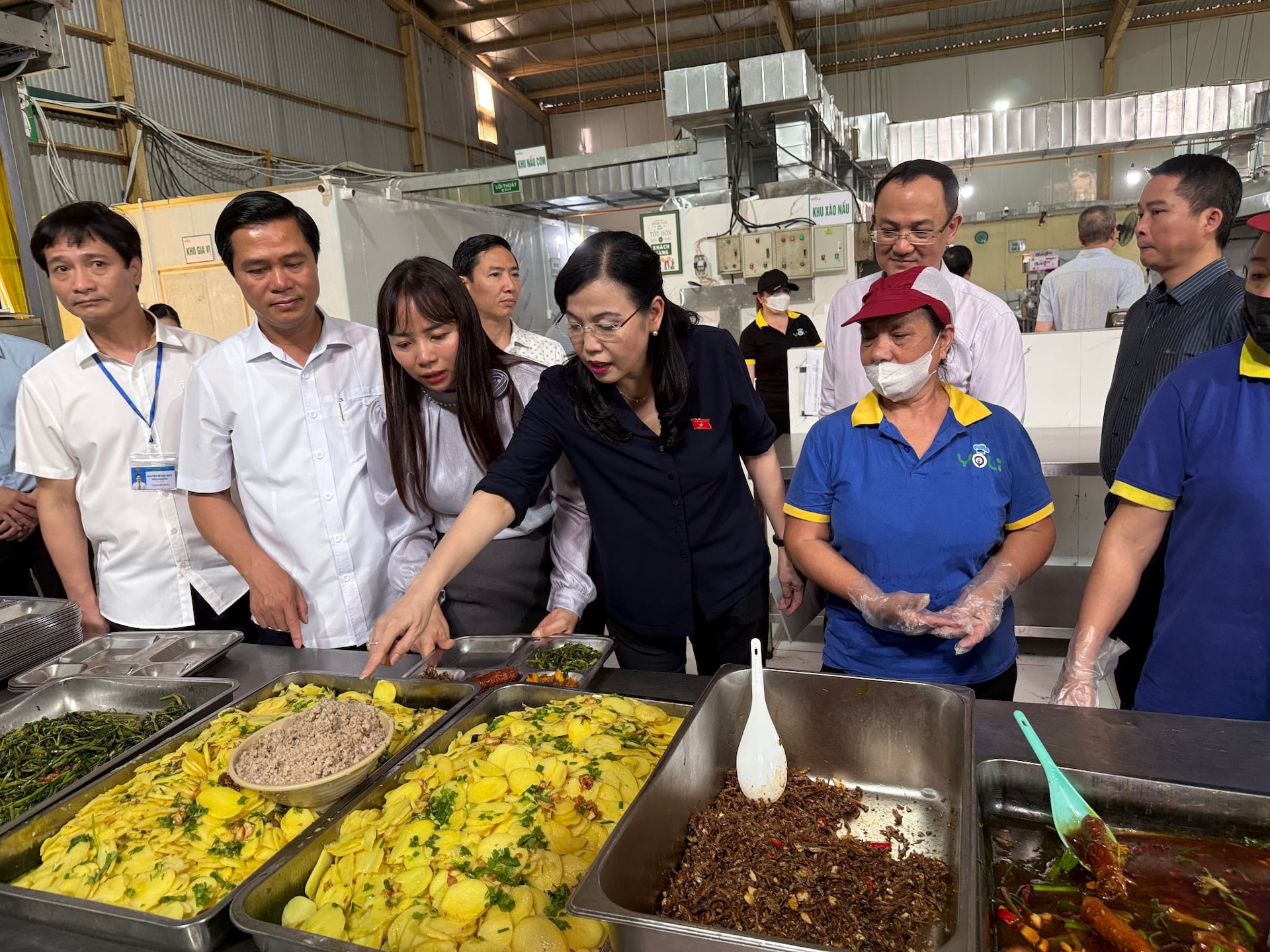
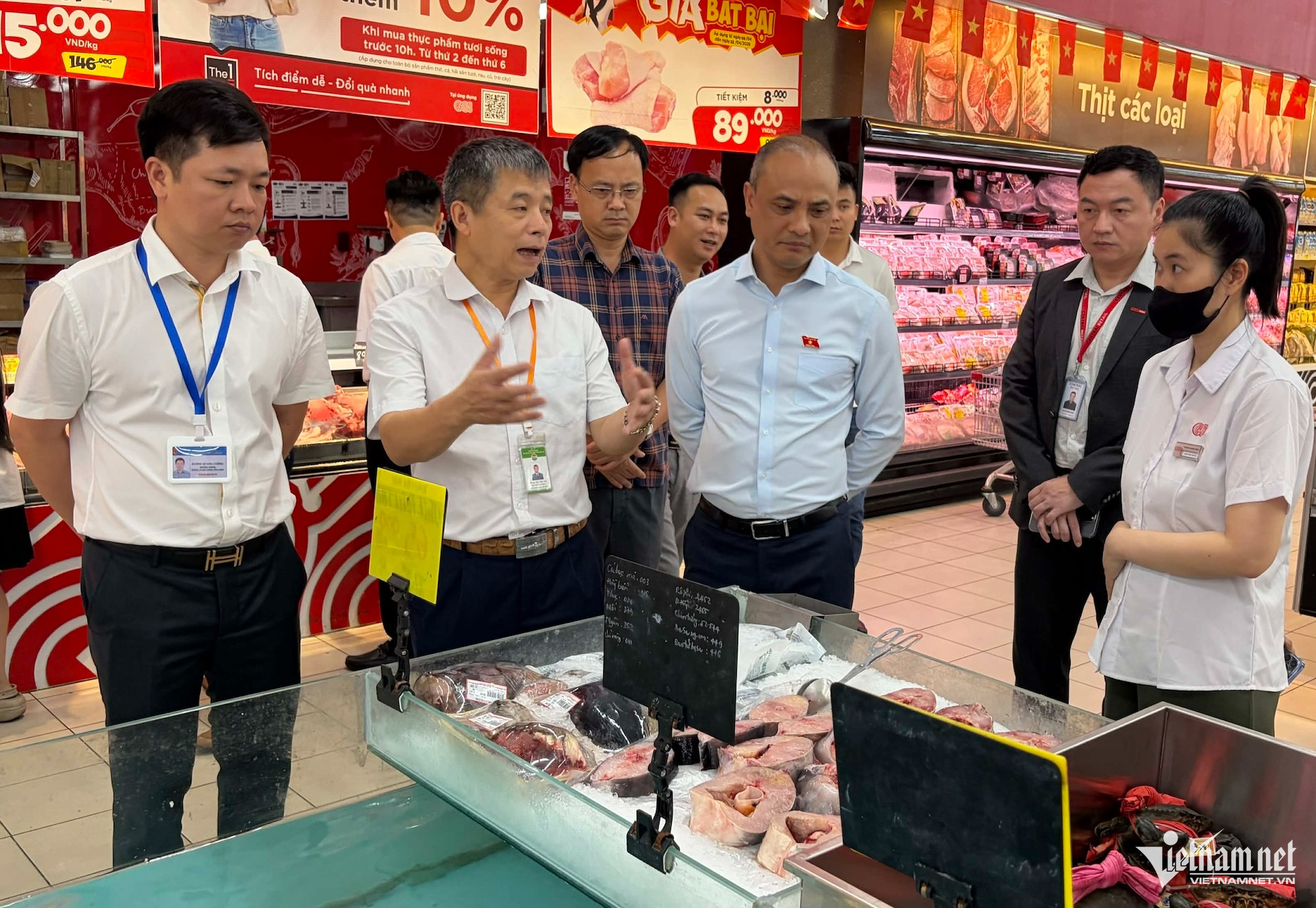
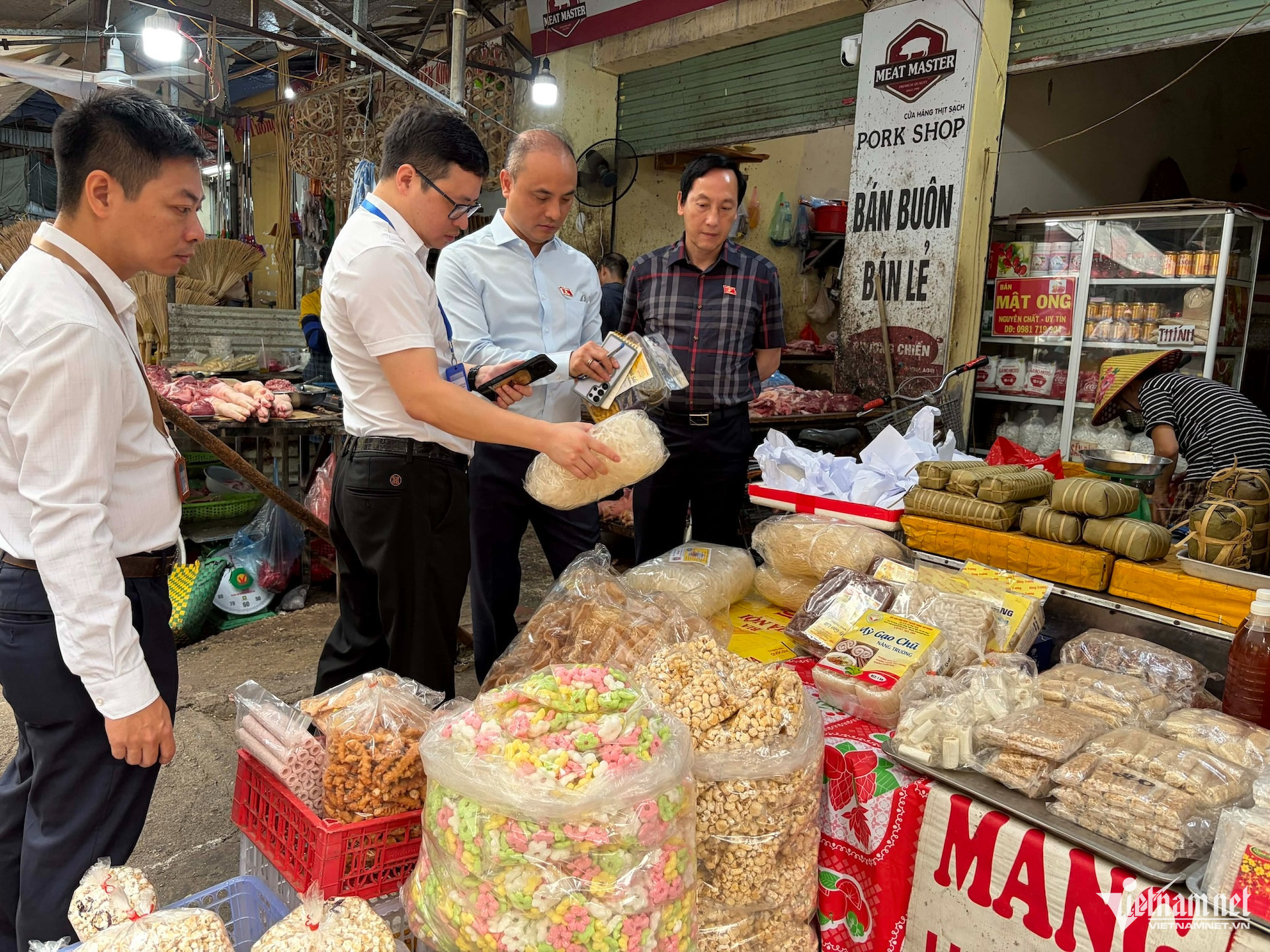
The delegation was divided into five teams to carry out field inspections at various locations, including markets, industrial kitchens, hospital canteens, and schools across Bac Ninh.
Following these site visits, the delegation held a working session with the Bac Ninh People’s Committee, where the issue of organizational structure and human resources for comprehensive food safety management once again came into focus.
More than 90% of personnel are part-time
Among eight key issues raised, Vice Chairman of the Committee Nguyen Phuong Tuan highlighted concerns over the quality of the organizational system and personnel responsible for food safety management. According to the provincial report, the workforce from provincial to grassroots levels remains extremely thin, with more than 90% of staff working on a part-time basis.
“In a densely populated area with a high concentration of industrial zones like Bac Ninh, is it appropriate to maintain this part-time model? Should food safety management continue to be handled by three separate agencies, or should it be consolidated under a single authority?” he questioned.
Survey findings indicated that while goods in supermarkets generally have clear origins, most products sold in traditional markets lack traceable sources.
Vice Chairwoman Nguyen Thi Mai Phuong expressed concern that despite being a major province, Bac Ninh lacks sufficient human resources and equipment to effectively manage the sector.
“Food safety personnel are a major issue. According to provincial data, full-time staff account for less than 8%, while the rest are part-time. At the commune level, a single official handles multiple responsibilities, including food safety. With heavy workloads and modest salaries, what solutions does the province have moving forward?” she asked.
Sharing similar concerns, Vice Chairman of the Committee for Culture and Society Ta Van Ha noted that a large industrial province like Bac Ninh has only 24 full-time food safety officials, which he described as insufficient.
He also pointed to weak coordination among departments. Currently, three departments are assigned responsibilities in this field, yet it remains unclear which one holds primary accountability, despite the principle that a single task should be assigned to a single lead agency.
National Assembly deputy Nguyen Ngoc Son observed that food safety control is currently fragmented across different stages, making it difficult to assign responsibility when violations occur. This, he noted, raises serious concerns about law enforcement.
He stressed that the core issue lies in the lack of clear accountability across the food supply chain. Assigning specific responsibilities to each stage, individual, and entity is essential to addressing the problem.
To improve testing capacity, he proposed granting provinces the authority to collect samples, conduct testing, issue preliminary conclusions, and carry out on-site post-inspection. Official certification would then be granted once provincial laboratories meet required standards and are designated by central authorities.
He also suggested that testing results should be integrated into shared databases, subject to cross-checking and inter-laboratory validation. High-risk indicators or serious cases should undergo confirmatory testing at regional or central facilities.
Expanding staffing or creating new structures remains difficult
In response, representatives from Bac Ninh’s departments and agencies agreed that consolidating food safety management under a single authority would likely be more effective.
Nguyen Quang Huy, Deputy Director of the Bac Ninh Department of Health, asserted that the province has been “a bright spot in food safety” in recent years. Previously, Bac Ninh was among the few localities selected to pilot the establishment of a Food Safety Management Board, where all state management functions were centralized and operated efficiently.
Vice Chairman of the provincial People’s Committee Le Xuan Loi, who oversees food safety, explained that responsibilities are currently divided: the Department of Health manages processed food and kitchens, as well as food poisoning prevention and response; the Department of Agriculture and Environment oversees initial production; and the Department of Industry and Trade handles circulation, markets, and supermarkets.
Under the former Food Safety Management Board model, all these functions were unified, allowing for streamlined direction, specialized management, and direct advisory support to the provincial leadership without overlap.
Chairman of the Bac Ninh People’s Committee Pham Hoang Son emphasized that the province places high importance on food safety management, particularly the responsibilities of authorities at provincial, departmental, and commune levels, as well as advisory roles of sectors such as industry and trade, agriculture, health, and public security.
He acknowledged that inter-agency coordination remains largely formalistic and expressed agreement with the proposal to unify management under a single authority.
However, he cautioned that establishing a new organizational structure would be challenging. Instead, he suggested assigning responsibility to a single department, with a designated deputy director in charge and oversight from a provincial vice chairman. This approach would ensure both strategic direction and specialized management.
Chairwoman Nguyen Thanh Hai recommended accelerating the application of information technology and digital transformation in food safety management, noting that expanding staffing would be difficult.
She also called for stricter enforcement, stronger sanctions, and heavier penalties for violations, including the possibility of revoking business licenses for establishments that fail to meet food safety standards.
In addition, she urged a comprehensive review of food safety, particularly within the fresh food supply chain across the province.
Commitments made by businesses regarding food safety should be printed and publicly displayed at their premises. “If commitments are kept in drawers and not made public, they carry no meaning,” she stressed.
Buying and selling based on “trust”

During inspections at Ha Vi traditional market, Nguyen Thanh Hai pointed out that all fresh food products were sourced by traders without documentation, records, or invoices to verify their origin.
There were no supporting documents whatsoever, leaving consumers to rely solely on visual judgment. Similarly, vegetables and mushrooms, whether imported from China or sourced from Da Lat, were sold without proof of origin, effectively “traded on trust.”
At a facility supplying meals for 4,000 workers daily, record-keeping for food inputs was found to be largely superficial, with some logs left blank for an entire week.
According to Hai, inspection results often differ significantly from reality. To identify gaps, it is necessary to strengthen unannounced inspections across multiple stages and enhance post-inspection oversight.
Thu Hang
.svg)
