 Vietnamnet.vn

 Podcast



In Vietnam, coconut jelly is commonly found in simple sweet desserts or used as a topping. Yet few realize that behind this familiar treat lies a high-tech processing operation worth millions of dollars. Today, coconut jelly is exported to 27 countries.

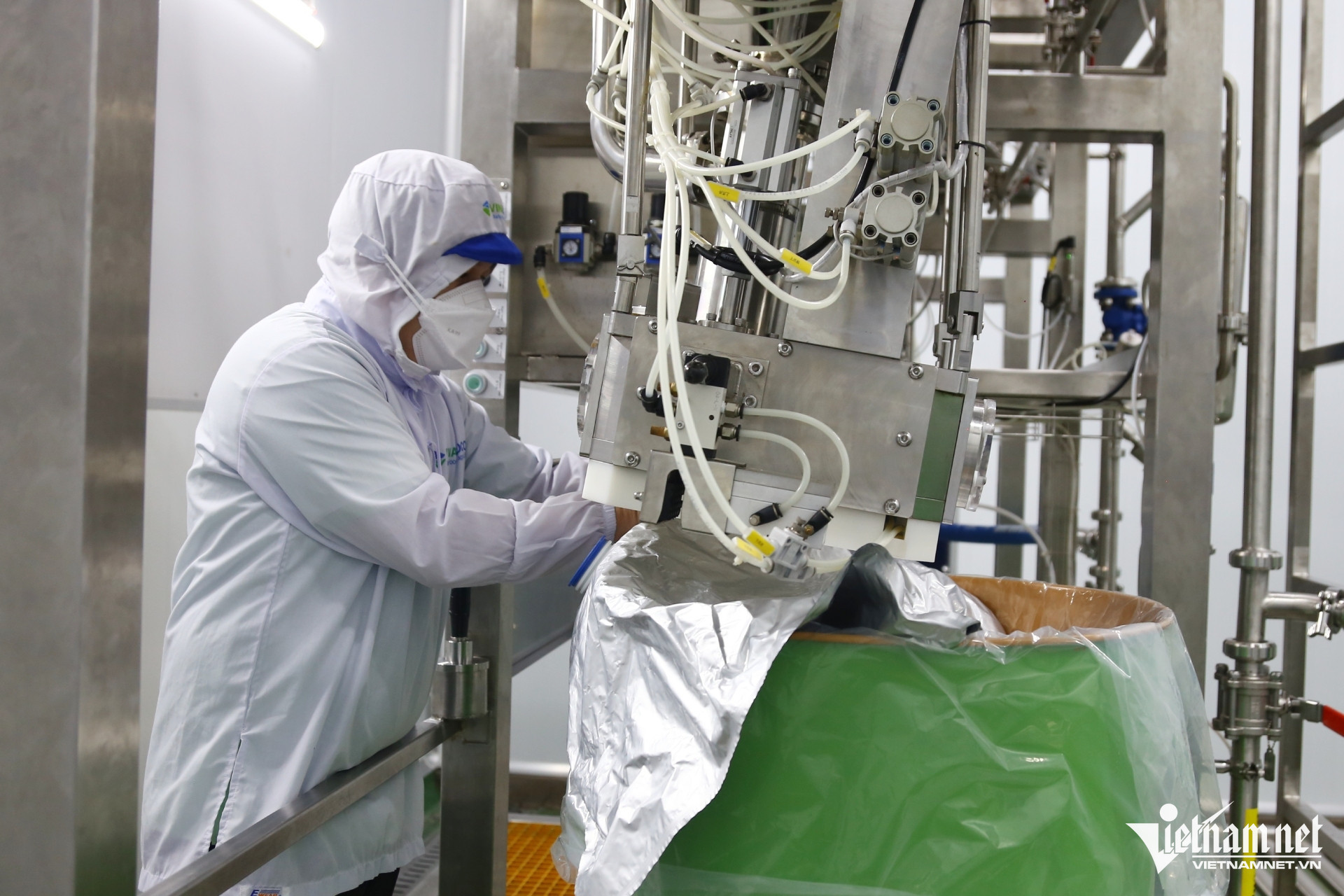
According to Le Tri Thong, CEO of Vinacoco - Co Co Vietnam Food Joint Stock Company - the factory located in Ho Nai Industrial Park (Ho Nai Ward, Dong Nai Province) has recently been upgraded with a fully automated, aseptic production line.
“We want our product to reach consumers, whether in Vietnam or abroad, with the same crispness and natural aroma as if it had just been scooped from a fresh coconut,” said Mr. Thong.
Every step of production, from filling to packaging, is fully enclosed and automated. This reduces the risk of bacterial contamination and significantly lowers labor requirements.
Thong noted that while a traditional production line previously required about 40 workers, the new system needs just five to six operators and still produces up to 30,000 tons of coconut jelly annually. At the same time, it meets the highest international food safety standards.
Thanks to these technological advances, a product that originated as a local street snack is now available in international markets such as Japan, South Korea, the United States, and many European countries. In these markets, consumers are drawn to coconut jelly for its natural composition, low sugar content, and alignment with healthy eating trends.
“In Vietnam, coconut jelly is often considered a fun little treat,” said Mr. Thong. “But overseas, it’s valued for its natural quality and health benefits.”
Traditionally found in street-side sweet soup shops, coconut jelly was rarely considered a high-value export. However, with strategic investment in advanced technology and stringent quality control, the product now enjoys strong demand in Japan, South Korea, Thailand, and several European nations. In these regions, it is embraced as a natural, lightly sweetened refreshment that fits modern wellness lifestyles.
“To international customers, it’s not just a dessert, but a nutritious product compatible with a healthy lifestyle,” Thong emphasized.
To cater to various consumer preferences, the factory produces both traditional coconut jelly and newly developed variations. Every batch must pass rigorous quality assessments to meet HACCP, ISO 22000, and specific import standards set by individual countries.
“What matters most isn’t how much we sell, but whether each shipment meets the standard and builds trust,” Thong asserted. “Once we gain that trust, markets will open themselves.”
Beyond technological upgrades, the company is also investing in sustainable production. Solar power systems and water recycling processes are being implemented to reduce carbon emissions during manufacturing.
Nguyen Van Thang, Deputy Director of the Department of Agriculture and Environment of Dong Nai Province, shared, “Although coconut jelly isn’t a major agricultural product in our province, its transformation into a branded OCOP product with regional identity and global reach aligns with our vision to elevate Dong Nai’s agriculture and Vietnamese products on the world stage.”
Hoang Anh
.svg)
