 Vietnamnet.vn

 Podcast



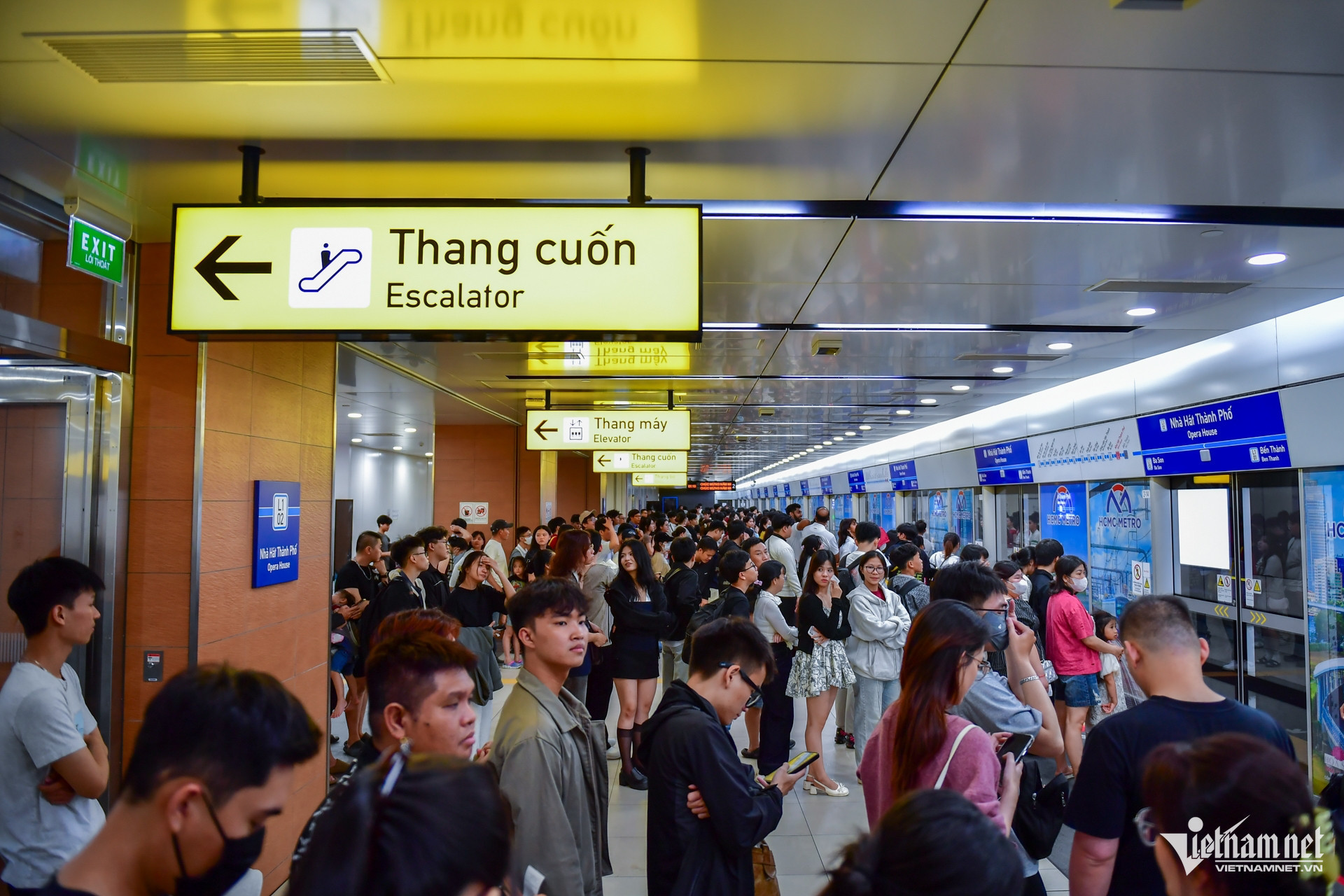
On March 24, a representative from Ho Chi Minh City Urban Railway Company No.1 (HURC1) said passenger numbers on the Ben Thanh - Suoi Tien metro line have risen sharply over the past month.
According to data from the first week of March, from February 28 to March 6, the metro line served around 417,151 passengers. Just one week later, from March 7 to March 13, the figure climbed to 467,732, marking a 12.1% increase.
The upward trend continued in the following periods. From March 10 to March 16, ridership reached 465,311 passengers.
In the week from March 17 to March 23, the metro recorded 486,254 passengers, up 4.5% compared to the previous week.
On average, the metro line now serves nearly 70,000 passengers per day, reflecting a gradual shift in commuting habits as residents increasingly favor modern, punctual, and comfortable modes of transport.
The positive trend is not limited to the metro system. Ho Chi Minh City’s broader public transport network, including buses, is also seeing encouraging growth.
According to the city’s Public Transport Management Center, since early March 2026, the system has handled an average of 340,000 passengers per day. This represents a 35% increase compared to late February, when daily ridership stood at around 249,000, and a 12% rise compared to the same period in 2025.
Several factors are contributing to this growth. Notably, students have returned to school following the Lunar New Year holiday, accounting for approximately 43% of total passengers. At the same time, fluctuations in fuel prices are prompting more people to reconsider their reliance on private vehicles.
In recent months, Ho Chi Minh City has also made continuous efforts to improve the quality of public transport services. The introduction of new vehicles, extended operating hours on certain bus routes, the rollout of cashless payment systems, and promotional programs during holidays have all helped attract more passengers.
According to the Ho Chi Minh City Department of Construction, the city currently operates 2,115 fixed passenger transport routes, including 2,046 interprovincial routes and 69 intraprovincial routes. These are managed by 97 operators using a total of 2,758 vehicles.
Among them, Phuong Trang Passenger Transport Joint Stock Company (FUTA Buslines) operates 228 routes, accounting for 11% of the total, with 1,171 vehicles, or 42% of the city’s fleet.
As of March 22, 34 out of 97 operators have adjusted ticket prices, with increases ranging from 5% to 36% depending on the route. Notably, FUTA Buslines has not yet raised its fares.
In the taxi and ride-hailing segment, the city currently has 36 operators with around 24,000 vehicles. Two companies have increased fares by between 6% and 27%, while Grab and Be have kept their prices unchanged. Meanwhile, electric taxi operator Xanh SM has reduced fares by 10%. Transport costs for businesses have risen by approximately 20% to 25%.
The Department of Construction continues to closely monitor transport operations, working with relevant agencies to inspect fare declarations and listings by companies. The goal is to ensure stable, uninterrupted transport services that comply with regulations while meeting travel demand and facilitating the smooth circulation of goods.
Tuan Kiet
.svg)
