 Vietnamnet.vn

 Podcast



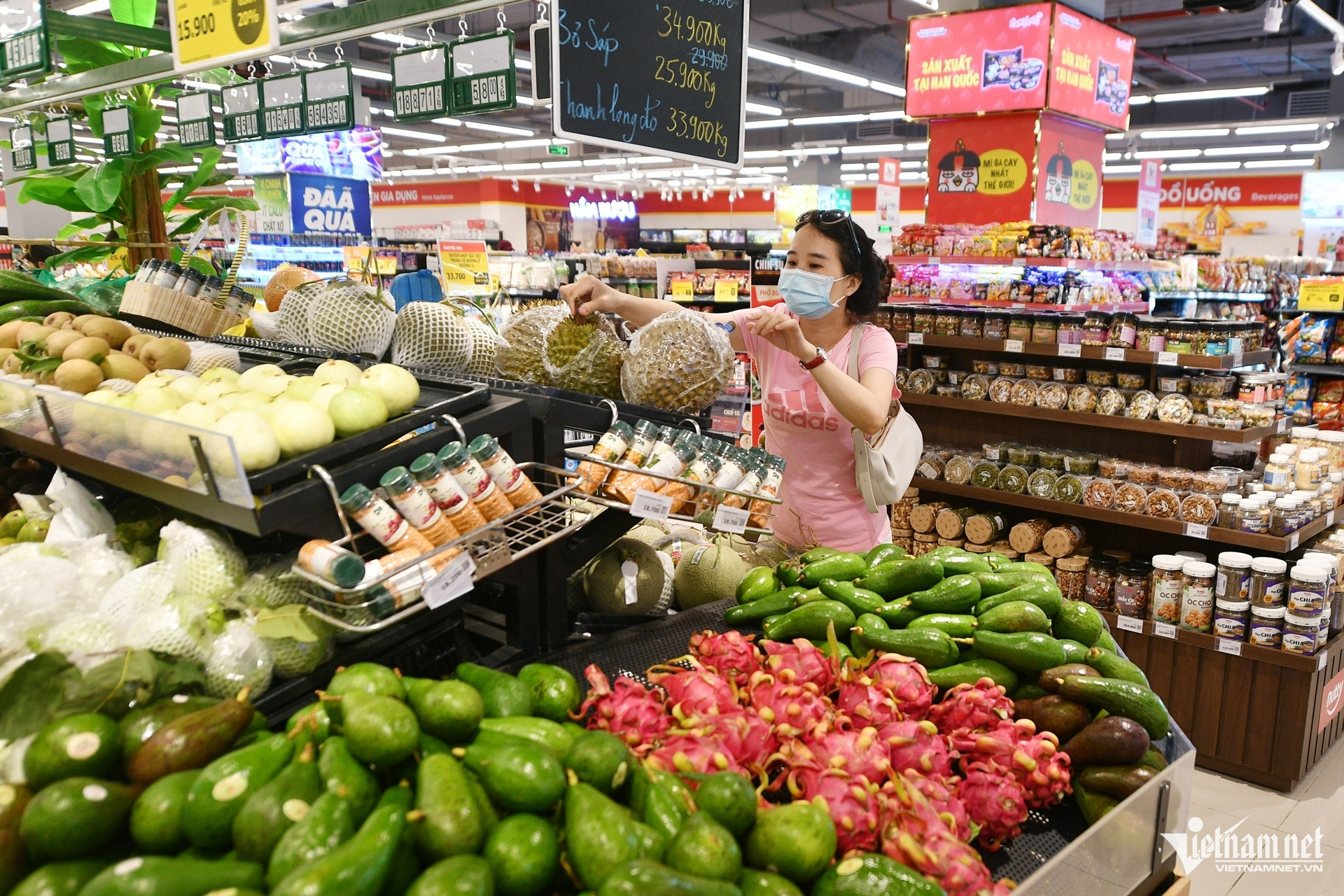
Data released by the Statistics Office under the Ministry of Finance on the morning of Sept. 3 showed that the consumer price index (CPI) increased 0.47% in August from a month earlier. Prices rose in 10 groups of goods and services, while one group recorded a decline.
Transport posted the sharpest increase, rising 4.09% and adding 0.41 percentage points to the overall CPI. The increase was mainly driven by diesel prices, which jumped 22.15%, and gasoline prices, which rose 9.53% following adjustments to domestic fuel prices.
Other categories also recorded increases, with education up 0.47%; household equipment and appliances 0.19%; other goods and services 0.15%; beverages and tobacco 0.12%; garments, hats and footwear 0.11%; housing, electricity, water, fuel and construction materials 0.10%; information and communications 0.08%; medicines and healthcare services 0.05%; and culture, entertainment and tourism 0.03%.
In the opposite direction, food and catering services fell 0.03%, trimming 0.01 percentage points from the overall CPI. Within the category, food prices declined 0.05% and staple food prices fell 0.04%, while eating-out services edged up 0.01%.
On average, CPI in the first eight months of 2026 rose 4.45% from the same period last year. Housing, electricity, water, fuel and construction materials recorded the largest increase at 6.71%, adding 1.52 percentage points to overall CPI. Transport prices rose 5.38%, contributing 0.54 percentage points.
Food and catering services increased 4.76%, adding 1.70 percentage points to the overall CPI. Other goods and services rose 4.46%; beverages and tobacco 3.67%; education 3.42%; household equipment and appliances 2.79%; culture, entertainment and tourism 2.71%; garments, hats and footwear 2.03%; medicines and healthcare services 1.08%; and information and communications 0.09%.
Core inflation in August rose 0.11% from the previous month and 4.55% from a year earlier. On average, core inflation increased 4.24% in the first eight months, below the 4.45% rise in headline CPI. According to the Statistics Office, the difference reflected sharp fluctuations in fuel, cooking gas and food prices, which are excluded from the calculation of core inflation.
Notably, domestic gold prices moved in the opposite direction from the global market. The average global gold price in August, as of Aug. 25, stood at more than $4,377 per ounce, up 7.22% from the previous month.
Vietnam’s domestic gold price index, meanwhile, fell 0.65% in August from the previous month but remained 16.98% higher than in the same period of 2025. On average, the gold price index surged 46.98% in the first eight months from a year earlier.
For the US dollar, the average USD price index in the international market stood at 99.65 points in August as of Aug. 25, down 1.17 points from the previous month.
Domestically, the USD price index fell 0.38% in August from the previous month, declined 0.36% from the same period in 2025 and was down 0.38% from December 2025. However, on average, the index remained 1.31% higher in the first eight months than in the same period last year.
Nguyen Le
.svg)
