 Vietnamnet.vn

 Podcast



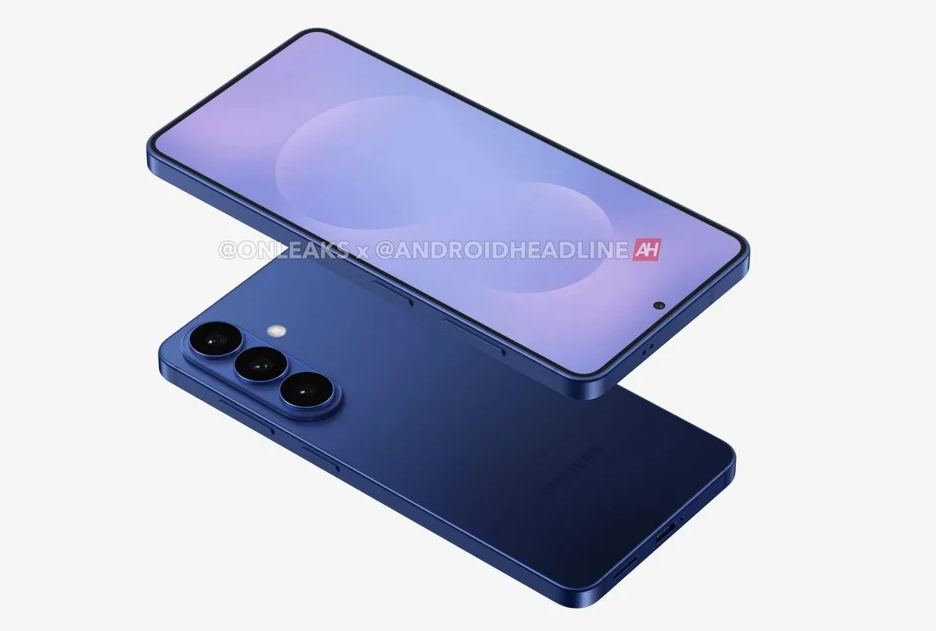
After months of underwhelming leaks and speculation, Samsung’s Galaxy S26 is finally making headlines for something positive. For the first time, a real improvement -one that could actually be felt during daily use -has emerged for the upcoming standard model. But with only one confirmed upgrade so far, questions continue to hang over Samsung’s flagship release.
The highlight? A notable increase in internal storage. Leaks now suggest that the Galaxy S26 base model will offer 256GB of storage -double that of the Galaxy S25, which launched at 128GB for $799 in the US. While this is a practical and welcome change, some critics argue it’s too little, too late.
What’s more, the device was at one point rumored to carry the name “Galaxy S26 Pro” -despite lacking any features that would truly warrant a “Pro” label. That potential branding misstep, if realized, could backfire in a fiercely competitive market where expectations are sky-high and consumers are more discerning than ever.
The real challenge for Samsung is not just whether Galaxy S26 is better than its predecessor -but whether it’s good enough to compete with Apple’s iPhone 17. The 6.3-inch standard iPhone, released last fall, has been hailed as one of Apple’s best non-Pro iPhones yet. It sports a high-refresh-rate Super Retina display, substantial front and rear camera upgrades, and improved battery life -leaving Samsung with a high bar to clear.
Meanwhile, Samsung has yet to confirm key details about the Galaxy S26, including its official pricing. Industry whispers suggest the company wants to freeze prices to retain an edge over Apple, but rising component costs could make this difficult. Maintaining the $799 price point for a 256GB model would be a win -but any increase could push the S26 into an awkward price war with Apple, where its current value proposition might not be strong enough.
If Samsung ends up pricing the Galaxy S26 at around $849, it may still appear attractive compared to the S25, given the doubled storage. Yet most analysts agree: a mere bump in memory won’t be enough to make the S26 feel like a real upgrade.
Comparatively, the iPhone 17 didn’t just expand storage or improve processing power -it redesigned the display, introduced new camera features, and offered a significantly better battery experience. That’s the kind of leap Samsung will need to match if it wants to reignite interest in its standard S-series phone.
A last-minute surprise?
There’s a glimmer of hope that more is coming. In an unusual twist, just weeks before the anticipated Unpacked event, real-life images of the Galaxy S26, S26+ and S26 Ultra have yet to surface -suggesting Samsung may still be finalizing key hardware and design elements.
Among the rumored late-stage additions is a bump in charging speed from 25W to 45W. On paper, it seems minor. But for everyday users, that translates into faster top-ups and less time tethered to a cable -exactly the kind of quality-of-life upgrade that could shift perceptions.
There’s also lingering speculation around potential camera improvements, battery optimizations, and even tweaks to the overall design. If Samsung can deliver on those fronts in a meaningful way, the S26 may yet redeem itself as a worthy successor.
But time is running out. With the iPhone 18 already looming on the horizon -featuring a rumored 2nm A20 chip and 12GB RAM -Samsung needs more than incremental tweaks to stay in the game. A thinner profile or slightly lighter body, reminiscent of the “Galaxy S25 Edge,” won’t be enough to shift momentum.
Consumers are watching -and their patience is thinning. If Galaxy S26 launches without more standout features, it risks being remembered not as a bold evolution, but as a missed opportunity.
Hai Phong
.svg)
