 Vietnamnet.vn

 Podcast



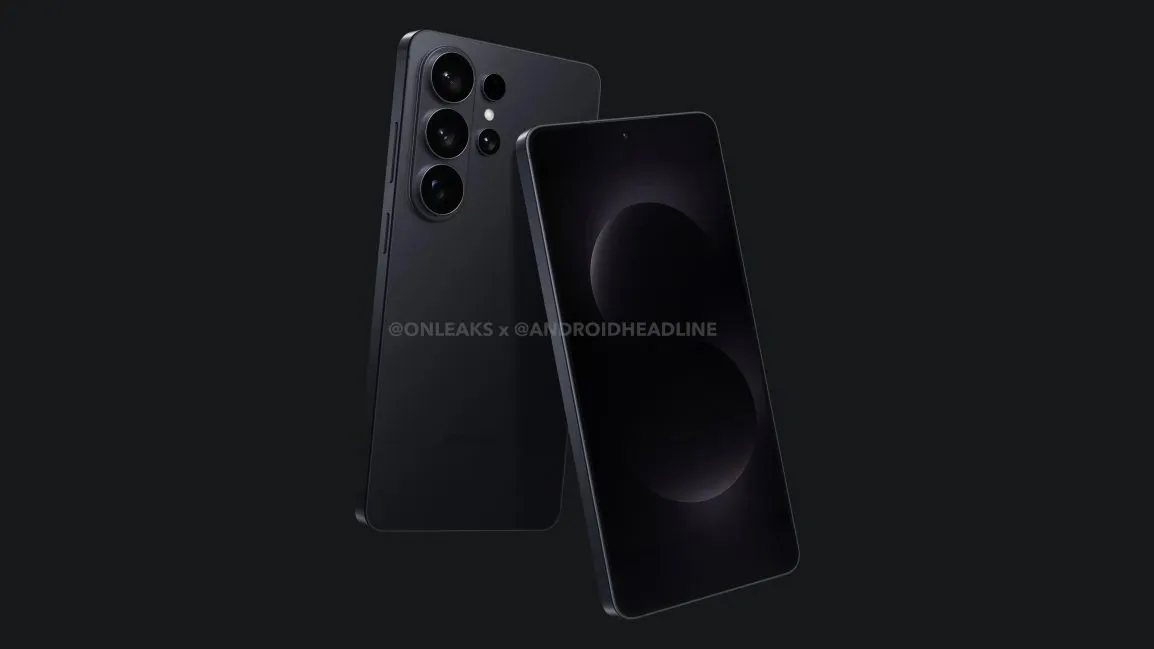
While the South Korean company is rumored to increase charging speed on its next flagship-the Galaxy S26 Ultra-leaked internal testing results suggest the charging time may not deliver the kind of major leap many fans are hoping for.
Galaxy S26 Ultra: 75% in 30 minutes?
For years, Samsung has been known as a relatively conservative manufacturer when it comes to battery capacity and charging power on smartphones. While Chinese rivals have repeatedly pushed the limits with 80W, 100W, or even higher charging speeds, Samsung has largely stuck to a strategy that prioritizes battery safety and long-term durability.
According to rumors surrounding the Galaxy S26 line, that approach appears set to continue. The Galaxy S26 Ultra is said to make progress in charging speed compared with the previous generation, but the improvement may not be enough to truly surprise users.
Well-known leaker Ice Universe says the Galaxy S26 Ultra could charge to around 75% in just 30 minutes. The figure reportedly comes from Samsung’s internal tests, conducted under tightly controlled conditions-likely at an ideal temperature to ensure the most stable results.
Although Samsung has not disclosed the testing conditions, this is consistent with the company’s usual approach to evaluating battery performance. The reported gains are believed to come from the Galaxy S26 Ultra supporting 60W wired charging, a notable step up from the 45W on the Galaxy S25 Ultra. Samsung’s recent launch of a new 60W charger is also seen as a near-confirmation of this upgrade.
Not quite enough to impress
If accurate, the Galaxy S26 Ultra would still charge faster than some major rivals. For example, the iPhone 17 Pro Max, with a 5,088mAh battery, reportedly reaches only about 64% after 30 minutes in real-world tests. Compared with Apple, Samsung would still hold a certain advantage in charging speed.
By pure percentage, the Galaxy S26 Ultra could even surpass the OnePlus 15, a phone said to reach around 68% after 30 minutes.
However, it is important to note that the OnePlus 15 is equipped with a massive 7,300mAh battery. That makes direct comparisons less straightforward, because battery capacity has a significant impact on charging percentages.
So while 75% in 30 minutes sounds decent, it is difficult to call it a breakthrough in today’s market, where users are increasingly accustomed to smartphones that can reach near-full charge in under half an hour.
What do users need: a bigger battery or lightning charging?
The core issue is that Samsung appears to be choosing a balance point that feels safe, but can also leave people underwhelmed. For many users, it is not necessary to have both a two-day battery and a full charge in just minutes. Having one truly outstanding strength is often enough.
Some are willing to accept slower charging if the battery is strong enough to last through the busiest workdays. Others do not mind a battery that lasts only a day, as long as a quick 10–15 minute top-up before heading out in the evening is enough to keep them going.
From that perspective, the Galaxy S26 Ultra does not yet seem to stand out decisively in either direction. The battery capacity is rumored not to increase significantly, while 60W charging-though better than before-still may not qualify as “best-in-class” fast charging.
As one of the world’s largest smartphone makers, Samsung is fully capable of doing more. Users may not demand that every specification top the charts, but they do expect at least one improvement that is clear enough to feel in everyday use.
If the Galaxy S26 Ultra truly stops at being only “a bit faster,” many may see it as a safe upgrade-yet one that lacks excitement.
In an increasingly fierce competitive landscape, Samsung may need to be bolder: either meaningfully extend battery life, or make a genuine leap in charging speed, to satisfy even the most demanding users.
Hai Phong
.svg)
