 Vietnamnet.vn

 Podcast



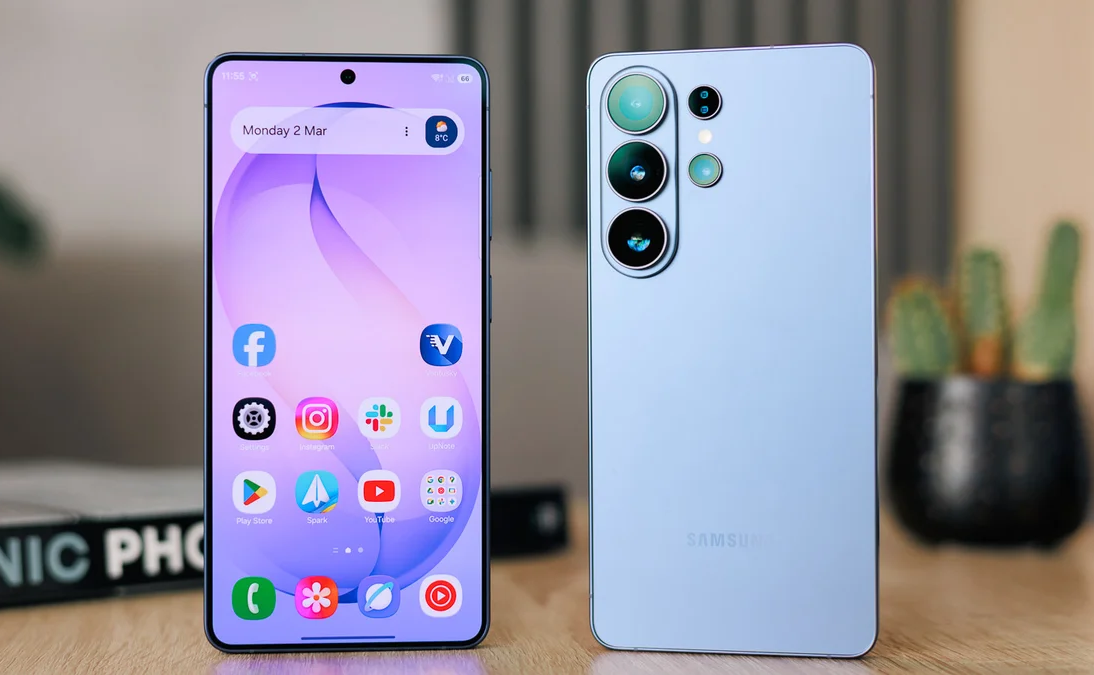
More than a month after launch, Samsung reports strong sales, particularly in the US market, suggesting continued consumer interest. However, user sentiment tells a different story. A survey cited by PhoneArena, based on 513 responses, found that nearly 53 percent of participants felt “very disappointed” with the device.
Even among loyal Samsung users, the reaction has been notably restrained. In contrast to criticism often directed at Apple for incremental updates in its iPhone lineup, the company’s recent improvements across the iPhone 17 series have shifted perceptions. For many observers, Samsung now appears to have adopted a similarly cautious approach, with the Galaxy S26 Ultra feeling closer to a minor revision than a generational leap.
Some commentators have even suggested the device would be more accurately named “Galaxy S25.1 Ultra”.
Design compromises raise questions
One of the most debated changes lies in the design. Previous Ultra models featured a premium titanium frame, reinforcing a sense of luxury. The Galaxy S26 Ultra, however, switches to aluminum.
While aluminum offers practical benefits such as reduced weight, improved heat dissipation and better signal transmission, many users interpret the move as cost-cutting. At a price point of around US$1,300, expectations for premium materials remain high, and the absence of titanium has diminished the perceived value for some.
S Pen limitations persist
Another source of disappointment is the continued absence of Bluetooth functionality in the S Pen. Samsung removed this feature in the previous generation, prompting backlash, and many had expected its return.
The company maintains that only a small portion of users relied on Bluetooth features. However, the decision continues to divide opinion, particularly among long-time users who valued remote control capabilities.
Display trade-offs and modest camera gains
The display delivers strong brightness, but enabling privacy mode reduces resolution significantly by disabling half of the pixels. While the feature enhances security by limiting viewing angles, it also compromises visual quality.
Camera upgrades, meanwhile, are incremental. The 5x telephoto lens improves from f/3.4 to f/2.9, and the main 200MP sensor from f/1.7 to f/1.4, enhancing low-light performance. Beyond these adjustments, however, the system remains largely unchanged, with no upgrade to the 3x telephoto lens - a point of frustration for many users.
Battery remains a major concern
Perhaps the most significant criticism centers on battery capacity. Despite competitors such as OnePlus and Xiaomi pushing higher capacities in their flagship devices, the Galaxy S26 Ultra retains a 5,000 mAh battery - a specification that has remained unchanged for several generations.
The absence of MagSafe-style magnetic accessory support further adds to user dissatisfaction, particularly as such features become more common across the industry.
Strengths still present
Not all feedback is negative. The device introduces a more advanced privacy display feature and upgrades wired charging from 45W to 60W, reducing charging times.
Camera capabilities also expand with 24MP high-resolution shooting and a new APV codec designed for professional video recording. Software improvements are notable, including enhancements to the landscape lock screen.
Artificial intelligence continues to play a central role. Features such as intelligent photo composition, background noise removal through Audio Eraser, and contextual suggestions via Now Nudge contribute to a more refined user experience.
A question of timing
The Galaxy S26 Ultra is not a weak device, but it arrives at a moment when expectations for flagship innovation are particularly high.
For users upgrading from older models such as the Galaxy S24 or standard S25, the device remains a compelling option, offering strong performance, updated software and advanced AI capabilities.
However, for those already using the S25 Ultra, the incremental nature of the improvements may not justify an upgrade. Attention may now turn to the next generation, with early expectations that the Galaxy S27 Ultra could deliver more substantial changes, particularly in battery technology.
Hai Phong
.svg)
