 Vietnamnet.vn

 Podcast



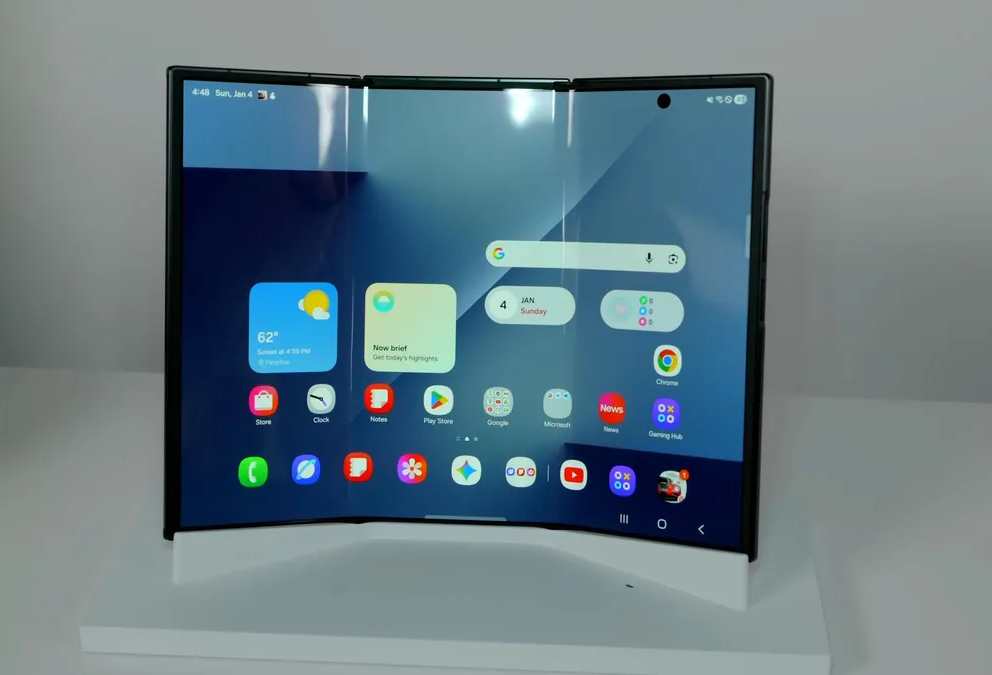
Unexpectedly, the Galaxy Z TriFold gained notable traction, even beyond Samsung’s own expectations. The device sold out within minutes of its release in South Korea, with similar scenes unfolding in the US and each time new stock was made available. This indicated that the market for tri-fold smartphones, while niche, is far from insignificant - especially among tech enthusiasts willing to spend heavily.
Yet despite this early momentum, Samsung discontinued its first tri-fold device after just three months. On the surface, this could be viewed as a failure. However, emerging reports that a Galaxy Z TriFold 2 is already in development suggest a more strategic narrative.
Samsung appears to be following a familiar path, one that has previously led to major turnarounds.
One of the main reasons behind the discontinuation was incomplete product maturity. While innovative and powerful, the device faced notable durability issues. Shortly after launch, users reported problems with the inner display, ranging from abnormal creases to unstable visuals.
This situation echoes the early days of the original Galaxy Fold. Ahead of its official release in 2019, several review units failed in the hands of journalists, forcing Samsung to delay the launch and issue multiple warnings about the device’s fragility when it eventually reached consumers.
In the years that followed, however, the Galaxy Z Fold series improved significantly. Durability increased, designs were refined, and software became better optimized for larger screens.
Today, devices like the Galaxy Z Fold 7 can effectively replace traditional smartphones, competing directly with strong rivals such as the Honor Magic V6 and Oppo Find N6. Foldable phones are no longer experimental novelties but a growing segment within the broader market.
Another key factor behind the TriFold’s discontinuation was its price. At nearly US$3,000, the device appealed only to a limited group of loyal users. However, the issue went beyond consumer demand. Even at that price point, the product reportedly delivered very low profit margins for Samsung, making it a commercially inefficient investment. Amid rising memory costs and a shrinking smartphone market, producing ultra-premium devices has become increasingly risky.
In reality, memory may not have been the most expensive component. The massive 10-inch display and complex hinge system likely drove production costs significantly higher. Solving this technological challenge remains essential if Samsung aims to turn tri-fold devices into viable commercial products.
Historically, Samsung has demonstrated a strong ability to rebound from early setbacks. Rumours surrounding the Galaxy Z TriFold 2 reinforce this expectation. The company is said to be improving the hinge system to make production more efficient and reduce costs. If successful, these changes could address many of the first generation’s technical limitations while transforming the successor into a more profitable venture.
That said, such optimism comes at a time when Samsung appears to be losing some momentum. The Galaxy S26 Ultra has been seen as less compelling compared to certain Chinese competitors, while Huawei has already introduced two tri-fold devices ahead of Samsung.
Still, the Galaxy Z TriFold has proven that Samsung retains the capability to create breakthrough products. More importantly, it became the first company to demonstrate that tri-fold smartphones can achieve strong global demand. This could lay the foundation for an entirely new product segment, much like Samsung once did with foldables.
If the company can fully absorb the lessons from the Galaxy Z TriFold, its successor may mark a turning point. In that context, discontinuing the first model may not be remembered as a failure, but as a calculated step back before a significant leap forward. As seen with the evolution of the Galaxy Z Fold series, an early “disaster” could ultimately become the starting point for a brighter future in tri-fold smartphones.
Hai Phong
.svg)
