 Vietnamnet.vn

 Podcast



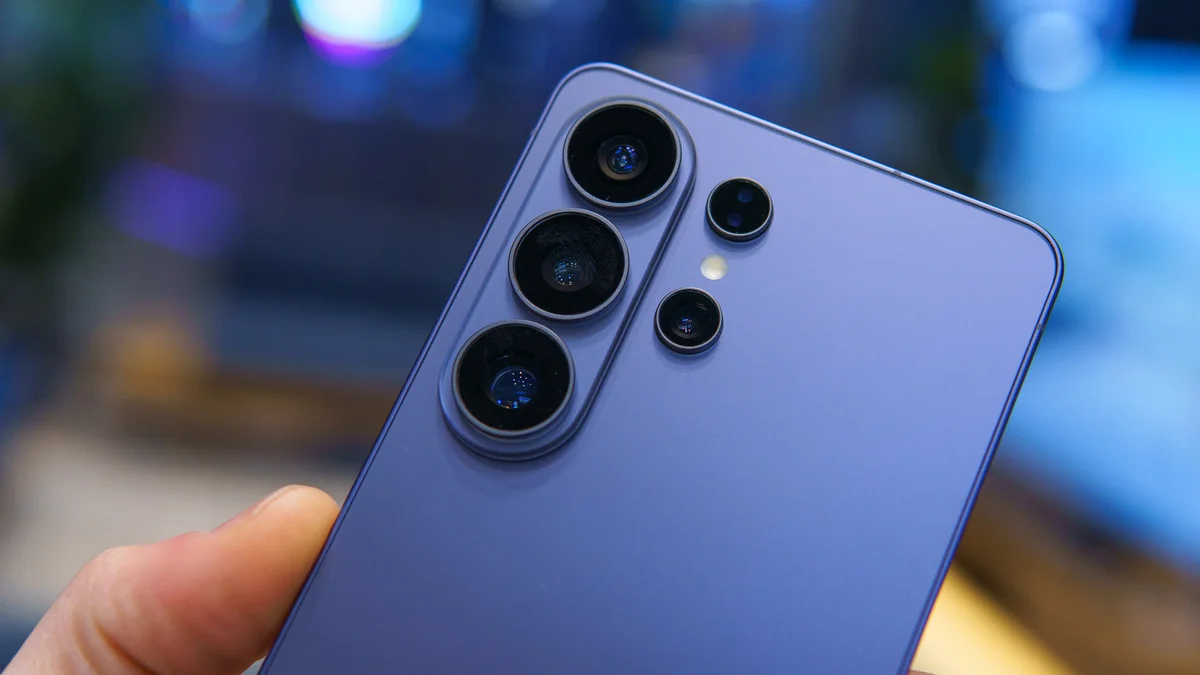
If the rumors prove accurate, the Galaxy S27 Ultra could feel like long-awaited relief for users who have been hoping for a meaningful leap in battery life for several years.
Galaxy S27 Ultra could approach 5,800mAh without becoming thicker
Across seven consecutive generations - from the Galaxy S20 Ultra to the Galaxy S26 Ultra - Samsung has kept the battery capacity of its flagship Ultra model at around 5,000mAh. While processing power, displays and camera systems have steadily improved, battery capacity has remained one area where many users believe the company has been overly cautious.
That could change with the Galaxy S27 series.
According to Galaxy Club, Samsung is developing two new premium models: the Galaxy S27 Ultra and the Galaxy S27 Pro. The latter is expected to replace the current Plus model and sit below the Ultra in Samsung's flagship lineup.
More notably, both devices are rumored to use silicon-carbon batteries instead of conventional lithium-ion cells.
According to leaked information, the Galaxy S27 Pro will feature a battery with a rated capacity of approximately 5,087mAh. Samsung is expected to market it with a typical capacity of around 5,200mAh.
Meanwhile, the Galaxy S27 Ultra is rumored to carry a battery with a rated capacity of 5,534mAh. Based on Samsung's usual marketing convention, the typical capacity could reach around 5,700mAh, or even approach 5,800mAh.
That would be an impressive figure for a premium smartphone that still maintains a slim and lightweight design.
Had Samsung continued using conventional lithium-ion technology, integrating a battery of that size would almost certainly have required a thicker and heavier device. Silicon-carbon technology is therefore seen as the key to overcoming a design limitation that has persisted for years.
Silicon-carbon batteries replace part of the traditional graphite anode with silicon, significantly increasing energy density. In practical terms, this means more energy can be stored within the same physical space, extending battery life without increasing the size of the smartphone.
Several Chinese smartphone manufacturers have already adopted this technology in their latest flagship models. Samsung and many other major brands, however, have taken a more cautious approach due to concerns over long-term durability and safety.
Growing competitive pressure now appears to be pushing Samsung toward the transition.
Samsung may not have much time left to wait
The premium smartphone market is entering a new competition centered on battery life.
Several Chinese manufacturers have already surpassed the 10,000mAh mark on certain devices by adopting silicon-carbon battery technology. Meanwhile, rumors suggest the iPhone 18 Pro Max could increase its battery capacity to approximately 5,391mAh while continuing to rely on conventional lithium-ion technology.
If those reports are accurate, Apple may need to accept a thicker and heavier design to accommodate the larger battery.
Samsung, by contrast, could gain a meaningful competitive advantage if it successfully commercializes silicon-carbon batteries in the Galaxy S27 Ultra. A smartphone with a battery approaching 5,800mAh while maintaining a slim, lightweight profile would deliver significantly longer battery life without compromising everyday comfort.
After years of little movement in battery capacity, the Galaxy S27 Ultra could become an important milestone in Samsung's product evolution.
If development proceeds as expected, the company's next flagship may not only improve battery endurance but also establish a new benchmark for premium Android smartphones in the years ahead.
Hai Phong
.svg)
