 Vietnamnet.vn

 Podcast



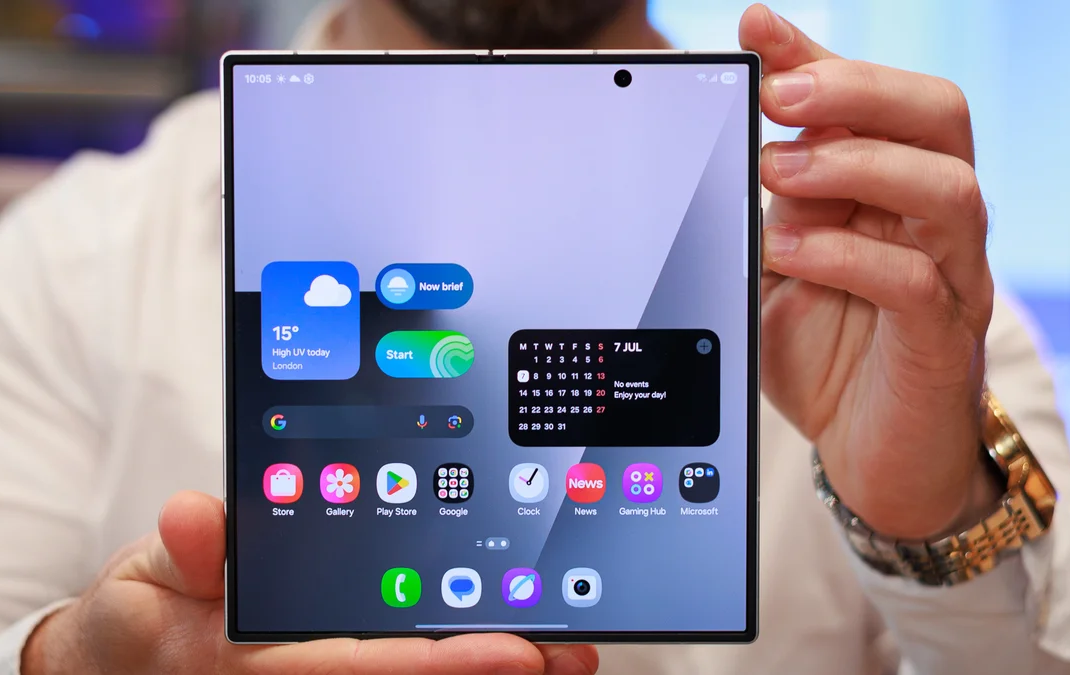
According to recent reports, the device is likely to retain its starting price from the previous generation, while only slightly increasing the cost of higher storage variants. This approach could make the premium foldable segment more appealing at a time when competition is heating up.
Pricing remains largely unchanged
A source on social platform X claims Samsung will offer three configurations: 12GB RAM with 256GB storage, 12GB RAM with 512GB, and a top-tier version with 16GB RAM and 1TB storage. The expected prices are US$1,999, US$2,199, and US$2,499 respectively.
By comparison, the Galaxy Z Fold 7 launched at US$1,999.99 for the 256GB version, US$2,119.99 for 512GB, and US$2,419.99 for 1TB.
This means the entry-level price remains virtually unchanged, while higher-capacity versions increase by around US$80.
The increase is not insignificant, but it is also unlikely to provoke strong reactions, especially if the rumored hardware upgrades prove substantial.
Notably, Samsung had already raised prices last year, with the Galaxy Z Fold 7 costing US$100 more than its predecessor. Another sharp increase this year could have risked a negative response from users.
Maintaining the base price while improving the device suggests a carefully calculated strategy as the foldable market becomes more competitive.
Hardware upgrades aim to justify the strategy
Leaks indicate that the Galaxy Z Fold 8 could bring several meaningful improvements.
Battery capacity is expected to rise from 4,400 mAh to around 5,000 mAh - a notable step forward for foldable devices, which are often constrained by limited internal space.
Charging speed may also increase from 25W to 45W, significantly reducing charging time.
The camera system is rumored to receive further refinements, while a new Snapdragon 8 Elite Gen 5 chip could replace the previous generation, offering stronger performance alongside improved power efficiency.
These upgrades help explain why Samsung may feel confident keeping the starting price steady.
Pressure from Apple’s foldable ambitions
Another key factor is the anticipated arrival of Apple’s first foldable iPhone. Rumors suggest the device could launch in the fall with a starting price between US$1,999 and US$2,320, with the 1TB version potentially reaching US$2,900.
If Samsung can deliver a more complete device - featuring a telephoto camera, larger battery, and faster charging at a similar or lower price - it could gain a meaningful advantage.
This is particularly important as Apple prepares to enter the foldable segment for the first time, where real-world usability and refinement will likely outweigh brand loyalty alone.
Refinement beyond specifications
The previous generation already introduced significant changes, including a thinner design, a wider cover display, and an inner screen with a less visible crease.
New leaks suggest the Galaxy Z Fold 8 will continue this trajectory, with dual-layer display glass, a carbon fiber hinge, and a lighter body.
These improvements indicate that Samsung is not only focusing on specifications, but also on durability, weight, and long-term usability - all critical factors for foldable devices.
While US$1,999 remains a high price for a smartphone, it becomes more reasonable within the premium foldable category, especially when compared to potential rivals.
If the rumored pricing for Apple’s foldable device proves accurate, Samsung could offer one of the most complete foldable experiences of the year at a lower cost, while Apple’s first attempt may still lack certain features such as a telephoto camera.
According to current leaks, the Galaxy Z Fold 8 is expected to launch in July, alongside the Galaxy Z Flip 8 and a new model, Galaxy Z Wide Fold.
If these reports hold true, Samsung may enter the summer with a strong foldable lineup, competitive pricing, and enough momentum to put pressure on the market - just ahead of Apple’s official entry into the race.
Hai Phong
.svg)
