 Vietnamnet.vn

 Podcast



After three days of deliberations, the second plenum of the 14th Party Central Committee concluded on the afternoon of March 25.
In his closing remarks, General Secretary To Lam addressed the work of inspection, supervision, power control, and the fight against corruption, wastefulness, and misconduct.
He emphasized that these efforts in the coming period must be placed within the broader objective of rapid and sustainable national development, adopting an approach that is both systemic and strategically deep.
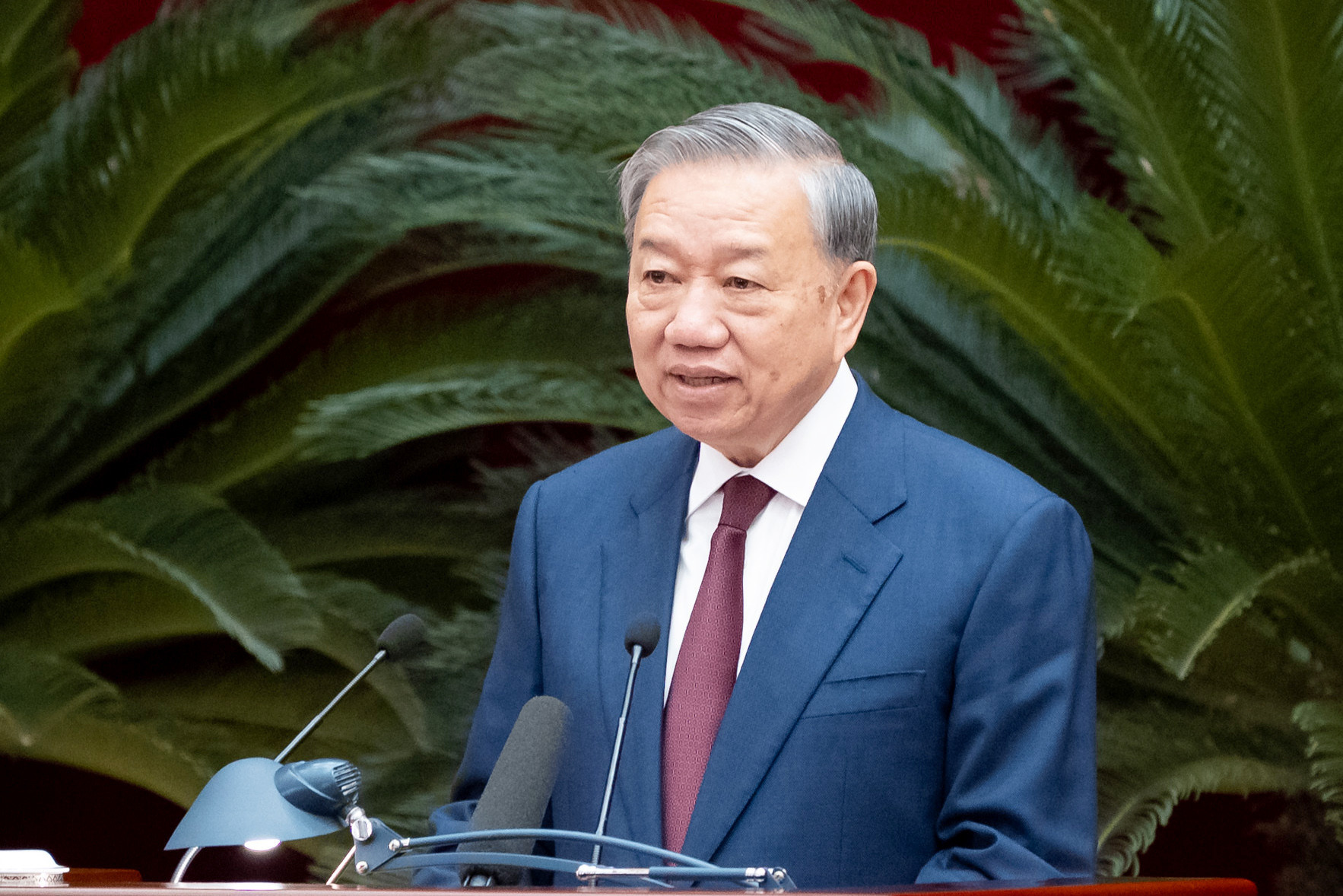
According to the General Secretary, this is not only an urgent and regular task to ensure the integrity of the system, but also a fundamental condition for strengthening public trust, maintaining socio-political stability, and creating a healthy environment for development.
As Vietnam moves toward ambitious growth targets, with a series of large-scale projects and more open, flexible mechanisms and policies to unlock development resources, the risks of corruption, wastefulness, and negative practices are also expected to increase in both scope and sophistication.
He noted that in practice, sectors enjoying more incentives are often more vulnerable to risks if preventive mechanisms and effective inspection and control are lacking. Therefore, the requirement is to design and improve institutions that are sufficiently robust to make corruption and waste “impossible,” while establishing supervisory mechanisms strong enough to ensure that officials “do not dare” and “do not want” to engage in wrongdoing.
Inspection, supervision, and power control in the fight against corruption and waste must be carried out with high political determination, alongside resolute, persistent, regular, and continuous actions.
The General Secretary stressed the need to strictly handle all violations under the principle of “no forbidden zones, no exceptions,” while at the same time upholding humanity, the rule of law, and development objectives.
He also underscored the importance of establishing and effectively operating mechanisms to protect officials who are dynamic, innovative, and willing to take responsibility for the common good. A clear distinction, he said, must be made between violations driven by self-interest and mistakes arising from experimentation and reform.
Building resilience against security shocks
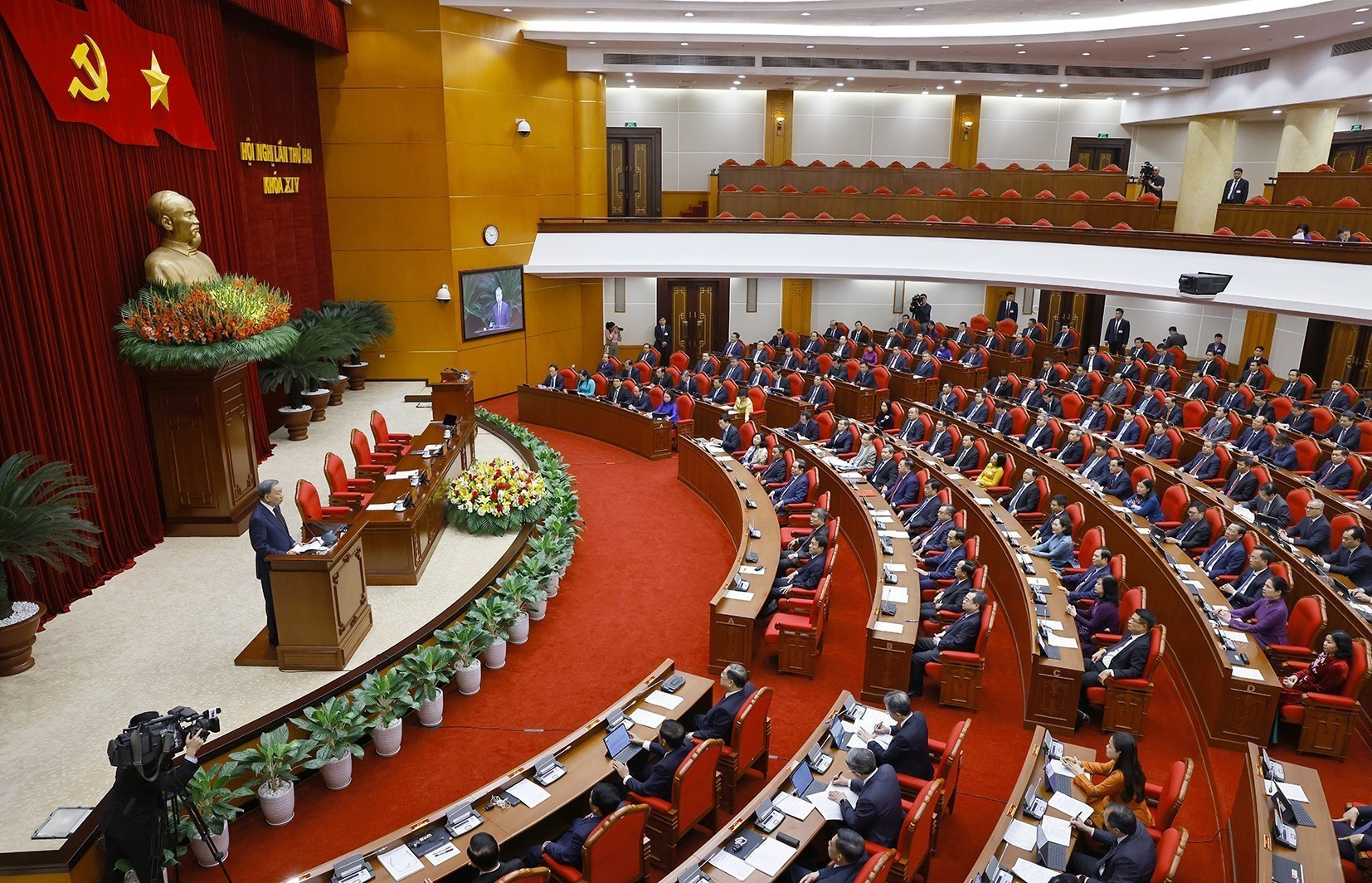
On national defense, security, foreign affairs, and international integration, the General Secretary pointed out that global political, economic, and military developments demonstrate that a country seeking rapid growth, strong investment inflows, expanded markets, and deep integration must first ensure strategic autonomy, risk management capacity, strong institutions, social order, and resilience against both traditional and non-traditional security shocks.
In the new context, ensuring defense, security, and foreign affairs is not only about safeguarding sovereignty, borders, seas, and airspace, but also about protecting a peaceful environment, safeguarding institutions, maintaining social trust, securing cyberspace and data, and protecting vital economic lifelines and strategic development interests.
He stressed that this must be recognized as a regular, core, long-term strategic mission of the entire Party, people, armed forces, and political system.
Defense, security, foreign affairs, and international integration must be integrated across all strategies, planning, and development policies to ensure sustainable, sovereign, and risk-controlled growth, with the capacity for early and proactive national protection.
The General Secretary emphasized the need to build comprehensive national strength in peacetime, where military, security, diplomatic, economic, scientific, technological, and national unity strengths are integrated into a unified and mutually reinforcing whole.
He also highlighted the importance of strengthening the “people’s support posture,” building an all-people national defense posture in close alignment with the people’s security posture in every locality, particularly in strategic areas, border regions, seas and islands, major urban centers, key economic hubs, critical infrastructure, and cyberspace.
This, he noted, represents the combination of “position” and “power,” between national defense and social defense, between protecting territorial sovereignty and safeguarding ideological foundations, political stability, and social order.
The General Secretary added that the new requirement is to more closely integrate defense, security, and foreign affairs with socio-economic development, combining protection with development, and stability with innovation.
This will ensure that defense, security, and foreign affairs become a component of national competitiveness and a direct driver of development, while serving as a strategic pillar for the country’s steady advancement in a new era.
He called on the entire Party, people, and armed forces to act under the guiding principle: strategic autonomy - steadfast commitment to the two 100-year strategic goals - unity, determination, and decisive action for the prosperity and happiness of the people.
Tran Thuong
.svg)
